English: Publicity photo of Andy Williams from his television show. (Photo credit: Wikipedia)
Andy Williams is gone. We will miss his charm, his distinctive voice (formally declared a “national treasure”), and his singular, laid-back style that we came to know through his long run as a recording artist and entertainer of stage and television.
Although he’s known for his blockbuster hits of several movie theme songs, including, of course, Moon River and Love Story, Andy didn’t have a substantive track record as an actor on the silver screen.
There is one little treasure, though, that I am longing to see. Williams starred in the Ross Hunter romantic comedy I’D RATHER BE RICH (1964), along with Sandra Dee, Robert Goulet, Maurice Chevalier, Hermione Gingold, Charles Ruggles, and Rip Taylor. What a cast. What possibilities.
From the reviews and clips I’ve seen, I’D RATHER BE RICHappears to be a delightful indulgence, and it includes the captivating song Almost There. Unfortunately, a quality home video DVD version isn’t available. It seems a mystery that this one’s been neglected, but the good news is that there is an opportunity to vote in favor of such a release here on the Turner Classic Movie web site.
Please vote today and help us get this one out in honor of Andy. RIP, Mr. Williams. You were one in a million.
SPECIAL NOTE: Home Projectionist blogger, Ben Alba, was a personal friend of Andy Williams. To access his recent WGN radio interview reflecting on Williams’ life, go to Remembering Andy Williams.
Gloria Bowman is a writer, storyteller, blogger, movie lover, freelance editor, and author of the novel, Human Slices. Access her blog at www.gloriabowman.com; on Twitter @GloriaBow
“When yellow leaves, or none, or few, do hang, Upon those boughs which shake against the cold.” So wrote Shakespeare. Of course, he was being poetic about the onset of Fall, at which we mortals find ourselves at this moment in time. Now, setting aside the beautiful Fall scenery of Hitchcock’s THE TROUBLE WITH HARRY, most of Hitch’s “fall” scenes had a slightly less pastoral aspect. Namely, those scenes would often be of a “fall” from a great height. But have no fear, no one will push you. This is merely a quiz, and not even one with a “high level” of difficulty.
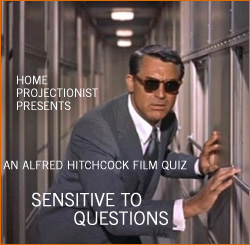
(*The quiz title was inspired by Alfred Hitchcock’s North By Northwest:“Something wrong with your eyes?” “Yes”, says the sunglass-clad Roger O. Thornhill (Cary Grant), “They’re sensitive to questions”. Vandamm (James Mason) announces his intentions for the troublesome Eve Kendall (Eva Marie Saint) by saying, “This matter is best disposed of from a great height…”)
ON THIS DAY in 1939, the city of Warsaw, Poland, surrendered to the forces of Nazi Germany. This event was portrayed in THE PIANIST, a 2002 film directed by Roman Polanski and starring Adrien Brody.
East London-based Hot Tub Cinema is adding a simmering new dimension to the world of outdoor movie-watching. And here I thought chaise lounges on the roof were a good idea.
(Thanks to Home Projectionist fan Bruce Bieber of Wines of Washington promotion agency for alerting us to this steamy trend.)
ON THIS DAY in 1996, the last of Ireland’s scandalous Magdalene asylums was permanently closed. In 2002, THE MAGDALENE SISTERS dramatized the stories of several of the institution’s inmates.
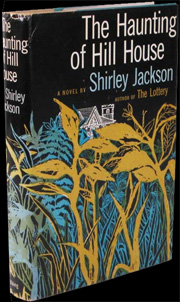
WHEN I FIRST SAW Robert Wise’s THE HAUNTING, which was adapted from Shirley Jackson’s novel The Haunting of Hill House, I had a writerish reaction: how dare they change her book so much? It wasn’t until I saw the movie the second time that I realized how brilliantly the novel had been adapted for the screen. If screenwriter Nelson Gidding had been faithful to every detail of the book, the result would have embarrassed everybody.
For this guest blog, I decided to write about the rocky road from print to screen, using the examples of NIGHT FLIGHT, THE THIRD MAN, and THE HAUNTING. (If anyone wants to know the alternate ending to THE THIRD MAN, just ask.)”
.
Night Flight
I don’t remember why I recorded NIGHT FLIGHT, but when I got around to watching it, I was surprised to learn that it had been kept out of circulation for more than 70 years because the author of the book on which it was based, Antoine de Saint Exupéry, hated it.
How Saint Exupéry was able to suppress this film for so long is a mystery. Why he did it is less of a mystery, at least to me. The movie makers were unfaithful. His book Vol de nuit was not on the screen. In its place was a good movie—smart, emotional, and tough, with spectacular aerial photography. But Saint Exupéry did not see the movie. He saw the book that wasn’t there.
.
The Third Man
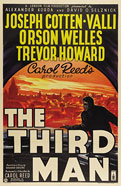
Graham Greene wrote THE THIRD MAN as a movie treatment in response to a specific request by British film producer Alexander Korda. When director Carol Reed changed the ending, Greene could have been offended. Instead, he recognized that Reed was right and thanked him publicly:
One of the very few major disputes between Carol Reed and myself concerned the ending, and he has been proved triumphantly right.
.
The Haunting
Nelson Gidding’s screenplay for the 1963 movie THE HAUNTING is a masterpiece of adaptation. Gidding was not all that faithful to Shirley Jackson’s The Haunting of Hill House, although Jackson was a major author and the novel was a best seller. He knew when to stay true to her intentions and when to ignore them.
What Was Kept
The House as the Star. Hill House is the source of the terror and the mystery. If you read the book, you will find elements that do not match up with the movie, but you will recognize that spectacular house in every detail.
Eleanor, the Main Female Character. Eleanor is the most tormented visitor to Hill House. She and the evil presence in the house are drawn to each other. If Gidding changed her, he would also have had to rethink the house. He left her alone.
What Was Changed
All the Characters Except Eleanor. Theo morphed into a lesbian. Luke became a character meant to provide comic relief. Dr Montague—a bookish scholar in the novel—became the charming, handsome, and witty Dr Markway. Dr Montague’s wife, too, underwent a major transformation (more on that below).
The Event That Pushes Eleanor Ever the Edge. In the novel both Eleanor and Theo pursue Luke. In the movie Eleanor falls for Dr Markway, who is married but keeps quiet about it and sees through her as if she were made of glass. When he rejects her, the humiliation is intense. By making Eleanor’s pursuit of Dr Markway delusional, Gidding sets up the scene where she loses her grip on reality entirely.
The Funniest Part of the Novel. This really is a loss, although Gidding had no choice. In the book Mrs Montague blazes into the house with a ouija board and an assistant named Arthur, ready to give the spirit inhabitants of Hill House perfect love and compassion. She has a session with the ouija board where the spirits definitely communicate and she definitely misunderstands them (the other people in the house understand perfectly, and are terrified). In the movie Mrs Markway is a no-nonsense debunker of all things ghostly.
If you watch THE HAUNTING this October, there is another change to appreciate. The novel takes place in June. Gidding moved the time to just before Halloween.
Lindsay Edmunds blogs about robots, computers, life in southwestern Pennsylvania, and sometimes books and movies at Writer’s Rest. She is the author of a novel about love in the age of artificial intelligence: Cel & Anna.
ON THIS DAY in 1896, author F. Scott Fitzgerald was born in St. Paul, Minnesota. Fitzgerald was portrayed by Tom Hiddleston in Woody Allen’s 2011 film, MIDNIGHT IN PARIS, starring Owen Wilson.
To celebrate their 20-years of hilarious success, the ABSOLUTELY FABULOUSgals have created three specials recently released to the U.S. market after airing to rave reviews on BBC. If you love Ab Fab, you need this in your stash of tv treasures.
Edina (Eddy), ditzy public relations agent, continues to struggle with aging; Patsy, her ever-stoned sidekick, continues to be confused. And Saffron (better known as Saffy) continues to be exasperated with the adults in her life.
Thanks to today’s technology, we can hit the road and watch (or read) what we want, when we want, and just about anywhere we go. Passing time has never been more chock full of options.
I may be late to the realization party, but up until last week, I thought of the availability of online streaming while traveling only as a source of entertainment. I have learned that it can serve as a sort of vacation enrichment program in a box.
I recently visited Frank Lloyd Wright’s Taliesin in Spring Green, Wisconsin, and was thrilled to have the opportunity to roam through the rooms, the public spaces, and the grounds. Through an incredibly well done guided tour, I learned much about Wright the man and his vision. But I wanted to know more.
While wandering through the Taliesin gift shop after the tour, I happened to see a Ken Burns’ DVD on the life of Frank Lloyd Wright for sale. I was certain that a Burns’ documentary would provide the sort of expanded view I was seeking. I hoped the documentary was available online, and I’m happy to report that it was.
That night, as the sun was setting in the Midwestern sky, I sat on the back porch of a historic inn, with feet up and relaxed from a glorious day. It was time to fire up the tablet and learn more about this American icon. What a pleasure it was to be able to watch the entire documentary. While the live tour allowed time to savor the space and the beauty of the countryside, feel the history, and experience the physical and psychological reactions to Wright’s built environments, the video provided a more in-depth exploration of his early career, his philosophies, and failings–as well as successes. It was as if the live guided tour and the documentary were magical collaborative partners.
It wouldn’t have been the same if I waited until I got home to watch this documentary. I may have even forgotten about it. The sense of my tour experience would have faded. I may have even decided that I didn’t want to take the time, wasn’t as interested anymore. There would be something more pressing to do.
Watching the documentary was a delightful and satisfying way to end the day. Online streaming will now be more than an entertainment option when I’m on the road. It will be a very valuable and treasured travel companion.
Gloria Bowman is a writer, storyteller, blogger, movie lover, freelance editor,
and author of the novel, Human Slices.
Access her blog at www.gloriabowman.com; on Twitter @GloriaBow
ON THIS DAY in 1909, the publication of Gaston Leroux’s Le Fantôme de l’Opéra (The Phantom of the Opera), began, as a serial, in the French newspaper Le Gaulois. In 1925, the first of several film adaptations of Leroux’s novel premiered– THE PHANTOM OF THE OPERA, starring Lon Chaney.
ON THIS DAY in 1957, François “Papa Doc” Duvalier was elected president of Haiti on a populist and Black Nationalist platform. THE COMEDIANS, a 1967 film starring Elizabeth Taylor and Richard Burton, and based on a Graham Greene novel, was set in Haiti during the Duvalier regime.
Bon nuit. That’s good evening in French, as we just learned from our useful English-to-French phrase book. When it comes to the films of Alfred Hitchcock however, it comes up a bit short. For example, it does not tell us how to say, in French, “My mother is… not quite herself today”, or “Go away or I’ll kill you myself”. Nevertheless, we think you’ll enjoy this globetrotting quiz…
(*The quiz title was inspired by Alfred Hitchcock’s North By Northwest:“Something wrong with your eyes?” “Yes”, says the sunglass-clad Roger O. Thornhill (Cary Grant), “They’re sensitive to questions”. As Roger attempts to find out who Lester Townsend really is, he orders a cab driver: “Take me to the United Nations.”)
ON THIS DAY in 1897, author J. R. R. Tolkien published his novel, The Hobbit, or There and Back Again. In 1978, Tolkien’s book was adapted for the Rankin-Bass animated film, THE HOBBIT, narrated by John Huston.
Not just another WordPress.com site, but an extraordinary place to spend a weekend, grill a cheese sandwich and watch a film to improve your life and stimulate a few of the grey cells.









 Home Projectionist