Before the 1970’s, there are few films with all African-Americans. There were ‘race’ films that were produced especially for a black audience in the 20’s and 30’s. There is an informative article about it HERE on the Amoeba Blog.
But there was a time when if there was a black character, there was a possibility that the film would not even get shown in the South. It wasn’t until the success of CARMEN JONES and PORGY AND BESSthat there was a market for films with primary all-black casts but with stories that appealed to the mainstream white cinema-going audience. Somewhere lost in time is this very bizarre film ANNA LUCASTA.
ANNA LUCASTAstarted out as a play by Philip Yordan. (Yordan had a varied career in films writing screen plays for JOHNNY GUITAR, THE MAN FROM LARAMIE, DETECTIVE STORY and DAY OF THE TRIFFIDS). The plot concerns a young girl who is thrown out of her home by her father. She then becomes a prostitute. Years later her family, trying to get the dowry of a rich man, takes her back in order for her to seduce him into marrying him. It’s a poor man’s Eugene O’Neil opus that probably played well on the stage in the forties. Every character is given a chance for a monologue and a chance to tear at the scenery, throw a punch, scream and yell and generally overplay their parts.
Eugene O’Neal Meets Amos and Andy
The play was filmed once before in the late 1940’s with Paulette Goddard playing the lead and the characters changed to a Polish-American family. I was surprised to learn that the play was written for an all-black cast, because my first thought was that it must have been written for an Italian family. The story has a universal appeal that could play to any ethnicity. In fact, it was remade in the 1970’s with a Greek cast.
However, as probably a concession to the studio, most of the cast are very light skinned, to the point where Anna’s rich suitor looks more Latino or Middle Eastern than black.
The too-good-to-be-true gentleman caller…
Overall, the production is first-rate, with some nice deep focus black and white cinematography and a constant and bizarre score by Elmer Bernstein. Bernstein’s score switches from frantic jazz to bizarre circus music to snippets of what seem like leftovers from ON THE WATERFRONT. Sometimes the music matches what is going on the screen, sometimes its just seems to playing for another movie.
There is a disturbing unspoken subtext that the father had been seduced by Anna.
The one and best reason to see this film is to see the one-of-a-kind Eartha Kitt. It is a shame that she didn’t have a bigger film career. She is a natural, modern actress. In fact, the film falls flat on its face whenever she is not in it. The other highlight is a good dramatic turn by Sammy Davis Jr. as Danny the no-good, good-time sailor. With a better director this film might have risen above the melodrama, but Arnold Laven (THE CREATURE THAT CHALLENGED THE EARTH) doesn’t seem to know if he is directing Tennessee Williams or an episode of Sanford and Son. The film shifts back and forth between the goofy family and Anna’s noir existence so haphazardly that I was dizzy; Some moments are bleak and dramatic, some moments felt like they were missing a laugh track.
But rising above the whole thing are Eartha and Sammy. One highlight is when they go out on the town on a bender and suddenly the film becomes a dipso dream with Eartha hallucinating a musical dance number with Sammy. It comes out of no where and is classic 50’s cinema.
Sammy dances
I’m surprised that this film hasn’t gotten more attention, if only for historical significance.
Despite its many faults ANNA LUCASTAis definitely worth a streaming look.
With campaign season in full force, we can’t help but think about movies that delve into politics. One of the best, and most depressing, is ALL THE KING’S MEN, the 1949 classic and Oscar-winning Best Picture, based on the Pulitzer novel by Robert Penn Warren. It’s filled with some great slap scenes too.
Broderick Crawford plays Willie Stark, the honest idealist, champion for the “Everyman,” turned power-hungry politician. You know Willie is going to turn out to be the ultimate jerk when his wife sweetly says “I love you,” and he snarls, “Get me some coffee.” And that’s when he’s still playing the good guy.
I wish the film would take a longer and more thoughtful road for us to travel with Willie as he leaves behind his principles and succumbs to the power of political position and his own narcissism, but director Robert Rossen is dealing with a long story here. The pace is as frenetic and choppy as the staccato, quick-fire delivery of the lines. But the lines are sometimes oh so good.
Broderick, who won Best Actor in this role, shines when he’s on the stump spitting out rallying cries like, “Listen to me, you hicks. Nobody ever helped a hick but a hick.” And later, “You wanna know what my platform is? Here it is. I’m gonna soak the fat boys and spread it out thin.” Gotta love language like that on a campaign trail.
But once he’s done flailing about as the sincere guy that “Everyman” can count on, and he’s decided that playing politics means playing rough, Willie is no longer that interesting as a character. Mercedes McCambridge’s role as his campaign confidante, Sadie Burke, carries the day. I get tired of Broderick’s bluster in this film, but I can’t wait for McCambridge, who won Best Supporting Actress in this role, to appear on screen, especially when she’s in slap scenes like this with co-star John Ireland:
One of the creepiest moments in the film is Willie showing his father-in-law how to use the new police radio he’s bought him. When they hear the dispatcher say, “Tom Jones is beating his wife again,” both Willie and his father-in-law share a big laugh. These are not good people. In fact, Stark’s driving belief is that good can only come out of evil, and it’s an unsettling philosophy that leaves one pondering a bit about the dark side of human behavior. Everyone here, in one way or another, caves in to something, be it to power, greed, booze, lust, envy, and all those other deadly sins.
As a perfect antidote to the ugliness and cynicism in ALL THE KING’S MEN, cue up the Capra classic, MR. SMITH GOES TO WASHINGTON (1939), starring an ever-principled James Stewart. You’ll feel a lot better about the human spirit.
Gloria Bowman is a writer, storyteller, blogger, movie lover, freelance editor,
and author of the novel, Human Slices.
Access her blog at www.gloriabowman.com; on Twitter @GloriaBow
The iconic DARK SHADOWS. Tim Burton. Johnny Depp. A lavishly budgeted production enabling old fans to rekindle the magic of the TV classic they grew up with. A chance to attract new fans unfamiliar with the original. Cameo appearances by beloved original cast members. Pre-release advertising saturation. How could it possibly miss?
Here’s how.
One of the producers admitted in Entertainment Weekly that he had never heard of the original “Dark Shadows” (the 1966-71 ABC-TV gothic/supernatural soap phenomenon that so swept the country that its star vampire was summoned to a Halloween party at the Nixon White House), so he simply “studied up” by watching DVDs. As if. The extent of the similarly clueless EW writer’s grasp of the original was that it “was notorious for its cheapo production values and campy melodramas.”
Such superficiality overlooks the 1225-episode original as an absorbing, magical fantasy. More than just a television show, “Dark Shadows” was a total experience. Its characters – whether conventional or other-worldly, good or evil – had compelling, often sympathetic, human appeal. You wanted to step into their world. You cared for most of them, even the evil ones. That’s why, like thousands of kids across America, I used to run home after school to watch it. That’s why I got hooked again when the Sci-Fi Channel resurrected it in the ‘90s.
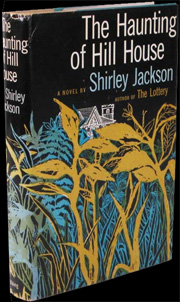
WHEN I FIRST SAW Robert Wise’s THE HAUNTING, which was adapted from Shirley Jackson’s novel The Haunting of Hill House, I had a writerish reaction: how dare they change her book so much? It wasn’t until I saw the movie the second time that I realized how brilliantly the novel had been adapted for the screen. If screenwriter Nelson Gidding had been faithful to every detail of the book, the result would have embarrassed everybody.
For this guest blog, I decided to write about the rocky road from print to screen, using the examples of NIGHT FLIGHT, THE THIRD MAN, and THE HAUNTING. (If anyone wants to know the alternate ending to THE THIRD MAN, just ask.)”
.
Night Flight
I don’t remember why I recorded NIGHT FLIGHT, but when I got around to watching it, I was surprised to learn that it had been kept out of circulation for more than 70 years because the author of the book on which it was based, Antoine de Saint Exupéry, hated it.
How Saint Exupéry was able to suppress this film for so long is a mystery. Why he did it is less of a mystery, at least to me. The movie makers were unfaithful. His book Vol de nuit was not on the screen. In its place was a good movie—smart, emotional, and tough, with spectacular aerial photography. But Saint Exupéry did not see the movie. He saw the book that wasn’t there.
.
The Third Man
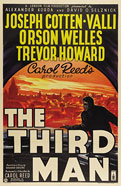
Graham Greene wrote THE THIRD MAN as a movie treatment in response to a specific request by British film producer Alexander Korda. When director Carol Reed changed the ending, Greene could have been offended. Instead, he recognized that Reed was right and thanked him publicly:
One of the very few major disputes between Carol Reed and myself concerned the ending, and he has been proved triumphantly right.
.
The Haunting
Nelson Gidding’s screenplay for the 1963 movie THE HAUNTING is a masterpiece of adaptation. Gidding was not all that faithful to Shirley Jackson’s The Haunting of Hill House, although Jackson was a major author and the novel was a best seller. He knew when to stay true to her intentions and when to ignore them.
What Was Kept
The House as the Star. Hill House is the source of the terror and the mystery. If you read the book, you will find elements that do not match up with the movie, but you will recognize that spectacular house in every detail.
Eleanor, the Main Female Character. Eleanor is the most tormented visitor to Hill House. She and the evil presence in the house are drawn to each other. If Gidding changed her, he would also have had to rethink the house. He left her alone.
What Was Changed
All the Characters Except Eleanor. Theo morphed into a lesbian. Luke became a character meant to provide comic relief. Dr Montague—a bookish scholar in the novel—became the charming, handsome, and witty Dr Markway. Dr Montague’s wife, too, underwent a major transformation (more on that below).
The Event That Pushes Eleanor Ever the Edge. In the novel both Eleanor and Theo pursue Luke. In the movie Eleanor falls for Dr Markway, who is married but keeps quiet about it and sees through her as if she were made of glass. When he rejects her, the humiliation is intense. By making Eleanor’s pursuit of Dr Markway delusional, Gidding sets up the scene where she loses her grip on reality entirely.
The Funniest Part of the Novel. This really is a loss, although Gidding had no choice. In the book Mrs Montague blazes into the house with a ouija board and an assistant named Arthur, ready to give the spirit inhabitants of Hill House perfect love and compassion. She has a session with the ouija board where the spirits definitely communicate and she definitely misunderstands them (the other people in the house understand perfectly, and are terrified). In the movie Mrs Markway is a no-nonsense debunker of all things ghostly.
If you watch THE HAUNTING this October, there is another change to appreciate. The novel takes place in June. Gidding moved the time to just before Halloween.
Lindsay Edmunds blogs about robots, computers, life in southwestern Pennsylvania, and sometimes books and movies at Writer’s Rest. She is the author of a novel about love in the age of artificial intelligence: Cel & Anna.
To celebrate their 20-years of hilarious success, the ABSOLUTELY FABULOUSgals have created three specials recently released to the U.S. market after airing to rave reviews on BBC. If you love Ab Fab, you need this in your stash of tv treasures.
Edina (Eddy), ditzy public relations agent, continues to struggle with aging; Patsy, her ever-stoned sidekick, continues to be confused. And Saffron (better known as Saffy) continues to be exasperated with the adults in her life.
One of the best things about my trip to Italy this summer was being introduced to the Aperol spritz. Three parts Prosecco, two parts Aperol (an orange-hued bittersweet aperitif), and a splash of club soda. It’s a perfect libation for that golden time of day when life slows down and people start to fill the piazzas.
With the long days of summer fading fast, it seemed like a good idea to enjoy a double feature of Italian romances, reflect a bit on my travels, and serve up the last of my Aperol stash. (I had discovered that I could buy it stateside at my local Binny’s.)
Our night was off to a great start with ROMAN HOLIDAY, the 1953 William Wyler classic starring Gregory Peck, Eddie Albert, and “introducing” Audrey Hepburn. (Her first film role for which she also won an Academy Award.)
This stunning black-and-white film, shot entirely on location, gives Rome itself a grayscale, velvety role. In a nutshell, this film is perfection — and Hepburn brings absolute magic to the screen. From the moment she appears, you cannot keep your eyes off of her. You witness a star being born.
The pseudo fairy tale tells the story of Hepburn’s bored but dutiful Princess Ann, who escapes her daily grind and hits the streets of Rome with reporter Gregory Peck and his sidekick photographer, played by Eddie Albert, who, by the way, steals the scenes playing this renegade character. Trouble ensues because Princess Ann doesn’t know that her newfound “friends” are just trying to get a big story about the missing princess and give their careers — and their wallets — a big boost.
But, of course, how could Mr. Peck not fall for Hepburn’s sheer loveliness, openness, vulnerability, and strength?
There’s a bit of an “ewwww” factor in the fact that Gregory Peck is too old for our sunny and beaming princess, but we can overlook that little matter. The two are delightful together, and there is impeccable honesty in their performances.
Unfortunately, this charming romantic comedy ends badly, and the princess chooses to head back to the castle. Love with a commoner is not to be. In the heart-breaking closing scene, Hepburn is all ceremony and steel as she says good bye, and she and Peck share looks that speak volumes of I-will-treasure-the memory-of-you-always sentiments. You keep thinking there will be a happy, fairy tale ending. You will be thinking wrong.
(It’s interesting to note that when ROMAN HOLIDAYwas released, Britain’s Princess Margaret was facing the same royal dilemma of having to end her love affair with a member of the common class. What a brilliant bit of serendipity to tie a movie promotion on!)
After we dried our eyes and refilled the spritz glasses, we looked forward to the second film in our lineup, ROME ADVENTURE(1962), starring Suzanne Pleshette (in her first film role too), Troy Donahue, Angie Dickinson, and Rossano Brassi. I remembered seeing this film as a young girl and I thought it was the most romantic movie ever. Sometimes memories don’t hold up.
Pleshette’s Prudence, a librarian at a girls’ school, starts out strong and compelling. After being reprimanded for lending a student a book that the administration considers obscene, Prudence resigns in that singular husky voice of hers and says, “I’m going to Italy where they know what love is about.”
So off she goes across the sea seeking an understanding of what it means to surrender to love and passion. Before she even gets to Rome, Prudence attracts two suitors, a young American and a middle-aged Italian, who present extreme options — one is too immature and inexperienced and the other is too old and uninspiring. She’s looking for someone who is “just right.” Enter the brooding Troy Donahue who looks cute in his red sweater and matching red Vespa (just like a Ken doll), but he certainly is dull and clueless. And as we say now, he is strikingly “emotionally unavailable.” Poor Prudence.
In spite of an intriguing setup — and a heavy dose of Technicolor glamor that especially suits a slutty and manipulative Angie Dickinson — writer and director Delmer Davis (of SUMMER PLACE fame) somehow loses focus. Prudence devolves from being a confident and curious young woman to being an unsure and silly girl. Her quest to understand lust and love goes flat.
It soon became apparent to us that this was going to be one of those film-watching experiences where there would be some wisecracking and collective groaning going on. About the same time we realized that the film was leaning more toward campy than classic, we also starting noticing interesting touches of the color orange appearing on the sets. An orange pillow here, an orange scarf there, an orange plate, an orange vase — the same striking color of our Aperol spritzes.
How could we not have a movie drinking game? So it was agreed: Every time there was a splash of the color orange on the screen, it was time to savor your spritz.
It was a great way to pass the time as Prudence and Don (the Donahue character) go off on a journey to tour the stunning Italian countryside. As Prudence wrestles with her carnal desires and her need to protect her virtue, the film becomes more of a travelogue. And what great fun for me to see so many of the places I had just visited — Orvieto, Lake Maggiore, the Dolomite Mountains. There is even big drama at the Piazza Erbe in Verona, which was the exact place I encountered my first Aperol spritz. What a coincidence!
One of the oddest scenes is a creepy cameo by trumpet player Al Hirt who has his date parade her stuff in a tight dress for the benefit(?) of Prudence and Don. An ensuing bar fight is priceless in its inanity.
But there is a lovely score by Max Steiner, and one of the most romantic songs in the world, Al Di La.
In both films, the young women learn about the trials and tribulations of love, and serious mistakes area made. In ROMAN HOLIDAY, Hepburn probably shouldn’t have forsaken Gregory Peck for her royal duties. Ditto in ROME ADVENTURE. By the time Pleshette’s Prudence gets the guy she thinks she wants, you know she’ll eventually realize that she’s making one of the worst choices of her life. (In a case of life imitating art, Pleshette and Donahue married after making this film, and the marriage lasted about a month.)
What we learned during this double feature is that romantic miscalculations can be made a little easier to bear with a few Aperol spritzes.
Salute!
Gloria Bowman is a writer, storyteller, blogger, movie lover, freelance editor,
and author of the novel, Human Slices.
Access her blog at www.gloriabowman.com; on Twitter @GloriaBow
One of the problems with having a projection system is that if the video isn’t in high definition it can look pretty dingy. However, sometimes visual quality doesn’t matter. I use a Roku to stream my video to my projector. I love the wide array of channels, many for free. The best of the lot is a channel called Pub-D-Hub.
Pub-D-Hub specializes in all things Public Domain. From movies to radio and television shows, and even industrial/school films such as ‘How to Date’… A lot of these films are available on YouTube and Archive.com, but Pub-D-Hub categorizes them and makes them easy to scroll through.
This Saturday I ventured into their Television section. Along with old episodes of The Andy Griffith Show and Beverly Hillbillies were a bunch of shows that I’d never heard of… some for good reason. I had a few people over, so I decided to play ‘let’s watch a random television show’. First Dan saw a show he hadn’t watched since he was a child in the 1960’s. “Sky King“.
This show goes by the premise that you can make a cowboy show, except instead of a horse our hero flies a plane. “Songbird”. The one we watched moved quickly and was about a couple of vicious but inept highway robbers. High jinx ensues with our Sky King having to fly Songbird through a valley of mountains with no gas. “Look out for that mountain…’ Sky King’s sidekick warns. Video quality: C-minus; Crowd pleasing scale: B-minus. Although it is entertaining, its still a routine cowboy show.
We then watched Ding Dong School.
Ding Dong School was the ‘nursery school of the air’. One of the first children shows of its kind that tried to teach as well as entertain. The school’s head teacher Miss Francis shows how to blow bubbles, make rabbits out of handkerchiefs, and most of all tells us that we need to tell our Mommies to buy us Kix cereal for breakfast. Fellow viewer Dean was not a good student and thought it was horrifying. I but I was transfixed by the complete calmness of Miss Francis who really seemed to want to teach children how to blow bubbles.
Video Quality: B+. Crowd Pleasing Scale: C-minus. Historically interesting, but at 30 full minutes you can only hear about how good Kix is for so long. The commercials were at least one-third of the show.
We then watched Stump the Stars. One of the most frustrating game shows I’ve ever seen.
In this show, Jeanne Crain and Ed Begley were the guest stars with regulars, Beverly Garland, Hans Conried, Ross Martin, Ruta Lee, Sebastian Cabot. Viewers write in a charade phrase that the stars have to guess in 120 seconds. This is Olympic style charades. The have to figure out not just the name of a book or play, but riddles, puns, parodies, and even a viewers address. The game moves so fast that I found it unbelievable that anyone could have gotten anything right. But how many chances to get to see Ruta Lee play charades with Hans Conried.
Video Quality: B. Crowd Pleasing Scale: B-minus. It was interesting for about ten minutes, then it just became exhausting. It just comes down to that charades is not fun to watch.
But I urge you if have a Roku to check this station out. Lots of fun video to dig through.
Several years ago I held my own personal one-person film fest through Netflix. One day after watching The Odd Couple, I put in every single film that starred Walter Matthau or Jack Lemmon. Even though a fraction of Matthau’s 104 Jack Lemmon’s 97 film or television appearances were on DVD and available it still took months to watch them. It was a great film adventure which got me to watch some wonderful films with Jack Lemmon such as Glengarry Glen Ross, Missing, Tuesdays with Morrie; and Walter Matthau in Charlie Varrick, House Calls, The Laughing Detective, Hopscotch.
After I’d squeezed every last bit out of my queue my conclusion was that Jack Lemmon movies were overall better films, and Walter Matthau was in a bunch of terrible films, but always seemed to rise above the materal.
So I was a little surprised to run across Walter’s craggy face on Netflix streaming in a movie called Movers and Shakers (1985). It went to the top of my list of must sees; it has a pretty interesting cast: Charles Grodin (who wrote it), Gilda Radner, Vincent Gardenia, Bill Macy (Walter from Maude), Tyne Daly. It clocks in at just an hour and twenty minutes. I figured this had to be a quick wild romp.
Let me tell you, its a very, very long eighty minutes! This movie falls flat on so many levels I don’t know where to start… But I must start with the star and writer whose shoulders this leaden so-called comedy must fall. I’m sure Charles Grodin is a smart guy; I read one of his auto-biographies and found him to be funny and insightful, so how could he write a movie that doesn’t have one solid laugh in it?
The plot goes like this… Matthau plays an executive at a major studio, Gardenia is dying and tells him to make a movie out of a sex manual called Love and Sex. Grodin is a writer who hasn’t had sex in years because his wife Tyne Daly just stares into space when he talks, Bill Macy is an insane director and Gilda Radner is his cheating girlfriend.
Gilder Radner screams at her agent for putting her in this movie.
Like Luigi Pirandello’s Seven Characters in Search of an Author, all our players just wander around from scene to scene, sometimes by themselves, sometimes in groups; they sit in a conference rooms and talk about what ‘positions’ should be in the movie, they go walk along the beach, eat ice cream, go for a ride in a limo, sit and watch old movies. Maybe Charles Grodin is a genius, because he wrote a pointless, humorless, flop film desecting the process it takes to make terrible movie. The moral of the story is that its amazing that any movies get made at all because everyone is so incompetent.
Steve Martin is one wild and crazy guy whose name isn’t in the credits
One of the high (low points) in the film is where all the characters go visit an aging silent movie star named Fabio, played by an uncredited Steve Martin. Steve wears a Bea Arthur wig and a smoking jacket and does his ‘wild and crazy guy’ voice while getting Guava juice for everyone. Meanwhile, Penny Marshall in a negligee runs through the scene shreeking and ordering everyone out of the house. This is ten minutes of the running time of the film. Why do they visit him, who knows, he’s not going to be in their movie, he’s just there and then he’s gone. Then Grodin and Macy run along the beach, Tyne Daly reads a book. Gilda makes funny faces. All the while holding this mish mash of random plotlines together is the droning voice of Charles Grodin a la Blade Runner explaining who everyone is, what they are doing, and why we should be interested.
The voice over is non-stop.
Seriously non-stop!
Tyne Daly demonstrates the audience reaction to Movers and Shakers
And as if to throw salt on our wounds the film ends with a musical montage of Charles and Tyne being playful on the beach while Stephen (Tootsie) Bishop sings “Can’t We Go Home Again” which must have been in the thoughts of the poor audience members who saw this stinker in an actual theatre.
However, riding the wave of this cinematic equivant of a flooded basement is Walter. He smirks delivering his lines like a wise, old owl, while thinking, ‘I don’t know why I’m saying this inane dialogue, but I got top billing and a check!’.
And speaking of check. Check one more off my Walter Matthau list…
What do we make of the coincidences, synchronicities, signs, and symbols that appear in our daily lives?
Just the other night as Chicago’s Grant Park Symphony began its outdoor concert, a very tall woman with very high, tightly curled hair rolled by on her mobility scooter, made a sudden right turn, and parked directly in front of me, unapologetically blocking my view.
The next night, I was watching Donald Sutherland in the 1973 classic thriller DON’T LOOK NOW. He was sporting the same sort of big tight curls that the woman had from the night before.
What did it mean to see two such improbable hair-dos in just 48 hours?
I still am wondering, waiting, and watching.
I had seen the film DON’T LOOK NOWby director Nicolas Roeg almost 40 years ago, and I remembered it mostly for three reasons — (1) there was an incredibly hot sex scene (which is still a hot, by the way); (2) that I didn’t understand what happened; and (3) there was a surprise appearance by a freaky dwarf with freaky makeup.
I wanted to see this movie again because I was recently waxing about the stunning and bright beauty of Venice as it was filmed in the 1955 love story, SUMMERTIME. In DON’T LOOK NOW, I remembered that Venice was portrayed as sinister, dangerous, damp, and dark. Which version of the city was right?
And that is the enigma of the narrative in DON’T LOOK NOW. Which version is right? Do we really understand what we are seeing, what we are experiencing? The story, based on a novella by Daphne du Maurier, reminds us that it’s always smart to beware…that the signs are there. But you just may get them wrong.
In a nutshell, the idyllic marriage of John (Donald Sutherland) and Laura (Julie Christie) is shattered by the drowning death of their daughter. Prior to his daughter’s death, Sutherland’s character has a prescient moment and senses that something bad is about to happen. He is too late.
Fast forward past mourning, and the couple is in Venice where John is overseeing the restoration of a cathedral. They meet a duo of sisters, one of whom is blind and possesses the gift of “second sight.” She feels that Sutherland’s character also “has the gift.” And she understands his struggle with accepting this burden. “It’s a curse and a blessing,” she says. She tells the couple that she sees their deceased daughter, who is now with them, and that the little girl is happy, but her spirit is also warning them to leave Venice. John scoffs. But later, when he does give in to this idea of having “second sight,” his interpretation of what he is seeing is dead wrong. The foreboding image he witnessed at the beginning of the film, which he thought was about the danger facing his daughter, was really about a danger facing him.
The atmosphere, the mystery, and the intrigue make it a pleasure to take a look again at DON’T LOOK NOW.
I just have to figure out what the hair thing is all about…..
Gloria Bowman is a writer, storyteller, blogger, movie lover, freelance editor,
and author of the novel, Human Slices.
Access her blog at www.gloriabowman.com; on Twitter @GloriaBow
Fearmakers (1958) is the second collaboration between Jacques Tourneur and actor Dana Andrews. The first being the great horror classic Curse of the Demon. Fearmakers takes on another demon from 1958, another unseen menace: Communism! And eerily portends the state of American politics today.
The plot in a nutshell, is that Andrews is a POW coming back to work at the PR company he founded, only to find that its just crawling with communists! In fact, everyone that dear Dana meets is a Communist. From the blathering old man on the plane, to a blousey blond running the boarding house, even a nerdy Mel Torme, are all trying to push the communist agendas and destroy America from within.
A Commie nuclear physicist nearly bores Dana Andrews to death
The movie is pretty campy. It looks and feels like a long television episode of a 50’s drama, i.e, Perry Mason. Dana Andrews barely registers an emotion on his face; and his voice is a long drone, to the point where viewers joining me for this Sunday night noir where dozing off for the first half.
If you can’t trust this floozy, who can you trust?
However, the theme of the movie is amazingly timely; almost frighteningly so… The message is heavy handed, delivered in long, long speeches. (The plane ride with the old man clocks in at 7 minutes, lunch with a senator nearly ten!) We, the audience, are warned over and over, that if the same methods that are used to sell soda and cigarettes are used to sell politicians than the American way is doomed. Especially if “the Communists” start putting out false information to change the public minds about political candidates.
Mel tries to see through his coke bottle glasses
As Dana Andrew’s character says, “Most people from main street to Madison avenue will go with the majority…” Is this Karl Rove’s favorite movie? The character of the senator warns about ‘professionally packaged groups lobbying congress with big money behind them to change the laws and distorting the voice of the people’. The Communists are trying to get the U.S to stop making nuclear bombs so they will become a weak nation, so that North Korea can take us over… or something like that.
Fearmakers is not a good film by any means, but I’d highly recommend it for its camp moments and historical value. It feels like filmmaker Jacques Tourneur was trying to warn us about the culture of the media/public relations today. If you tell people a lie enough times they’ll believe it, get enough people to believe it then you have everyone else going along with the majority. Trust no one… not even Mel Torme!
When I told a friend I was going alone on a trip to Venice this summer, he said, “Oh, you’ll probably have this great affair just like in the movie SUMMERTIME.” I remember laughing and having a vague recollection of Katharine Hepburn falling in love, wandering along the canals of Venice with handsome Italian Rossano Brazzi.
Unfortunately, an affair like theirs didn’t happen to me when I was there.
Fortunately, however, this 1955 classic film, directed by David Lean, perfectly captures the essence of Venice and the experience of being a woman of a certain age traveling alone. I watched this film after my trip. I wish I would have watched it before I went.
The film is a cinematic stunner, a love letter to one of the most romantic and surreal cities in the world. Every scene captures the light, the air, the visual magic of Venice — and also its timelessness. The train speeding across the canal, the jumble of people boarding the water taxis, tourists wandering down the narrow streets, the rows of palaces, the breathtaking expanse of Piazza San Marco, the white coated waiters at the cafes, and of course, the canals and the sparkling water. Nothing much has changed. Venice is the same today as it was in 1955, which is just like Venice was in 1455. It is “The Eternal City.”
And the story of people searching for love is eternal as well.
Miss Hepburn is remarkable in her portrayal of Ohio secretary Jane Hudson. She is a self-sufficient woman, who saved her money so that she could take her dream vacation. With her movie camera in hand, she is spirited and gutsy, beautiful and charming, excited about the adventure that awaits her.
She also realizes there is a bittersweetness attached to solo travel when her landlady asks, “You don’t mind traveling alone?” Jane likes it, she says. She is an independent soul. But there is also a slight sting with the question. It would be better if such a lovely experience could be shared. She is vulnerable, yes. She is open to possibilities.
Hepburn is nervous about her attraction to Brazzi as they first meet at an outdoor cafe. She is drawn to the potential affair but she also resists. When Brazzi tells her that “It’s better to take home more than Venetian glass,” you know that the fireworks will eventually happen. With her free spirit in force, she considers the pro’s and con’s and then goes after what she wants, transformed by the romance that beckons. She buys a lovely pair of impractical shoes, and like Cinderella, she becomes the beautiful princess. Violins play. You root for the both of them.
The only way for their love to remain as eternal as Venice, they have to part. Jane knows that she has a life back in Ohio. And she knows that her lover has a life in Venice. She ends the affair on her own terms.
If I had re-watched this film before I went on my trip, maybe it would have gone differently. I would have stayed longer in Venice. I would have tried harder not to feel so conspicuous and awkward sitting alone in the Piazza San Marco (along with so many other middle-aged ladies). And I would have bought those red shoes that I wanted. Maybe they would have been as magical as the ones that Hepburn’s character buys.
Gloria Bowman is a writer, storyteller, blogger, movie lover, freelance editor,
and author of the novel, Human Slices.
Access her blog at www.gloriabowman.com; on Twitter @GloriaBow
So there’s this show. It’s apparently about drugs. Dwelling on the drug culture, watching shiftless, troubled kids get high. Violence, death. Sounds depressing. My impressions led me to say, this isn’t quite like the way I’d want to spend an hour at 9 p.m. on a Sunday night. MAD MEN, yes, absolutely. But not this. And so I never tuned-in to BREAKING BAD.
Meanwhile, friends would recommend various shows to me. DEXTER, THE WIRE, ROME, HOMELAND, BOARDWALK EMPIRE. I tried but couldn’t get into BOARDWALK EMPIRE. The others, particularly HOMELAND, I definitely will be checking out.
As BREAKING BAD was available via Netflix Instant, I broke down and gave Season 1, episode 1 a try. And so there was this desperate-looking, middle-aged guy in his underwear, standing in a desert next to a beige RV. Well, I don’t know. But by the end of the show, I was a little bit intrigued. At the conclusion of episode 2, I was hooked forever.
That was about seven weeks and 40 episodes ago. Last night I watched episode 6 of season 4 (seasons 1-4 are available on Netflix and elsewhere; season 5 is currently running on AMC, and will be the show’s last ).
I can’t imagine having one-week interludes between new installments, let alone waiting nearly a year for a new season. Well, actually I don’t have to imagine that, because it is actually what I’m currently doing with the aforementioned MAD MEN.
Actor Bryan Cranston, who plays Walter White (aka “Heisenberg”, the lead character in BREAKING BAD) is truly terrific. Basically just a regular guy, his deadpan, slightly annoyed-and-perturbed, slow-boil style is a hilarious and tense contrast to his angry young partner Jesse (Aaron Paul). It gets even better with Walt’s son (RJ Mitte, who, like his character, Walt, Jr., has mild cerebral palsy), Walt’s wife (Anna Gunn) and a great supporting cast.
Like with Norman Bates or Tony Soprano, it’s amazing how the human mind can often feel sympathy for a person who is doing bad things, if we know their life story and their motives. The disturbed Norman, of course, loved his mother to the point where he’d kill on her behalf. Tony was a real family guy, but he was raised to see murder and mayhem as the cost of doing business in Jersey. In Walter White’s case, his overriding desire is to provide for his wife and son.
At a dead-end, part-time job at a car wash, and in a thankless role teaching bored high school students chemistry, Walt finds an opening to use his skills to finally make something people really want. At the same time, Walt, like some spreading disease, has caused a chain reaction that affects many people–not always in good ways–and he has learned how to lie, to everyone. And to lie on top of lies. He is finally getting respect, and he’s making something of himself at last. But what is that “something”? I’m on my way to finding out.
Without spoiling anything, a clip from the show; a glimpse into the premise and tongue-in-cheek style of BREAKING BAD:
FAR FROM THE MADDING CROWD (1967) contains some of the most memorable scenes in cinema — including suicidal sheep and maniacal casket cracking. This epic love story is a near-perfect convergence of scene, score, story, and performance. The only thing that doesn’t work in this film is Julie Christie’s hair and makeup. Maybe it’s the frosted lip gloss. As in Dr. Zhivago, she just doesn’t quite seem historically accurate, although she is otherwise perfect.
Christie stars as Bathsheba, the unattainable catch of the English countryside, who struggles with her passion and lack of passion for the men in her life: Peter Finch as the desperate suitor, Alan Bates as the regular guy, and Terence Stamp as the hot bad boy. While Bathsheba struggles over finding the right man, she is also rolling up her sleeves to deal with the the trials and tribulations (and joys) of day-to-day farm life. She’s a flirt and a heartbreaker, passionate and vulnerable. She is also smart, powerful, and confident.
The film is based on the book of the same name by 19th century novelist Thomas Hardy. And although I love the book, watching the movie is way, way easier and more satisfying than slogging through Hardy’s heavy prose.
When I read that there was a remake of MADDING CROWD as a “romantic comedy,” I couldn’t help but be curious. The only thing I’m curious about now is that someone thought that might be a good idea.
TAMARA DREWE (2010), starring Bond girl Gemma Arterton, boasts better historically accurate hair, but the film is flat and dull as it traces Ms. Drewe’s quest to find love among her choice of uninteresting village men. So much for a laugh riot take on a classic.
I was so hopeful with the opening of this film, which begins with a classified post advertising a country writers’ retreat that is “Far from the madding crowd.” But the film is all downhill from there. Homage to Hardy abounds — but is it really funny when one of Tamara’s suitors is trampled by stampeding cows? If there were a Monty Pythonian take on it, perhaps.
There are a few clever takes on the classic-to-contemporary theme, like casting a rock star in the role of a typical Hardy bad boy, and instead of misunderstood letters there are missent emails. But if you’re looking for a few romantic comedy laughs, you won’t find them. Better to watch the original drama instead.
Sadly enough, FAR FROM THE MADDING CROWDwasn’t released on DVD until 2009, so I think it’s been missed by many home theater fans. The trailer for the film is far from compelling (and you get to see why Julie Christie seems to be a time traveler instead of a 19th century beauty). Nonetheless, if you enjoy period dramas, tragic love stories, rain, and the English countryside, you’ll enjoy FAR FROM THE MADDING CROWD. A romantic “comedy” remake of it? Not so much.
Gloria Bowman is a writer, storyteller, blogger, movie lover, freelance editor,
and author of the novel, Human Slices.
Access her blog at www.gloriabowman.com; on Twitter @GloriaBow
Not just another WordPress.com site, but an extraordinary place to spend a weekend, grill a cheese sandwich and watch a film to improve your life and stimulate a few of the grey cells.


















 Home Projectionist