SOMETIMES A MOVIE SURPASSES its source material, as PSYCHO does.
Sometimes a movie uses its source material as a launching pad, as CABARET does.
Then there’s James Joyce’s short story “The Dead” and John Huston’s movie THE DEAD.
Rarely are a movie and its source material such well-met equals.
My God, this movie is good.
The Book (1914)
“The Dead” is the closing story in a collection by James Joycecalled The Dubliners. This collection had a long strange trip to publication, being rejected eighteen times by fifteen publishers. One time it was accepted and then rejected because the printer found one of the stories objectionable and refused to set it. Another printer burned the proofs.
The story starts with guests arriving at a party given by two unmarried sisters, Kate and Julia Morkan, on January 6, 1904—the Feast of the Epiphany. It ends in a Dublin hotel room, where the nephew of Kate and Julia, a college professor named Gabriel Conroy, sees himself suddenly as “a pitiable fatuous fellow.”
His wife Gretta has just confessed a passionate affair in her youth with a boy named Michael Furey, who died for love of her. What stirred Gretta’s memories is a song she heard at the party, “The Lass of Aughirm.” Her lover used to sing it to her.
As he watches Gretta sleeping, Gabriel perceives that he does not know her, this woman with whom he lives and with whom he has had children. He never felt toward any woman the passion that Michael Furey felt toward her.
Snow continues to fall. Gabriel imagines the death of his aunt Julia, who is frail, and the death that comes to all. He feels his soul approaching “that region where dwell the vast hosts of the dead.”
“The Dead” has the reputation of being one of the finest short stories ever written. It does not seem to be doing anything remarkable as it goes along—it is difficult to pinpoint its artistry. But it builds upon itself and ends in a way that you know is brilliant, even if you cannot explain why.
The Movie (1987)
John Huston directed 37 movies over a 46-year career. THE MALTESE FALCON was the first. THE DEAD was the last. He mostly had to direct the movie from another room, speaking to the actors through a microphone. He strong-armed the angel of death all through filming and did not live to see it released.
John Huston had Irish citizenship and lived in Galway, Ireland, for twenty years. He lived a rich and colorful life. In 1987 he was eighty years old, used a wheelchair, and needed oxygen. All these made him the perfect director to bring this Irish story about passion and death to the screen.
The opening shot is of a Dublin street in blue winter light. There is a soft, welcoming glow in the windows of a tall townhouse—the place where the guests gather. At the party, they have easy, polite conversations, except when the subject of music comes up. Music calls up another life entirely—more emotional, less amenable to reason.
A guest recites a poem called “Broken Vows.” (“You have taken the East from me. You have taken the West from me.”) It brings all conversation to a stop and prefigures Gretta’s encounter with the melancholy song that reminds her of the lover who died.
The movie has a delicate, beautiful score by Alex North.
Where it is going
Toward the end of the film, Gretta Conroy (Anjelica Huston) stands on the stairs listening to a tenor named Mr D’Arcy sing “The Lass of Aughirm.” She listens as if in a trance. Her husband Gabriel (Donal McCann) stares at her, not understanding.
Later that night in their hotel, Gretta tells Gabriel about her first love, Michael Furey. The scene, which plays out via two monologues, first hers and then his, is a powerhouse.
Where you can see it
Netflix, Amazon, iTunes, and Vudu, and YouTube have it for sale or rent. Amazon Prime members can watch it for free.
The story of the movie
YouTube has several clips available, including “The Lass of Aughirm” scene (another powerhouse). Here is the official trailer.
But there is another trailer, a commentary by Dan Ireland. He was head of acquisitions for Vestron Pictures, which produced the movie after initially passing on it. Ireland talks about how the movie got made and why he thinks it is great. (“It’s a tea party, but it’s John Huston’s tea party.”)
Lindsay Edmunds blogs about robots, writing, life in southwestern Pennsylvania, and sometimes books and movies at Writer’s Rest. She is the author of a novel about love in the age of artificial intelligence: Cel & Anna.
In Otto Preminger’s 1968 film SKIDOO, actor Austin Pendleton talks Jackie Gleason through an LSD trip and smokes pot with Groucho Marx.
What a mind-blowing way to start his film career.
“Here’s a movie that was made all those years ago, and it’s still controversial and being talked about. That’s sort of amazing,” Pendleton said in a recent interivew with HOME PROJECTIONIST.
“I mean, the majority of movies you make are just forgotten. People don’t even know what you’re talking about when you bring one up.”
Madeline Kahn with Pendleton in What’s Up, Doc? (1972), Warner Bros. Photo: movieactors.com
If you bring up Pendleton’s name, some moviegoers will respond, “Oh, I loved him in WHAT’S UP, DOC?” — or fill in the blank with another title in the long list of his films.
Others will say, “Austin who?”
“Oh, that’s all right,” Pendleton said in his self-deprecating style.
Over the years, it would have been hard to miss seeing Austin Pendleton on the silver screen. He’s brought his distinctive presence and talent to more than 40 feature films — plus stage and television — during a prolific career that’s still going strong. He’s kind of a national treasure. (See below for more on Pendelton’s career.)
AN INAUSPICIOUS BEGINNING
Austin Pendleton Photo: Steppenwolf Theatre
As soon as Pendleton settled in at his dreary motel near Paramount Studios to start work on SKIDOO, all he wanted to do was turn around and go back to the stage in New York.
“SKIDOO was the first time I ever played a part of any size at all in a film,” Pendleton said.
“When we first began to shoot, I thought, ‘Oh, I don’t know how to do this.’ I mean, for the first week I would call my agent in New York and I would say, ‘I gotta get outta here. I don’t know what I’m doing. I don’t know how to function in front of a camera.’ And my agent would say, ‘Well, dear, you just can’t get out of a film.'”
With no easy escape route, Pendleton continued to endure Preminger’s demands and tirades. “You’re an amateur,” Preminger railed to the struggling actor one day.
“We were about a week into filming,” said Pendleton, “and at that point, I just agreed with him. I said, ‘Yes, I know I’m inexperienced, Mr. Preminger. I really don’t know what to do.'”
Pendleton’s words of resignation instantly transformed the difficult director. “From then on, Otto took me under his wing,” Pendleton said. “He taught me just about everything I know about film acting. ”
“He was very kind and patient. Before each scene was shot, he would talk to me, mainly about how every take was like an opening night in the theatre, and I found that very helpful, since that was what I was most familiar with. He talked about how important simplicity was. He told me to just keep it small, to talk and listen, essentially, not to act too theatrically.
“He would repeat these things over and over to get them into me. And it meant so much that he was taking the time to do that. As an actor, I still call upon what Otto taught me.”
With Preminger’s coaching and support, Pendleton created the memorable SKIDOO character of Fred the Professor, an endearing, low-key, mastermind hippie whose stash of LSD changes everyone’s lives…for the better.
A LOVE IT OR HATE IT THING
Critics and movie fans have called SKIDOO all things scathing — a train wreck, a hot mess, a hatchet job.
It’s also been praised by its evangelists as being one of the most delightful, must-see films of all time.
“You know,” Pendleton said, “I sort of still don’t know what I feel about it. I certainly am happy I made it because I got to know Otto Preminger. That was wonderful. But there are two schools of thought about SKIDOO. One is that it’s a total disaster, an embarrassment, infamous, and all of that.
“On the other hand, there are a lot of people, either I know or know of, and who I’ve read on the subject who seem to be very intelligent, who just love that movie. It has a real following.”
Once you see SKIDOO, you can’t ever forget it. It’s a comedy that’s not a comedy, a spoof that’s not a spoof. Literally, it’s a “trip” — enigmatic, to be sure, blundering and odd, yet also rich with well crafted and executed scenes that will feed your head for a long time.
You’ll be asking yourself: “Did I really just see Carol Channing dancing in her underpants and see-through bra? Did I really just watch Jackie Gleason ingest LSD and hallucinate a vision of mathematics?”
In a nutshell, the plot is wacky. Tony (Jackie Gleason) is full of existential angst because he’s wondering if his wife Flo (Carol Channing) has been untrue and if he is really the father of his daughter Darlene (Alexandra Hay).
He’s also been called upon by God (Groucho Marx), the head of his old mob outfit, to knock off Blue Chips (Mickey Rooney) in Alcatraz because of an upcoming investigation in which Chips is going to testify. Tony doesn’t want to do the hit, but he finally agrees after discovering his friend Harry (Arnold Stang) in a car wash with a bullet hole right through his head.
How’s that for a comedic setup?
Tony has other trouble brewing as well. The hippies have come to town, and daughter Darlene has taken up with Stash (John Phillip Law) and his crew of dope-smoking, body-painting anarchists.
As an incognito prisoner, Tony sneaks into Alcatraz to do the hit. He befriends his cellmate, Fred the Professor (Austin Pendleton), a long-haired draft dodger. When Tony realizes he won’t be able to get to Blue Chips because of tight prison security, he and the Professor devise a scheme to escape from prison in a makeshift hot air balloon, oh yes, while all of the guards and the other convicts are happily hallucinating.
In the meantime, Carol Channing, dressed in a Napoleonic admiral suit, bugaloos and breaks into the SKIDOO theme song (by Harry Nilsson), leading a flotilla of hippies to rescue her daughter from God, who is hiding out on his yacht in the Pacific Ocean.
Most hilarious — and historic — is the closing shot where we find Pendleton and Groucho, now serene as Hare Krishnas, making their getaway in a psychedelic sail boat. After Groucho takes a hit off a joint, he utters what will end up being his last line ever in a movie: “Mmmm…pumpkin.”
“Doing that scene,” Pendleton said, laughing, “was one of the most delicious parts of the whole experience, you know?
“We were on location, by the ocean. We had dinner the night before, and everything Groucho said was funny, in a relaxed and inviting way. We talked about all kinds of things, mostly related to the acting profession.
“Looking back, I guess I was relieved that the last scene was being shot. But more than that, I was having a wonderful time at dawn with Groucho Marx. It was heaven, actually, exactly what you’d think it would be like.
“As soon as I got back to New York, I told everybody about that scene. In fact, I still tell everybody about it.”
CHANGING SCRIPTS & VISIONS
Preminger needed a film in 1968. He was facing a contractual obligation to get a movie completed by the end of the year. He chose the SKIDOO script, which was written by screenwriter Doran William “Bill” Cannon. Cannon asked the director to cast his friend Pendleton in the role of Fred because he had written the part specifically for him. Preminger met Pendleton and agreed.
“I think the script of that movie was pretty good,” Pendleton recalled. “I think Otto was not exactly the right director for it. It should have been somebody like Brian DePalma, who was very young then and who was making those counterculture movies. It should have been directed by somebody like that. On the other hand, Otto is a very original director, you know. What he does is very striking.”
Script changes were relentless. Cannon had written a “love, peace, and sunshine” script, and Preminger ended up making it something else, something still indefinable. He contributed to the jumble himself with his own script changes and brought in other writers as well, including Mel Brooks, Rob Reiner, Elliott Baker, and Stanley Ralph Ross, who was the writer for the BEACH PARTYmovies and several episodes for “The Monkees” and “Batman” television series. The film certainly shows his influence.
[Trivia buffs like to note that the SKIDOO cast includes Batman villains The Riddler (Frank Gorshin); The Penguin (Burgess Meredith); and The Joker (Cesar Romero). Otto Preminger himself played Mr. Freeze.]
Once Preminger established a relationship with Pendleton, he expanded his role as Fred the Professor. “That kind of knocked me out,” Pendleton said. “I wanted to be done with the whole thing. Although Otto was brilliant, there was this sense of despair on the set. What was happening didn’t seem to be really igniting.”
Pendleton said he learned from his later film experiences that there is often a sense of anxiety and fear during filming, and it doesn’t necessarily impact the success of a movie.
“I mean, it was true of the first few films that I did after SKIDOO. CATCH-22and WHAT’S UP, DOC? are both terrific films, but difficult in the making. On the other hand, sometimes the set is heaven and the film just sits there in the end.”
Certainly Preminger wasn’t trying to fail or crank out a meaningless throwaway piece of work. In addition to the star-studded “old school” Hollywood cast of Gleason, Channing, Rooney, and Marx, Preminger added Frankie Avalon, Fred Clark, Michael Constantine, Peter Lawford, Slim Pickens, Richard Kiel, and George Raft. For cinematographer, he opted for Leon Shamroy, an 18-time Oscar nominee. He chose avant-garde designer Rudi Gernreich for costumes, newcomer Harry Nilsson for original music, and renowned Saul Bass for titles.
But what in the world was he trying to do?
“One of the most interesting things about SKIDOO,” said Pendleton, “is that it’s a comedy with a dark, even sad, pull under it. Jackie’s got a comic persona and everything, but he’s depressed. So these comic and serious qualities are pulling against each other and pulling together. That’s what creates something distinctive to Preminger, I think. He was no fool, you know. A different director would have emphasized the comedy.
“That’s Otto’s specific contribution to it. I think that combination of feelings is what gives SKIDOO a quality all of its own and why people want to see it again and again and again.”
A YEAR LACED WITH ACID AND UPHEAVAL
Preminger produced SKIDOO during a monumental crossroads in time. Old Hollywood was still hanging on while it tried to figure out what to do with the growing influence of the counterculture on everyone’s daily lives and the film business itself.
“It’s important to remember that SKIDOO was filmed in that momentous spring of 1968,” Pendleton said, setting the stage for the film’s place in history. “In the middle of our shoot, Martin Luther King was assassinated, and before that was the withdrawal of LBJ from the presidential race and the primaries and all of the Viet Nam protests.
“We shot on the Paramount lot, and at the end of each day Otto would invite a few of us to his office and pour some vodka, and we would talk politics. Otto would lead the discussions; he was a famous liberal. Well, everyone there was a liberal, and that spring of 1968 was at once exhilarating and sobering, a mixture strongly reflected in Otto’s office on those evenings.”
That same mixture of exhilaration and sobriety is apparent in the film. While there were riots in the streets from Memphis to Paris, there was also an emerging counterculture of hope and new horizons.
The hippies intrigued Preminger. He was a 63-year-old classic Hollywood director turned hipster in a Nehru suit, and he was sympathetic to their cause. Straddling a cultural divide, Preminger had one foot grounded in his own history and generation while the other struggled to find a place in a groovy and cool world gone crazy with change.
Maybe he could find a bridge with lysergic acid diethylamide.
LSD’s appearance as a driving force in a movie certainly wasn’t strange in 1968. As TCM’s Millie de Chirico summarized in The Gist, “1968 in fact was a big year for acid movies. PSYCH-OUT, WILD IN THE STREETS, ALICE IN ACIDLAND, MANTIS IN LACE and others were released in the wake of Roger Corman’s THE TRIP (1967) and EASY RIDER (1969) was just around the corner.”
SKIDOO was created in the middle of them all. In preparation for the film, Preminger dropped acid with Timothy Leary (who appeared in the movie’s trailer). Likewise, Groucho Marx enjoyed a trip with Paul Krassner. All accounts tell of wondrous rides. (See reference links below.)
What made SKIDOO so different from the other acid movies of its time is that Preminger portrayed the LSD experience as a positive, liberating, empowering, and cathartic experience.
The movie still seemed “square.”
THE WILL TO SURVIVE
Paramount released SKIDOO in 1968 as part of a double bill with UP-TIGHT!
“On the set, even though I thought the film wasn’t quite working, I didn’t think it would be a catastrophe,” Pendleton said.
Nonetheless, due to scathing reviews and lackluster box office receipts, the film disappeared within weeks of its Miami premiere, sunk, buried, its memory erased, and it appeared that Paramount and the Preminger estate liked it that way. The film stayed out of view for many, many years.
“Oh, I remember the premiere very vividly,” Pendleton said. “People were walking out. And I remember thinking that they were wrong. I thought, ‘No way, it’s not a film you walk out on.’ We’ve all been in those and we’ve all seen those. It’s just not right.”
No one even talked about the movie at the gloomy after party. “It was so awkward and unpleasant,” said Pendleton. “I thought they were underrating the movie, but it was just the way it went.
“I put it behind me, flew back to New York, and kind of forgot about it. And it wasn’t too long after that that I did CATCH-22. The SKIDOO premiere was in late 1968, and I was shooting CATCH-22 in early 1969.”
Olive Films
SKIDOO was out of distribution for decades, a scarcity that increased demand and created a kind of mythology and mystery around it. It was a movie of its time whose time didn’t come until appropriately aged on the shelf.
Movie buffs coveted and shared bootlegs of it. In the late ’70s, it periodically showed up on cable and special screenings. New audiences appeared when TCM featured it, along with THE LOVE-INS, as part of its 2008 Underground Series.
At last, in July 2011 SKIDOO was released on DVD by Olive Films, followed by the Blu-Ray release of The Otto Preminger Collection in November 2012. The collection includes SKIDOO, SUCH GOOD FRIENDS (1971), and HURRY SUNDOWN (1967), which claims a spot in the book, TheFifty Worst Films of All Time.
PENDLETON AND SKIDOO: TOTAL ORIGINALS
“I saw SKIDOO again recently, ” Pendleton said. “I hadn’t seen it since it came out essentially, except once in 1997 at the Dallas Film Festival where they were going to have a midnight screening of it and they invited me down. I was in Los Angeles so I went there. SKIDOO was in a category called “Films You Love to Hate,” and I thought, ‘Wait a minute. I’ve flown all the way down here for that?!’
“They had me do a Q&A before it started. I told the audience, ‘Well, I haven’t seen the movie in years, and I’m looking forward to seeing it again.’ I said that I thought Otto was one of the great film directors, and they thought I was joking.
“Now that’s ridiculous. I mean the man made several classic movies, LAURA, ANATOMY OF A MURDER. Even the ones that aren’t classics, there are a lot of them that are, you know, very well made. Otto was much admired by a lot of people who are knowledgeable about the movies. A lot of actors do some of their best work in his movies. He’s very supportive and thorough with actors and he’s also difficult, so you get the pull of those two things.”
The festival audience still had to be convinced that Preminger was one of the greats.
“But then as I watched SKIDOO that night, after the Q&A,” Pendleton said, “I thought, ‘God, no, it doesn’t work.’
“But what’s good about the movie is that there isn’t anything else like it. It’s totally original. I just don’t think it works, that’s all. I don’t think it’s either this undiscovered classic or a disaster. I just think it’s this weird thing that doesn’t work.”
Pendleton paused and thought for a moment about the crazy movie that launched his film career.“And although SKIDOO‘s this ‘weird thing,'” he said, “it’s a film that still has its moments.
“That’s what I kind of love about it.”
_____________________
Postscript: Even the harshest critics of SKIDOO give high marks for Nilsson’s singing of the closing credits. It’s good in the movie, but it’s even better when Nilsson does it with an introduction by Otto Preminger in a “Playboy After Dark” segment.
MORE ON PENDLETON’S PROLIFIC CAREER
Pendleton has brought his inimitable presence to more than 40 feature films, including THE FRONT PAGE (1974); THEMUPPET MOVIE (1979); MR. & MRS. BRIDGE (1990); A BEAUTIFUL MIND (2001); and BAD CITY (2009) aka DIRTY CITY. His voice-over work includes Gurgle in FINDING NEMO (2003).
A long, long list of television appearances includes “Tales from the Crypt,” HBO’s “Oz,” “Law & Order,” “The Cosby Show,” “The West Wing,” and going way back, “Love, American Style.”
“I also direct,” Pendleton said,”so that keeps me busy a lot of the time. I do plays in attics. I’m kind of like a moving target,” he said. That’s a bit of an understatement. In the world of theatre, Pendleton is a well-respected and award-winning actor, playwright, and director whose presence is vast and still going strong.
In 1964, he originated the role of Motel the Tailor, singing the wonderful “Miracle of Miracle” in FIDDLER ON THE ROOF with Zero Mostel. He was nominated for a Tony for directing Elizabeth Taylor and Maureen Stapleton in the THE LITTLE FOXES.
Today he is still garnering rave reviews, currently starring in and directing the off-Broadway premiere of THE LAST WILL, by Robert Brustein. He recently directed Harold Pinter’s THE BIRTHDAY PARTY for Chicago’s Steppenwolf Theatre, where he’s been a member of the ensemble since 1987, and concurrently, a New York Mississippi Mudd production of SUDDENLY, LAST SUMMER. He’ll be back at Steppenwolf next season to direct TRIBES.
In addition to all of that, he teaches acting and directing at The New School in New York.
“Well, I do a whole lot of things,” Pendleton said. “I take a lot of work, and so that kind of keeps me going, and I try not to worry whether a role is going to promote my career or destroy it because you just simply can’t ever tell. But sometimes you can’t help worrying.”
Pendleton attributes his longevity and success to always being available and open to new work. “I think you have to follow your instincts and just go. That opens you up to a lot more things than if you tried to figure everything out. I guess thick-skinned and curious are the words I’d pick to describe myself. Sometimes I don’t pull off the thick-skinned part, though. I think everybody falls down with that one in this business sometimes.”
With support from an Indiegogo fundraising campaign, his students are producing a tribute to the man and his work with a new documentary, THE AUSTIN PENDLETON PROJECT: WHERE THE WORK IS. Set to be released this year, it’s described as Pendleton’s “five-decade journey…the colorful and dramatic life of this unsung artist…a portrait of the most famous actor you have never heard of.”
“You know,” he said, “I don’t know that much about it. It started out when two students of mine wanted to tape some of my classes. I sort of said ‘O.K.,’ although I got kind of nervous about it, but then it turned into this thing where they interview people.”
So far, the film includes interviews with the likes of Meryl Streep, Natalie Portman, and Laurie Metcalf, to name a few of Pendleton’s colleagues and biggest fans.
“I haven’t really seen any of it. I don’t think I should interfere with it because I would start trying to shape it in ways. I would start even if I resisted it,” he said, laughing.
IN THE QUEUE
Of all his movie performances, Pendleton’s favorites include: MR. AND MRS. BRIDGE (1990) with Joanne Woodward and Paul Newman and BAD CITY (2009), aka DIRTY WORK, where, Pendleton said, “I play the worst human being you can imagine.”
A special thanks to Austin Pendleton
for his time, kindness, and attention
and to Jeffrey Fauver of Steppenwolf Theatre
for making it happen.
Gloria Bowman is a writer, storyteller, blogger, movie lover, freelance editor,
and author of the novel, Human Slices.
Access her blog at www.gloriabowman.com; on Twitter @GloriaBow.
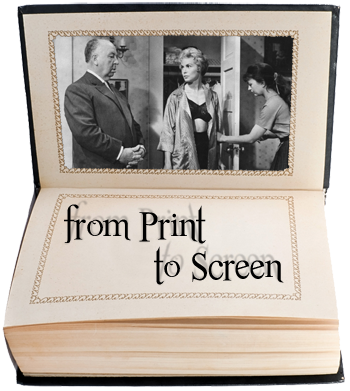
HERE IS SOMETHING you don’t know about Norman Bates if you have seen the movie but not read the book:
Along with his collection of pornography, he owns copies of A New Model of the Universe, The Extension of Consciousness, and Dimension and Being.
Something you don’t know about Sam Loomis, Marion’s boyfriend:
In the back room of his hardware store, he keeps a tiny FM radio to listen to classical music. (“But there was no one in Fairvale who would recognize either the music itself or the miracle of its coming.”)
Something you don’t know about Marion Crane (Mary Crane in the book):
Lowery, the man from who she stole the $40,000, once tossed a hundred dollar bill on her desk and suggested she take a little trip with him to Dallas (“three days’ rental privileges of the body of Mary Crane”). She did not do it.
The Book (1959)
Poor Robert Bloch. His agent sold the movie rights to PSYCHO for $9000. After the publisher, the agent, and the IRS took their share, Bloch got about $5000. For comparison, Bernard Herrmann was paid $34,501 to score the movie; Saul Bass, $3000 to design the title sequence.
It was a blind bid. Bloch and his agent did not know until too late that the buyer was Alfred Hitchcock.
Bloch writes in a monotone: everyone sounds like everyone else. (The exception is Norman Bates, for whom Bloch writes long interior monologues.) But the novel enjoyed good sales and good reviews, and won a major prize in 1960 from the Mystery Writers of America. It has slipped down in status to cheap pulp, a status it doesn’t quite deserve.
Its theme is the unknowability of another human being. This is Sam speculating about Marion:
Once you admitted to yourself that you didn’t really know how another person’s mind operated, then you came up against the ultimate admission—anything was possible.
The Movie (1960)
The movie and the book have the same plot. Even that peculiar coda in the mental institution came from the book, although in the book Sam talks about a conversation he had with the psychiatrist, and in the movie, the psychiatrist speaks for himself. Both book and movie have the same last line: “Why, she wouldn’t even harm a fly.”
However, Hitchcock and screenwriter Joseph Stefano made two big changes relating to the characters:
They made Norman Bates young and handsome rather than middle-aged and fat.
They turned up the heat under the relationship between Marion and Sam. That opening scene with them in the hotel room is not in the book—one of few places where the movie veers away.
That Shower Scene
The shower scene is not a Hitchcock invention. Marion’s death comes at the same early, disorienting point in both book and movie—and in more or less the same way.
A difference: in the book, Norman cuts off Marion’s head. As we all know, Hitchcock didn’t play it that way.
Another difference: Hitchcock waited, proportionately, almost twice as long as Bloch did to kill her off. In the 175-page paperback copy, the murder occurs on page 41. In the 109-minute movie, the murder occurs 47 minutes in.
Genius vs Talent
Hitchcock was the major talent; Bloch, the minor. That is why PSYCHO the movie made history, and PSYCHO the novel is remembered today mainly because the movie did make history.
The scene where Marion sells her car shows the difference between Hitchcock and Bloch.
In the movie this scene is tense. When Marion’s frightened, defensive behavior makes a highway trooper suspicious and he follows her to the used car lot, his presence symbolizes her guilty conscience. It is at that point that she starts to regret stealing the money. This scene sets up the later one at the motel when she decides to abandon her plan and go back to Phoenix.
Bloch handles this scene dismissively, in a single paragraph. Marion does not appear nervous or frightened. No trooper follows her. There is no emotional payoff. As if bored by the whole thing, Bloch has her trade her car not once, but three times in that single paragraph.
I wonder what Hitchcock saw in the novel. In his book Alfred Hitchcock and the Making of Psycho, Stephen Rebello offers various explanations. Hitchcock owed Universal a picture and thought PSYCHO would get the commitment out of the way quickly and cheaply. Hitchcock had competitors who were making scary, successful movies on small budgets and he wanted to show them he could, too.
Rebello speculates that “the fifty-nine-year old suspense maestro felt bullied by his brilliant present and past.”
Lindsay Edmunds blogs about robots, writing, life in southwestern Pennsylvania, and sometimes books and movies at Writer’s Rest. She is the author of a novel about love in the age of artificial intelligence: Cel & Anna.
A Christmas Carol was published in December 1843. By February 1844, it had three London stage productions. Charles Dickens himself did 127 readings from it.
Dickens was a theatrical, highly visual writer who was unafraid of emotion. Social injustice angered him. All these elements are in the book.
He knew what he had in Christmas Carol, judging by this letter to a friend (where for some reason he refers to himself in the third person):
[He] wept and laughed and wept again, and excited himself in a most extraordinary manner in the composition; and thinking whereof he walked about the black streets of London, fifteen and twenty miles many a night when all the sober folks had gone to bed. . . . Its success is most prodigious.
The first printing sold out in one day.
Three Movies
With Alastair Sim (1951)
This movie was rejected for a Christmas run at Radio City Music Hall because it was considered too “adult.” It did poorly in the United States, but was a hit in England. Filmed in black and white, it has a shadowy, otherworldly look.
Variations
Fan’s deathbed scene. In book Scrooge makes no promise to look after her son Fred. He is not at his sister’s side when she dies either.
What happens to Scrooge’s former fiancée. In movie she works at a homeless shelter, apparently unmarried. In book she marries happily and has a large family.
Tiny Tim. In movie he is cured of his disability. Dickens just says he does not die.
This clip shows Scrooge’s reconciliation with his nephew Fred:
With Reginald Owen (1938)
This movie was a hit in the United States, but did poorly in England.
When Scrooge gives Bob Cratchit a raise, you might wonder why he needs more money. He and his family look well fed and healthy, and their house seems solidly middle class. This infidelity to Dickens both sweetens and weakens the plot. As a poor family, the Cratchits’ goodness is heroic. When they are well off, the story turns toward sentimentality. The difference is major.
But it is a likable movie, with several fine performances. Its endurance as a holiday classic is easy to understand.
Variations
Marital status of Scrooge’s nephew Fred. In movie he cannot marry his fiancée without Scrooge’s financial assistance. In book Fred is a married man who asks/needs nothing of Scrooge.
Scrooge’s failed romance with Belle. She is not in the movie.
The children named Ignorance and Want. They no longer cling to the Ghost of of Christmas Present. Like Belle, they have disappeared.
This clip shows the Cratchits’ Christmas dinner:
With George C. Scott (1984)
This movie had a theatrical release in England, but was shown only as a TV movie in the United States. Respectful and mostly faithful, it honors the dark side of the tale as well as the light.
David Warner’s Bob Cratchit feels anger he doesn’t dare express. George C. Scott resists the temptation to overplay the big speeches.
Variations
The last scene. Tiny Tim is healed of his lameness. Dickens did not—repeat, DID NOT—ever say Tim was cured.
Scrooge conducting business on Christmas Eve. Scene where he bullies a couple of businessmen into paying a high price for a shipment of corn is a screenwriter’s invention.
The ringing bell that announces Marley’s ghost. Here the filmmakers one-upped Dickens. Dickens doesn’t use that bell to any particular effect. The filmmakers do.
The movie bell is shrouded in cobwebs. It obviously has not rung in years, if ever. Of course not—Scrooge hates people. That unused bell emphasizes his loneliness.
This clip is long—about 10 minutes. At 2:24 is the ringing bell:
What is a bowl of smoking bishop, anyway?
The drink Scrooge promises to share with Bob, smoking bishop, is made with port, red wine, sugar, spices, and roasted lemons and oranges. Here is a virtual mug of this hot, boozy drink.
***
If you’ve seen any of the above movies, what do you think of them? What about other adaptations?
Lindsay Edmunds blogs about robots, writing, life in southwestern Pennsylvania, and sometimes books and movies at Writer’s Rest. She is the author of a novel about love in the age of artificial intelligence: Cel & Anna.
ON THIS DAY in 1884, Mark Twain’s Huckleberry Finn was published for the first time, in England and Canada. Twain’s novel was adapted for the screen in 1939 as HUCKLEBERRY FINN, and starred Mickey Rooney.
WUTHERING HEIGHTS IS THE ONLY NOVEL by Emily Brontë, who died in 1848 at age thirty. It has been adapted for the movies nine times (1920, 1939, 1954, 1970, 1985, 1988, 1992, 1998, 2011) and for television at least four times. Bernard Herrmann wrote an opera based on it.
Its theme: deny the heart at your peril.
The Novel
Wuthering Heights is a difficult read, with two narrators, a tricky timeline, and complicated family relationships. Brontë buries plot points deep within long paragraphs.
It plays like an operatic tragedy. This is the story:
Cathy and Heathcliff have known since childhood that they are soul companions. However, at around age twenty Cathy decides to marry Edgar Linton. He is wealthy, handsome, intelligent, and kind, and he is smitten with her. She believes she can marry Edgar and continue to love Heathcliff. Really.
Ellen, a young woman who is both family servant and friend, subjects Cathy to a “catechism of love.” Cathy breaks down and admits that the marriage would be a mistake.
She marries Edgar anyway.
Cathy dies shortly after giving birth to her and Edgar’s daughter. Edgar’s sister, Isabella, goes after Heathcliff in the long tradition of nice girls throwing themselves at bad boys. He detests her. One of the first things he does is hang her pet dog from the garden gate (Ellen cuts the dog down before it dies).
He marries Isabella anyway.
Isabella wises up fast, flees from him, gives birth to their son, and dies a few years later. Heathcliff, embittered by the great unresolved passion in his life, becomes a monster. He is abusive to his son and cruel to Cathy’s daughter. He is tormented by memories of Cathy and visions of her ghost. Eventually he stops eating and dies.
Passionate, brutal, and darkly mystical—those are some words for Brontë’s novel. It has a fourth quality not always associated with the first three: it is very smart. Emily Brontë obviously was the sort of person who could walk into a room and see straight through everyone in it. She did not keep quiet about what she saw.
The 1939 Movie
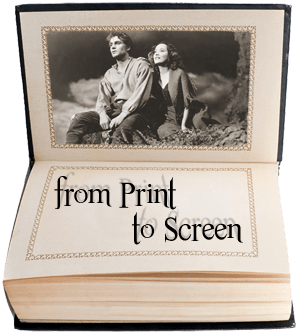
William Wyler’s WUTHERING HEIGHTS, with Laurence Oliver and Merle Oberon, is the distilled, purified essence of Brontë’s novel: romantic and beautiful even in tragedy. It has a happy ending that Wyler disowned.
Merle Oberon’s Cathy is passionate. However, it is impossible to imagine her getting into such a rage that her ears turn red, or ripping open a pillow with her teeth—though Brontë’s Cathy does both those things. Olivier’s Heathcliff is angry and tormented, but he is not a monster.
Never are viewers given cause to go out of sympathy with this pair.
The movie leaves out the children. Inconvenient children are often omitted in the translation from print to screen. (For example, GONE WITH THE WIND’s Scarlett O’Hara has three children in the book, but only one in the movie.) However, this omission removes a point Brontë thought important: how unresolved passion blights not only the present but the future (shades of CLOUD ATLASthere).
While browsing the WUTHERING HEIGHTS YouTube clips, I noticed that removing the dialogue punches up the movie’s power. Without words, it becomes more fiery, more like its source material.
Here is a video set to “My Immortal”:
Lindsay Edmunds blogs about robots, writing, life in southwestern Pennsylvania, and sometimes books and movies at Writer’s Rest. She is the author of a novel about love in the age of artificial intelligence: Cel & Anna.
THE BIRDS (1963; with Tippi Hedrin, Rod Taylor, Suzanne Pleshette, Jessica Tandy; directed by Alfred Hitchcock)
Our movie takes flight when a young, pretty blonde woman steps into San Francisco’s Davidson Pet Shop. “The girl” (as Hitchcock referred to Tippi Hedrin) is Melanie Daniels. Melanie causes trouble immediately, when she poses as a sales clerk and then allows a bird to escape from its cage. The errant avian is caught by another pet shop shopper, the debonair and eligible Mitch Brenner (Rod Taylor). Intrigued and inspired, the conniving Melanie decides that birds–love birds, to be precise–are the way to Mr. Brenner’s heart. Soon thereafter, Melanie swoops down into the small, California coastal burg of Bodega Bay with her two, winged cupids. Daniels’ eyes are like those of a hawk as she closes in on the Brenner residence. She’s delivering the love birds ostensibly as a birthday present for Mitch’s young daughter, Cathy. However, Mitch’s mom (Jessica Tandy) is like a mother hen to her son, and views Melanie suspiciously. As does the local schooteacher, and former love interest of Mitch’s, Annie (Suzanne Pleshette).
Soon, there’s chaos, and this time it’s not just one bird out of control. It’s many birds. Flocks of birds. Dozens, hundreds of them. No doves here, only menacing gulls and crows, darkening the skies and darkening the lives of Bodega Bay’s bewildered and terrified residents. Heads are pecked, eyes too. The reasons behind the rampage are unknown. Perhaps they’re really just another one of Hitch’s infamous MacGuffins. What’s significant in this story is the change the birds inflict upon the Brenner family and its relationship with the intruding Melanie and the two, cuddly caged companions she brings. Is the love between Mitch and Melanie meant to be? Or is love only for the birds?
Who wants to wait until the 31st to wallow in Halloween indulgences and scary movies?! Home Projectionist doesn’t! And so we’ll have pairings of 31 Frights and 31 Bites every one of October’s 31 nights: a scary, snack size movie “trick”, and a delicious “treat” to go along with it.
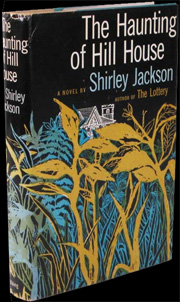
WHEN I FIRST SAW Robert Wise’s THE HAUNTING, which was adapted from Shirley Jackson’s novel The Haunting of Hill House, I had a writerish reaction: how dare they change her book so much? It wasn’t until I saw the movie the second time that I realized how brilliantly the novel had been adapted for the screen. If screenwriter Nelson Gidding had been faithful to every detail of the book, the result would have embarrassed everybody.
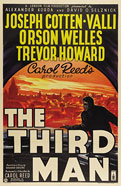
For this guest blog, I decided to write about the rocky road from print to screen, using the examples of NIGHT FLIGHT, THE THIRD MAN, and THE HAUNTING. (If anyone wants to know the alternate ending to THE THIRD MAN, just ask.)”
.
Night Flight
I don’t remember why I recorded NIGHT FLIGHT, but when I got around to watching it, I was surprised to learn that it had been kept out of circulation for more than 70 years because the author of the book on which it was based, Antoine de Saint Exupéry, hated it.
How Saint Exupéry was able to suppress this film for so long is a mystery. Why he did it is less of a mystery, at least to me. The movie makers were unfaithful. His book Vol de nuit was not on the screen. In its place was a good movie—smart, emotional, and tough, with spectacular aerial photography. But Saint Exupéry did not see the movie. He saw the book that wasn’t there.
.
The Third Man
Graham Greene wrote THE THIRD MAN as a movie treatment in response to a specific request by British film producer Alexander Korda. When director Carol Reed changed the ending, Greene could have been offended. Instead, he recognized that Reed was right and thanked him publicly:
One of the very few major disputes between Carol Reed and myself concerned the ending, and he has been proved triumphantly right.
.
The Haunting
Nelson Gidding’s screenplay for the 1963 movie THE HAUNTING is a masterpiece of adaptation. Gidding was not all that faithful to Shirley Jackson’s The Haunting of Hill House, although Jackson was a major author and the novel was a best seller. He knew when to stay true to her intentions and when to ignore them.
What Was Kept
The House as the Star. Hill House is the source of the terror and the mystery. If you read the book, you will find elements that do not match up with the movie, but you will recognize that spectacular house in every detail.
Eleanor, the Main Female Character. Eleanor is the most tormented visitor to Hill House. She and the evil presence in the house are drawn to each other. If Gidding changed her, he would also have had to rethink the house. He left her alone.
What Was Changed
All the Characters Except Eleanor. Theo morphed into a lesbian. Luke became a character meant to provide comic relief. Dr Montague—a bookish scholar in the novel—became the charming, handsome, and witty Dr Markway. Dr Montague’s wife, too, underwent a major transformation (more on that below).
The Event That Pushes Eleanor Ever the Edge. In the novel both Eleanor and Theo pursue Luke. In the movie Eleanor falls for Dr Markway, who is married but keeps quiet about it and sees through her as if she were made of glass. When he rejects her, the humiliation is intense. By making Eleanor’s pursuit of Dr Markway delusional, Gidding sets up the scene where she loses her grip on reality entirely.
The Funniest Part of the Novel. This really is a loss, although Gidding had no choice. In the book Mrs Montague blazes into the house with a ouija board and an assistant named Arthur, ready to give the spirit inhabitants of Hill House perfect love and compassion. She has a session with the ouija board where the spirits definitely communicate and she definitely misunderstands them (the other people in the house understand perfectly, and are terrified). In the movie Mrs Markway is a no-nonsense debunker of all things ghostly.
If you watch THE HAUNTING this October, there is another change to appreciate. The novel takes place in June. Gidding moved the time to just before Halloween.
Lindsay Edmunds blogs about robots, computers, life in southwestern Pennsylvania, and sometimes books and movies at Writer’s Rest. She is the author of a novel about love in the age of artificial intelligence: Cel & Anna.
Actor Frank Langella (GOOD NIGHT AND GOOD LUCK, many more) says he’s had “a life like a Chekhov play”. He has many stories to tell about his co-stars in a well-reviewed new biography, Dropped Names. (“Rita Hayworth dancing by candlelight in a small Mexican village; Elizabeth Taylor devouring homemade pasta and tenderly wrapping him in her pashmina scarf; streaking for Sir Laurence Olivier in a drafty English castle; terrifying a dozing Jackie Onassis; carrying an unconscious Montgomery Clift to safety on a dark New York City street.”) He also appears in a new film with, of all things, a robot.
Frank was just interviewed on NPR’s Fresh Air program. My favorite Langella film, without a doubt, is Mel Brooks’ THE TWELVE CHAIRS. Highly recommended.
I OWN A BUNCH of movie books. Well, more than a bunch. Dozens. Too many, I suppose. I think the hobby (or is it habit?) started about the time that VCRs came into being–about 1979–a milestone for my latent movie fanaticism. I had been awakened to a world of movies that previously had been unavailable for viewing.
I think the first book was Donald Spoto’s excellent film-by-film analysis, Hitchcock. I’d borrowed the Oak Lawn Public Library’s copy a couple of times, gotten completely immersed in it, and then finally plunked down the $8.95. Next, if I recall, was a little paperback, The Golden Turkey Awards-a sort of oddball collection of lists–lists of bad movies–turkeys, some of them in the so-bad-they’re-good category, a la MST3K; others just plain awful and unwatchable. A fascinating, fun read.
Eventually, my wanderings in Waldenbooks, Barnes & Noble, and Kroch & Brentano’s led me to my most treasured film book, Guide for the Film Fanatic (1986; Fireside Books) From the Introduction:
“If you flipped through the pages of this book, you may have noticed that, unlike many movie-list books, this one does not have a star rating system. I love those books, but I worry that rating systems have the adverse effect of discouraging people from seeing certain movies that should be equally recongnized. It’s only natural to choose a movie that has a three-star rating over one that has just two stars, but in many cases the two-star movie is more interesting–indeed it may have a cult made up of devoted fans who appreciate things that a particular review overlooked. I may attack a film, but that doesn’t mean I don’t want you to see it. This book is meant to encourage readers to see movies, not discourage them.”
Danny Peary’s is untypical of most movie review books in that every one of the films he discusses is worth your time, in some way or another. Each entry is a pleasure to read, even if it doesn’t convince you to watch the film. Peary might consider how absolutely great a movie is, or place some high value on it even if solely for its pure entertainment value, or occasionally only for historic reasons. Many of the book’s movies have a strong, cult-like following–not everyone’s cup of tea, but maybe it will be yours, if you give it a try. I discovered movies I would’ve otherwise overlooked–movies that Maltin gave just two stars to, that Siskel & Ebert rated “dogs of the week”, or films that arrived and burned brightly then for various reasons faded quickly from memory. Some films I had seen before, multiple times, took on a new light.
Not just another WordPress.com site, but an extraordinary place to spend a weekend, grill a cheese sandwich and watch a film to improve your life and stimulate a few of the grey cells.


 HERE IS SOMETHING you don’t know about Norman Bates if you have seen the movie but not read the book:
 FROM THE BEGINNING, it was a performance piece.
 The Novel







 Home Projectionist