ON THIS DAY in 1935, Senator Huey Long was assassinated during a session at the Louisiana capitol building. The story of Huey Long’s career inspired a novel and the 1949 dramatic film ALL THE KING’S MEN, starring Broderick Crawford.


ON THIS DAY in 1935, Senator Huey Long was assassinated during a session at the Louisiana capitol building. The story of Huey Long’s career inspired a novel and the 1949 dramatic film ALL THE KING’S MEN, starring Broderick Crawford.
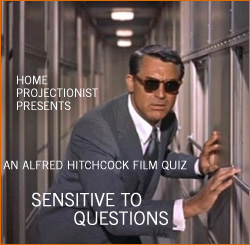
Good evening. If you take this quiz within the next five minutes, for a limited time you will be offered, free of charge, the correct answers to the ten questions (afterwards, not before). But wait, there’s more. We’ll also add an exciting final grade-which, if if you get half or more correct, will be a passing one. This offer void where prohibited.
Good luck, Mr. Thornhill, wherever you are…
Take the Quiz!(*The quiz title was inspired by Alfred Hitchcock’s North By Northwest: “Something wrong with your eyes?” “Yes”, says the sunglass-clad Roger O. Thornhill (Cary Grant), “They’re sensitive to questions”. During the opening scenes of the movie, ad executive Roger advises his secretary: “Maggie, in the world of advertising, there is no such thing as a lie. Only expedient exaggeration.”)
ON THIS DAY in 1945, the Battle of Wake Island, ongoing since December of 1941, ended when Japanese forces surrendered to U.S. Marines. The 1942 film, WAKE ISLAND, with Brian Donlevy, dramatized the early days of that conflict.

Numbers (Photo credit: Koen Vereeken)
The options of what we can watch continue to expand at a frenetic pace. We can thank the power of online video streaming, and the competition for content that’s heating up.
According to a Wall Street Journal article, Amazon has “more than doubled the number of television shows and movies it offers its video-streaming subscribers.” And by executing a new licensing deal with the cable channel Epix, as well as its recent content deals with Warner Bros. and MGM, Amazon is powering up its ability to compete with Netflix and Hulu LLC. According to the same WSJ article, Netflix has “roughly 50,000 shows and movies” and Hulu offers “more than 58,400 videos.”
In a recent Home Projectionist post, it was reported that, according to Broadcast Newsroom, an “estimated 3.4 billion movies will be streamed online in 2012.” The numbers are staggering.
Could it be that the days of red envelopes and red machines may come to a close sooner than was ever expected?
More options are great for people at home (Home Projectionists!) who are constantly on the prowl for compelling programming to share with their family and friends.
Will too much ever be enough?

ON THIS DAY in 1869, Felix Salten, author of Bambi, was born in Vienna, Austria. In 1942, Salten’s book was adapted by Walt Disney for his animated classic, BAMBI.
Lyricist extraordinaire Hal David passed away last week at age 91, leaving behind a legacy of timeless, honest, clever, and memorable lyrics that are woven into our lives.
But I always felt he wrote those songs especially for me.
As lyricist partner of composer Burt Bacharach, Mr. David penned the words to contemporary classics such as “Walk on By,” “What the World Need Now (Is Love Sweet Love), and “This Guy’s In Love With You,” to name only a few…only a few out of hundreds and hundreds! What an astounding collection of work.
Back in the day, I remember crying and singing “One Less Bell To Answer” along with the radio in my old Chevy after my high school boyfriend Bill broke my heart in 1970. And then there’s my all-time favorite Bacharach-David heartbreak song, Who Is Gonna Love Me? It’s still my go-to recording whenever I’m feeling exceptionally mournful about a failed romance.
In addition to the popular hits, there were also the gems that David and Bacharach created for film, with Best Song Oscar-nominees like “What’s New Pussycat?” for the 1965 film of the same name, and “The Look of Love” for CASINO ROYALE. And, who doesn’t know Oscar-winning “Raindrops Keep Fallin’ on My Head” from BUTCH CASSIDY AND THE SUNDANCE KID?
But my all-time favorite is another Bacharach-David Oscar nominee, “Alfie,” which was written for the 1966 classic film starring Michael Caine.
To be sure, it is totally illogical and weird that a movie song named “Alfie” would endure for so long. David chose a line from the ALFIE script, “What’s it all about?” to lead the narrative, and the rest is music history.
After its tender, sweet beginning, the melody and lyrics turn frustrated: “I know there’s something much more/Something even non-believers can believe in.”
And then it gets downright hostile: “Until you find the love you missed….you’re nothing, Alfie.”
Eek. That’s an indictment.
Hope springs eternal, as they say, and the concluding lyrics send Alfie off with a wish for better days ahead: “When you walk, let your heart lead the way. And you’ll find love any day….”
I can read music a bit, but unfortunately, I have never been diligent about practicing. The only song I can play reasonably well is “Alfie.” It gives me such great pleasure that my hands still can find those notes when I periodically feel compelled to open the well-worn sheet music.
The song was a huge hit recorded by Cilla Black and of course, the Bacharach-David muse, Dionne Warwick. Joss Stone got the honor of recording it for the 2004 remake. And I had forgotten that Cher ever sang it.
Thank you, Mr. David, from the deepest part of my heart for writing all of those wonderful words. You always knew exactly how I felt.
Gloria Bowman is a writer, storyteller, blogger, movie lover, freelance editor,
and author of the novel, Human Slices.
Access her blog at www.gloriabowman.com; on Twitter @GloriaBow
NUDE ON THE MOON (1961; directed by Doris Wishman; with William Mayer, Lester Brown, and Marietta)
IT’S TEMPTING to write-off this 1961 relic as a just plain awful waste of time. Poor production values, with sets that can’t quite surpass even Ed Wood’s cardboard cemetery in PLAN NINE FROM OUTER SPACE. It’s not only bad acting. It’s the lack of any acting whatsoever. And of course it goes without saying that there are much better lunar-themed films. Even a personal favorite of mine, the very much a product-of-its-time, DESTINATION MOON, would make for a more worthy tribute to the late Neil Armstrong.
But despite the film’s primary intent and its many flaws, NUDE ON THE MOON has a certain, honest-to-goodness, innocent charm. The effects, such as they are, are laughable at first. But after a while, I began to lament our present day, super-sophisticated dialog, rapid cutting, wall-to-wall soundtracks, CGI, and the overabundance of murderous, super-powered heroes and villains.
NUDE’s director, Doris Wishman, borrowed $10,000 from her sister in 1959 to make her first feature, HIDEOUT IN THE SUN, a nudist camp documentary. Her next film, in 1960, was NUDE ON THE MOON. Banned in New York, the censors said that showing nudes in a nudist colony setting was OK, but showing nudes on the moon in a sci-fi film was not. Wishman later worked with female stars like Chesty Morgan, and eventually moved on towards making more hardcore, “sexploitation” movies. She passed away in 2002.
There’s no cursing or bathroom humor here. In fact, you won’t find a mean word or unkind deed in the course of this wistful film. Sure, NUDE ON THE MOON was made–obviously–as a thin excuse to showcase topless women, of which there are several. But somehow there is nothing titillating or lecherous about the nudity. These characters look very well-adjusted, happy, and stable and content with their lives.
The movie’s point of view appears more like that of LOST HORIZON–the 1930s Frank Capra picture in which earthly travelers, each with their own problems, journey to a place where they discover what their lives have been missing. In the case of NUDE ON THE MOON, the traveler is a young rocketeer, so caught-up in his goal of getting to his imagined scientific paradise that he’s lost sight of the fact that he has a more human paradise right at home, on earth.
While the theme song (“Moon Doll”) is over-the-top corny, the “space ship” probably garnered from World War II salvage, and the attempts at any scientific accuracy almost nil, the movie left this over-60 viewer longing afterwards for far less-cynical days. Days when we spoke of the New Frontier, an exciting, optimistic time when President Kennedy boldly declared that “we will go to the moon!”. When none of us knew, but all of us wondered, dreamily, what we’d eventually encounter up there. 
ON THIS DAY in 1638, Louis XIV–King of France, and the longest-reigning king in European history–was born. Roberto Rossellini’s 1966 film, THE TAKING OF POWER BY LOUIS XIV, tells the story of the “Sun King’s” rise to power.
ON THIS DAY in 1949, following a concert for civil rights by Paul Robeson at Peekskill, New York, departing concertgoers were attacked by a mob of anti-communist agitators, resulting in over 140 injuries. The 1979 biographical film, PAUL ROBESON: TRIBUTE TO AN ARTIST, documented this event.
About four years ago I took the InFocus projector off the shelf and brought it to my friend Gary’s to watch an outdoor movie on Labor Day. I thought about what would be the best end of the season film; It dawned on me that the quintessential Labor Day film is Picnic (1955).
It was a perfect, perfect night weather-wise, and in the back of Gary’s apartment was a covered deck that we turned into a mini-movie theater for the night. Stacy and his boyfriend even brought a cake with the names of the film’s stars on it.
 As a child my parents let me watch everything with them, so I had a vague recollection of seeing Picnic when I was eight or ten. But seeing it again, outside, and on Labor Day, it really hit home how the film captures that feeling that summer is over, school is going to start. I think after generations of starting school in September we are conditioned that the time for new beginnings is September, not the new year or birthdays. The Human Resources director where I worked claims that people change their jobs more often in September. Everyone wants a new start.

The wide-screen Technicolor drama looks beautiful projected and the characters are bigger than life. I could go on about how beautiful Kim Novak is, or how handsome and wonderful William Holden is (even though he’s a bit long in the tooth for the role), but the one reason to see this film is the tour de force performance of Rosalind Russell as Rosemary, the spinster school teacher. She’s her performance is hysterically funny, then turns into a drunken melodrama that shows how she fears growing old alone; it’s a performance that is Oscar worthy. However Picnic only picked up awards for Best Color Art Direction and Editing.
The high point of the film has to be the picnic dance in which Holden and Novak dance to Moonglow, which segues into the Picnic theme song. It’s a magically moment of theater. If you watch this scene, a bit of trivia: Holden was so nervous about dancing on camera that he was drunk while filming this… The film also has a gorgeous score by George Duning.
The Picnic Dance
This movie also has bittersweet memories, because it was the last evening that everyone got to be with our dear friend Bob Lesh who passed away the following month. Endings, beginnings. Fall is here.
The Picnic Trailer
For a really comprehensive review of Picnic I highly recommend watching Steve Hayes (Tired Old Queen at the Movies)
ON THIS DAY in 1189, Richard I was crowned King of England at Westminster Abbey in London. Anthony Hopkins, in his first film role, portrayed the King (also known as “Richard the Lionhearted”) in the 1968 film, THE LION IN WINTER.

If you spent most of your time watching movies this past week, you might have missed these articles here at Home Projectionist:
Visit Home Projectionist on Facebook
ON THIS DAY in 1864, Confederate forces evacuated Atlanta, Georgia, burning the city’s supplies and structures behind them. The 1939 classic film, GONE WITH THE WIND, depicted scenes of this great conflagration.
PRESIDENT GROVER CLEVELAND made Labor Day a national holiday in 1894, with the intention of preventing further worker turmoil and deaths, such as occurred during the just-ended, nationwide Pullman strike. Now, it’s a great time to gather together and relax with friends & family for food, drinks, and… movies. Celebrate worker esprit de corps with some Labor Day spirit and one or two of these recommendations (in no particular order), all of which in some way highlight both the delights, and plights, of working men and women.

ON THE WATERFRONT (1954; directed by Elia Kazan) Ex-boxer and longshoreman Marlon Brando attempts to redeem himself by confronting union boss Lee J. Cobb. Leonard Bernstein’s first movie score. “One of the most powerful films of the 50s” (Pauline Kael).
SALT OF THE EARTH (1953) Latino mine workers on strike in New Mexico. The film’s writer and producer had been on the Hollywood blacklist.
BLUE COLLAR (1978; Richard Pryor, Harvey Keitel) Auto workers are being cheated by both their management and their unions. “Strongly-written and provocative” (Danny Peary).
MODERN TIMES (1936) Charlie Chaplin vs. the Machines. An assembly line worker tries to express his humanity at work, with the help of Paulette Goddard.
MOONLIGHTING (1982) Jeremy Irons is a Warsaw construction worker ordered to London where he slowly begins to oppress the Polish laborers he’s supervising.
BLACK FURY (1935) Michael Curtiz’ film is based on a true story of a Pennsylvania coal miner (Paul Muni) who was beaten to death by company detectives. “Realistic, strikingly filmed” (Leonard Maltin).
GUNG HO (1985; directed by Ron Howard) Michael Keaton stars in this light comedy about a Japanese auto firm’s attempts to establish a factory in the U.S.
NORMA RAE (1979) Sally Field (Oscar winner) and Ron Liebman team up to unionize textile workers in this inspiring Martin Ritt film.
MOLLY MAGUIRES (1970; Sean Connery, Richard Harris) Connery leads a secret society of Irish mineworkers in late 1800s Pennsylvania. “Elegiac” (Pauline Kael).
WHICH WAY IS UP? (1977) Richard Pryor plays three roles in a story of a citrus grove worker transformed into a union hero. A remake of the Lena Wertmuller film, THE SEDUCTION OF MIMI.
F.I.S.T. (1979) A truck driver (Sylvester Stallone) becomes a Hoffa-like union organizer and subsequently tangles with gangsters. Directed by Norman Jewison.
HOFFA (1992) Jack Nicholson portrays the exploits of the infamous Teamster boss, in a script by David Mamet. “Almost affectionate biographical treatment” (Videohound).
HARLAN COUNTY, U.S.A. Oscar-winning Barbara Kopple film documents a bitter strike by United Mine Workers against a Kentucky power company. “One of the most incisive portraits of America and the ever struggling labor movement” (Danny Peary).



A bucket list blog: exploring happiness, growth, and the world.
this blog will disappear on the day that my heart is alive again
Where classic films stand out above the rest
The Power of Words
Incredible tips for Classrooms and Staffrooms
Watch as I amaze and astound with opinions about what TV shows I like!
Political Co-Dependency Intervention
Tablecloths, Table Toppers, Placemats our specialty
I blog about everything and anything, never hesitate to question....
The works and artistic visions of Ken Knieling.
entertainment & belief go heart to heart
the Story within the Story
Horror With Humour
unparalleled film reviews, news, and top 10s
Mostly movies with a smattering of TV, books, and LEGO thrown in!
MUSINGS : CRITICISM : HISTORY : NEWS
Film, Comics, Music, News, You want it? We've got it!
On This Day....
Celebrate Silent Film
...a classic film and TV blog
Entertainment and Everyday News brought to you in a flash
wendy maruyama, art work, executive order 9066, the tag project
A guy with a desk...
www.attentiallupo2012.com
Improving the English language one letter at a time
Seek first the kingdom of God and his righteousness. (Matthew 6:33)
draws comics
Canadian trivia and history in bite size chunks!
“There are always two people in every picture: the photographer and the viewer.” -Ansel Adams
Independent movie reviews and more...
Stories
The life and times of Erik, Veronica and Thomas
a site for movie lovers' eyes
Short reviews on high quality films. No spoilers.
For the Love of Leading Ladies
A blog for movie enthusiasts and weed lovers
A Blog For Every Movie Lover
knitting and blogging in Italy in times of economic crisis
** OFFICIAL Site of Artist Ray Ferrer **
Not just another WordPress.com site, but an extraordinary place to spend a weekend, grill a cheese sandwich and watch a film to improve your life and stimulate a few of the grey cells.
 Home Projectionist