Thanks to today’s technology, we can hit the road and watch (or read) what we want, when we want, and just about anywhere we go. Passing time has never been more chock full of options.
I may be late to the realization party, but up until last week, I thought of the availability of online streaming while traveling only as a source of entertainment. I have learned that it can serve as a sort of vacation enrichment program in a box.
I recently visited Frank Lloyd Wright’s Taliesin in Spring Green, Wisconsin, and was thrilled to have the opportunity to roam through the rooms, the public spaces, and the grounds. Through an incredibly well done guided tour, I learned much about Wright the man and his vision. But I wanted to know more.
While wandering through the Taliesin gift shop after the tour, I happened to see a Ken Burns’ DVD on the life of Frank Lloyd Wright for sale. I was certain that a Burns’ documentary would provide the sort of expanded view I was seeking. I hoped the documentary was available online, and I’m happy to report that it was.
That night, as the sun was setting in the Midwestern sky, I sat on the back porch of a historic inn, with feet up and relaxed from a glorious day. It was time to fire up the tablet and learn more about this American icon. What a pleasure it was to be able to watch the entire documentary. While the live tour allowed time to savor the space and the beauty of the countryside, feel the history, and experience the physical and psychological reactions to Wright’s built environments, the video provided a more in-depth exploration of his early career, his philosophies, and failings–as well as successes. It was as if the live guided tour and the documentary were magical collaborative partners.
It wouldn’t have been the same if I waited until I got home to watch this documentary. I may have even forgotten about it. The sense of my tour experience would have faded. I may have even decided that I didn’t want to take the time, wasn’t as interested anymore. There would be something more pressing to do.
Watching the documentary was a delightful and satisfying way to end the day. Online streaming will now be more than an entertainment option when I’m on the road. It will be a very valuable and treasured travel companion.
Gloria Bowman is a writer, storyteller, blogger, movie lover, freelance editor,
and author of the novel, Human Slices.
Access her blog at www.gloriabowman.com; on Twitter @GloriaBow
I have never been obsessed with super spike heels that cost more than my monthly rent. Nonetheless, I have to admit that I have too many pairs of the hundred dollar or less variety stacked up in my closets. I am not immune to the power of the shoe.
In the new documentary GOD SAVE MY SHOES (2011), director Julie Benasra attempts to explore the meaning of some women’s obsession with the spike heel. The film provides an interesting and albeit sometimes wacky collection of interviews with celebrities, avid shoe collectors, sociologists, shoe designers, and cultural observers (one of whom seems to think that women never talked about sex and relationships before Sex & the City appeared on television).
Although uneven and oddly like an infomercial at times, the film does cover a wide range of subjects, providing some good fun facts to use at cocktail parties, such as shoes being a $40 billion industry and that you can take classes to learn how to walk in preposterous pumps.
Comments and clips featuring burlesque artist Dita Von Teese are designed to be titillating, and we learn of some compelling theories, one putting the forth the notion that the reason the spike is so sexy is that it forces the foot to emulate the shape it takes when a woman has an orgasm.
We hear from a plastic surgeon who specializes in fixing feet damaged by the hellish high heel. And the director of Toronto’s Bata Shoe Museum takes us into her archives for a look at the shoe’s place in history. Men smartened up and stopped wearing heels after a few years of doing so in the French court, but women have carried on the tradition thanks to cultural icons like Betty Boop.Shoe designer Pierre Hardy says, “I think women find some pleasure in the pain.” Why is that men who would never wear such contraptions are the leading designers?
I know many people will shake their heads while watching this, but it is entertaining and clever if you can ignore the disdain you may feel for some of the commentators. I will keep this documentary in my file for future use. Perhaps it would be a good opening piece when showing something like KINKY BOOTS.
Gloria Bowman is a writer, storyteller, blogger, movie lover, freelance editor,
and author of the novel, Human Slices.
Access her blog at www.gloriabowman.com; on Twitter @GloriaBow
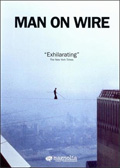
A LITTLE OVER 27 years before the tragic events of September 11th, a daring Frenchman stepped off the edge of one of the World Trade Center towers and walked to the other—on a thin wire. That daring, young man was Phillipe Petit, and MAN ON WIREtells his story.
It’s a story of courage and much planning. A tale of bank-heist proportions, of law-breaking and recklessness. Yet, it culminates in sheer magic and poetry–a gentle stroll between two points. A simple walk among giants that would, on one, sad day, be toppled in an unbelievable act of cruelty.
It’s a melancholy-tinged remembrance of an audacious feat–a feat of pure, awe-inspiring beauty. On this day, MAN ON WIRE is a way to see man at his best.
ON THIS DAY in 1971, a riot began at a state prison in Attica, New York, eventually resulting in the deaths of 39 prisoners. In 1980, the made-for-TV movie, ATTICA, starring George Grizzard, Morgan Freeman and Charles Durning, documented this four-day event.
ON THIS DAY in 1965, the Beatles played before approximately 60,000 fans at Shea Stadium in New York City. The concert–which marked the birth of stadium rock–was documented in the 1966 film, THE BEATLES AT SHEA STADIUM.
I visited Colorado’s Mesa Verde National Park many years ago and can still clearly recall the haunting, magical feeling that permeates the air there. Nearly a thousand years ago, the Anasazi ancients abandoned their cliff dwellings and moved on to the spiritual world, but their handprints and their energy remain.
The same sort of transcendent, surreal experience happens when you are touched by the images in the ELECTRIC EDWARDIANS – THE LOST FILMS OF MITCHELL & KENYON (1900). You don’t just watch a collection of old-timey “home movie” clips from the past, you submit to a sort of time travel sorcery of other worldly-proportions.
ELECTRIC EDWARDIANS is a compilation of lost footage that was miraculously found after being stored for 100 years in someone’s basement. During the turn of the century, filmmakers Sagar Mitchell and James Kenyon took to the streets of England and Ireland and captured images of the mundane — people going to work, people walking down the street, people standing around, people cheering at sporting events, children lining up at school. Dreadfully boring, one might understandably think. But in the activities of the every day, there is an ethereal magic. The soundtrack by In The Nursery is impeccable and adds a brilliant dimension to the scenes of daily life in the Industrial Age.
What makes the images so hypnotic is that the individuals being filmed, most of whom probably don’t even know what this thing “film” is, are directly looking into the camera and somehow their souls are being captured in a moment in time for us to meet and connect with.
“Aren’t you a very curious person?” they seem to ask as they look out at us from the screen. And we look back at them in the same curious way.
These clips are mesmerizing, but they are also a bit mournful as well – the people we are watching are gone. But we also are reminded that they once were here. And that’s the mystical part of this viewing experience.
Along the same theme, I was thinking (wrongly) that CAVE OF FORGOTTEN DREAMS (2010) would be a moving and appropriate double bill with ELECTRIC EDWARDIANS. In the trailer, director Werner Herzog says that the spirits of the Cave of Chauvet are so palpable that it is “as if the modern human soul has awakened here.”
Unfortunately, the film just doesn’t quite deliver that sense of spiritual awakening. The famous cave, located in southern France, had been hidden from civilization for eons; a landslide had buried its entranceway. When the cave was discovered in 1994, its perfectly preserved, awe-inspiring ancient paintings and handprints — more than 20,000 years old — open a door to a truly lost world.
This award-winning documentary allows us a peak into this realm, and the scientists and the filmmakers are certainly stirred by their experiences in the cave, on both the academic and metaphysical levels. “A strange, irrational sensation – like eyes upon us,” they say. Here, “time and space lose their meaning.” But the film doesn’t award us, the viewers, with a similarly enchanting experience. We just have to believe them. Frankly, the film is most visually interesting when the stunningly attractive scientists talk about the caves in their French-accented English. Ooh la la.
While CAVE is certainly thought-provoking (albeit way too long), it delivers very little of the soulful punch that the ELECTRIC EDWARDIANShas.
CAVE is worth a watch. ELECTRIC EDWARDIANSis worth watching over and over.
Gloria Bowman is a writer, storyteller, blogger, movie lover, freelance editor,
and author of the novel, Human Slices.
Access her blog at www.gloriabowman.com; on Twitter @GloriaBow
“If we all went out looking like a slob, like me, it’d be a pretty dreary world.”
LAST SUMMER I met an artist who, in the course of talking about movies, mentioned a film she thought I ought to see. BILL CUNNINGHAM NEW YORK. An odd title, and so I remembered it. A month or two later, the same recommendation from another person. New York City is a place I love, so I put it in my Netflix queue. I finally got around to watching it recently. It’s great.
Bill Cunningham, 83, is a fashion photographer for The New York Times, and has been for many years. He rides an ordinary bicycle through the streets of Manhattan, camera in hand, darting here and there, wearing a beat-up poncho on rainy days, on the lookout for fashionable clothes–clothes that fit a certain theme. A theme of the week. His pictures are featured on a page in the Style section of the Times–a page composed of dozens of Cunningham’s colorful, candid shots. Stylish, fashionable and/or eccentric New Yorkers as they dash across streets, glide past shop windows, or stroll around parks. One week it might be hats, while another week’s subject is stripes.
While we were watching fireworks this last Fourth of July weekend, scientists around the world were swilling champagne, celebrating the official detection of the Higgs boson. It’s a very big deal. The Higgs is a subatomic particle that gives mass to the universe. Without it, nothing would exist.
The discovery happened in Switzerland at CERN, the European Organization for Nuclear Research — and not at U.S.-based Fermilab, where scientists had been relentlessly dedicated to the quest for the Higgs.
If you’re up for a proud nerd night at home, The Atom Smashers (2008) provides an inside look at how scientists in Illinois were trying to beat the clock and discover the Higgs before CERN could do it.
Who knew there was so much drama in the world of physics?
The Atom Smasherswas produced by Chicago’s 137 Films organization, a group dedicated to “creating films out of the stories found in the world of science.” With this documentary, 137 Films succeeds in creating a tale compelling enough that I just may try to read “Physics for Non-Scientists” one more time.
Whatever hesitation I had about a watching a film about super colliders faded to black as soon as the quirky techno opening music began. The soundtrack, by composer Kate Simko, provides a sort of magical segue into the film, where Fermilab looms, surrounded by a herd of buffalo and cracked pavement. It doesn’t seem an inspirational place. The environment actually looks a little sad, with its ’60s-era wood panelling and drop ceilings. The scientists’ offices are small and rickety. This is the home of groundbreaking research?
We are introduced to a cast of characters who are intriguing, incredibly smart (of course), and, well, extremely likable, if not even lovable. They are working together toward a “discovery of a lifetime,” yet they still find time for diversions like their tango club, writing rock music with lyrics based on Unix programming commands, and finding romance.
I became instantly and absolutely smitten with Leon Lederman, Nobel Laureate and director emeritus of Fermilab, with his bright-eyed curiosity and excitement about the Higgs work. A flashback clip of a young Lederman on the Phil Donahue show (!?!) congenially discussing particle physics and defending its cost to the American taxpayer made me long for those days when television talk went far beyond what’s-new-with-the-Kardashians.
I now understand how a particle accelerator works!
I also know how to pronounce boson. It rhymes with “hose on,” not “possum.”
The race to find the Higgs accelerates as do the demands made upon the Tevatron accelerator itself (faster! faster!). And while the velocity of the research expands, federal budget cuts loom and the Tevatron operations at Fermilab are scheduled to close. Layoffs begin; scientists start to seek new opportunities. In spite of all of the forces at odds with their quest, the determination of the scientists prevails. (Unfortunately, while we watch, we feel a little beaten, knowing that, in the end, CERN will succeed.)
Upon this year’s celebration of the Higgs, Paul Tipton, professor of physics at Yale University, wrote, “As exciting as this discovery is, and as meaningful as it is to the field of physics, the broader lessons of this human endeavor should not be lost on us…The Higgs discovery also represents a triumph of human curiosity. “
And also, if I may sound corny, it represents the power of the human spirit. The Atom Smashersis a gem of a film giving an inside look into a world of intense curiosity, painstaking commitment, and human collaboration that few of us will ever know.
It is a rare documentary indeed that makes for an enjoyable group viewing event, but WORDPLAY (2006) is definitely worth adding to your Home Projectionist list. Think three-letter word for jewel: This film is a G-E-M.
Brilliantly directed by Patrick Creadon, WORDPLAYdelves into the smart and quirky subculture of the crossword puzzle. It’s a world of intelligence, humor, and passion populated by fanatic puzzlers, including New York Times editor Will Shortz (who actually devised his own college major in puzzling) and celebrity crossword fans such as Jon Stewart, Ken Burns, and Bill Clinton.
My father was a crossword fan, and some of my favorite childhood memories are of my dad giving me crossword solution insights and the scoop on good words to know. But whether you’re a crossword fan or not, this film keeps you entertained from beginning to end.
The drama — and yes, there is big drama — is centered around the dynamics of the 2005 Crossword Puzzle Tournament, and it will have you at the edge of your seat. Even a segment about the construction of a crossword puzzle is mesmerizing and provides more than a few “who knew?” moments. At the core of the film, of course, are the crossword puzzle enthusiasts themselves, a cast of some of the most eccentric, delightful, and engaging human beings you’ll have the pleasure to meet. (And their ghosts may still linger in the tournament halls.)
The DVD package for WORDPLAY includes additional commentary on puzzle construction, extended interviews with puzzlers, and deleted scenes. These extras can round out a great night of Home Projectionist entertainment , and you can even add in your own crossword competition at home with your friends.
Get out your pencils…and your projectors. WORDPLAYis a w-i-n-n-e-r.
Gloria Bowman is a writer, storyteller, blogger, movie lover, freelance editor,
and author of the novel, Human Slices.
Access her blog at www.gloriabowman.com; on Twitter @GloriaBow
Pride weekend here in Chicago, the weather is fabulous, and everyone’s gearing up for the festivities — I even got a robo phone call last night advising me of the new parade route. That’s some community power.
In honor of Pride Month, I’ve been looking at assorted lists of the Best Gay Films out there, and they include Brokeback Mountain, Beautiful Thing, Maurice, Milk, Hedwig, Priscilla, Jeffrey, and a range of other essential and important movies.
Unfortunately, missing from the lists I’ve seen is DIFFERENT FROM THE OTHERS(1919), Magnus Hirschfield’s groundbreaking and heartbreaking film starring Conrad Veidt.
And I’ve also noted that the smile-inducing documentary, THE TOPP TWINS: UNTOUCHABLE GIRLS (2009) isn’t front and center on the lists as well. I am formally nominating it as a must-see and encourage you put in on your Pride Month Home Projectionist list.
This feel-good, award-winning documentary by Leanne Pooley follows the lives of the absolutely delightful Jools and Linda Topp, lesbian twin sisters who are New Zealand icons (who knew?).
Talented as singers and comedians, and influential as political activists, the Topp Twins are inspirational (although their skits can be corny, they still entertain). The beauty of the film is that it shows how the sisters’ joyfulness, strength, intelligence, honesty, and authenticity lead to love and understanding — and influence a cultural shift. It’s a movie about the power of the human spirit and demonstrates what Pride is all about. In that, the Topp Twinns are totally untouchable girls.
The movie’s title song will stick in your head all weekend:
Happy Pride to all!
Gloria Bowman is a writer, storyteller, blogger, movie lover, freelance editor,
and author of the novel, Human Slices.
Access her blog at www.gloriabowman.com; on Twitter @GloriaBow
If I set my Way Way Back Machine to 1976, I can recall being addicted to the Masterpiece Theatre I, CLAUDIUSmini series the same way I am addicted today to Downton Abbey, Mad Men, and the Housewives of New Jersey.
Earlier this year, the 35th anniversary edition of the BBC I, CLAUDIUSseries was released. What memories that announcement brought back.
Although I clearly remember being enthralled with every episode of I, CLAUDIUSthat I watched on television in the ‘70s, I don’t clearly remember the home projection screening of the series we did sometime in the ‘90s.
Blame the summer heat and copious amounts of red wine for the fuzzy recollections, but our screening of I, CLAUDIUS was memorable nonetheless. (It still comes up once in awhile when friends reminisce – a true sign of a Home Projectionist success.)
A small group of us who are old enough to have seen the original airing of I, CLAUDIUSwere raving about it to our friends who hadn’t seen it. We wanted to show off our new big screen and agreed to make a true marathon event out of it — hunkering down for a screening of 13 episodes on two consecutive Sundays during one of the hottest spells of summer.
Everyone came in on the first Sunday at noon looking limp from the 90-degree heat and 100 percent humidity. They immediately perked up when the blast of over-conditioned air hit them at the door.
The food theme was “Bring Something Mediterrean,” and the kitchen was overflowing with olives, grapes, dried meats, roasted peppers, bruschetta, fabulous cheeses, and an obscene number of bottles of Italian wines. After eating a drinking a bit, people moved into the living room and scrunched up on the couch, grabbed dibs on chairs. We didn’t have enough seating, so in true Roman style, there was also a lot of lying around on the floor.
The opening credits were riveting, the theme, and that snake sliding over the tile floor. So far, so good. But I remember feeling a bit panicked when the first scene appeared with its playhouse production style. I could sense a collective groan.
But within only minutes, really, everyone was drawn in and my worries were over. How could they not be mesmerized?
The cast and performances are over-the-top stellar. Derek Jacobi stammers his way through the leading role as hapless Claudius. Sian Phillips brilliantly plays the evil matriarch Livia while Brian Blessed blusters around as Emperor Augustus. Star Trek fans will be excited to see a young Patrick Stewart in a leather skirt playing the handsome and crafty military officer Sejanus. And John Hurt absolutely kills it as Caligula. Absolutely kills it.
The whole series is a kind of Survivor game show with insider politics and power plays, murder and mayhem, insanity and sexual intrigue…and more sexual intrigue, a few battles, and more sexual intrigue.
During the first day of our mini series marathon, we took long breaks between episodes, and even though we started watching at noon, we didn’t stop until the late, late evening. And copious bottles of wine were empty. Everyone had a bleary-eyed Monday morning.
The next Sunday, the same group of friends reappeared for Round Two, bringing along a repeat of the last Sunday’s Mediterranean spread, as well as a few new participants. We held a plot recap to catch up everyone on the story so far and settled in for the last six episodes.
As the day went on, the breaks between episodes got longer and longer. Sam, who knew the in’s and out’s of Roman history, helped clarify some of the genealogy and missing links. (Note that the 35th anniversary edition has featured extras that will help in that arena.)
I had anticipated that the group would go home early on the second Sunday and that there was no way that we would have a late-night repeat of the week before. But when the last episode was done and I, CLAUDIUSreached its wonderful conclusion, no one went home.
Everyone migrated back to the kitchen to refill glasses and happily pick at leftover dried up cheese and other unappetizing bits and pieces. There was a weird kind of spirit in the air and a sense of ensuing late-night drama. I knew that our own little reenactment of a Roman soiree was going to continue when I walked in on an improbable make-out scene (that still makes me shake my head), and then later when, courtesy of Miss P. Caster, some rock band’s tour bus and entourage pulled up in front of the house.
Sometimes, life can imitate art.
I woke up in the morning to find one friend asleep on the bathroom floor, and he was holding a bowl of grapes.
If you’ve never seen I, CLAUDIUS put it on your Home Projectionist must-see list. And let the intrigue begin.
Gloria Bowman is a writer, storyteller, blogger, movie lover, freelance editor,
and author of the novel, Human Slices.
Access her blog at www.gloriabowman.com; on Twitter @GloriaBow
Not just another WordPress.com site, but an extraordinary place to spend a weekend, grill a cheese sandwich and watch a film to improve your life and stimulate a few of the grey cells.







 Home Projectionist