EVEN A BAD NOIR is good, when film noir is your favorite movie genre, as it is mine. So it’s really difficult for me to name nine as “the best,” particularly when some, like The Maltese Falcon, Double Indemnity and The Postman Always Rings Twice, would be really obvious, unsurprising choices. What follows though are some that I could watch over and over. A few are well-known, a couple maybe not so much. But they’re all great–perfect for a chilly, dark and stormy November night.
The Big Heat(1953) Gloria Grahame and Glenn Ford, with terrific chemistry, and a very evil Lee Marvin. Grahame–Marvin’s abused girlfriend–delivers sympathy for Ford’s plight, and deep regret for her own choices. Ford’s utter despair and silent rage are a great contrast to Marvin’s nearly psychotic character.
Leave Her To Heaven (1945) “Technicolor Noir” and much admired by filmmakers such as Martin Scorsese. The complex and selfish character played by the beautiful Gene Tierney destroys everyone around her to one degree or another. Awe-inspiring cinematography and an unforgettable score by Alfred Newman.
Point Blank (1967) Lee Marvin, left for dead in an Alcatraz prison cell, is back in L.A. He doesn’t want his girl (Angie Dickinson), his life, or revenge. He wants his money. Is he really alive and kicking, or is the entire film a death bed dream? We’ll never know, but who cares? This is a wild ride, in more ways than one.
The Killing (1956) Stanley Kubrick’s riveting heist film, an early masterpiece. One of Sterling Hayden’s best roles, with a clockwork-like plot and intriguing time-shifts.
The Tall Target Dick Powell is a detective in 1861, aboard a train full of sinister characters, one of whom is allegedly the would-be assassin of president-elect Lincoln. Claustrophobic, suspenseful, and unpredictable, it also, because of what we know would eventually happen to the President, has an extra layer of poignancy and foreshadowing.
The Narrow Margin (1952) Like The Tall Target, this terrific film noir, shot over three weeks, is set within the small confines of a train. With great dialog, like Marie Windsor’s assertively snide, “There’s another train… The gravy train!”
They Live By Night (1948) Nicholas Ray’s early, sweet and tragic noir, starring Farley Granger, with a tone that later would be evident in Ray’s Rebel Without a Cause. Granger and Cathy O’Donnell are the tragic lovers who, as the opening credits say, “were never properly introduced to the world we live in.”
Fall Guy (1947) “Was that the sound of heels clicking, or my beating heart?”Fall Guy is a very low-budget noir from Monogram Studios, based on a Cornell Woolrich story. A young man who’d been implicated in a murder, has no recollection of what happened, and must clear his name.
Dark Passage (1947) My list isn’t complete without at least one Bogart picture, and this is the one. On the run from San Quentin, Vince Parry (Bogie) meets up with none other than Lauren Bacall. After some low-rent plastic surgery, Parry is out to prove his innocence against all odds. A great ending scene.
(1958, France) starring Jacques Tati, Jean-Pierre Zola, Adrienne Servantie, Alain Bercourt; directed by Jacques Tati; music by Franck Barcellini and Alain Romans. Seen on TCM, July 21, 2013. Available from these sources.
The story:Five years after his first appearance, Jacques Tati’s M. Hulot returns with MON ONCLE, a film set along the dividing line between Paris’ past and its future. Aligned (as is the film) with the former, Hulot lives in a colorful, overpopulated Parisian neighborhood and, lacking employment, spends his days waiting to pick up his adoring nephew from school, and subsequently escorting him to his parents’ ultra-modern house. Filled with gadgets, some turned on only to impress the neighbors, the house seems designed specifically to frustrate Hulot, who unwittingly disrupts its operations at every opportunity. Concerned about his future, Hulot’s relatives attempt to find him gainful employment and pair him off with a neighbor, with little success on either front.
– – –
Lindsay:
IN MON ONCLE, there is a silver fountain shaped like a fish that has so much screen time that it is practically a co-star. It belongs to the Arpels—Monsieur Hulot’s sister, brother-in-law, and young nephew. They live in a house so obsessively modern that it has turned them into clowns.
When Hulot’s sister switches on the fountain, which she is forever doing for visitors, it gives a strangled gurgle and spouts straight up like a geyser. You see that fountain far away, in close up, and from every conceivable angle. Is is as if Tati can’t get over how funny it is, and neither will you after about an hour.
M Hulot lives a dreamy, impractical life in a city neighborhood full of color. He tries to do what his modern relatives want—the problem being that even they cannot do what they want. They cannot be colorless for the life of them. They own a red bicycle, green plants, blue pillars, a vivid yellow rocking chair. We first see Hulot’s sister wearing a pea-green caftan and matching turban.
She buys a silver garage door with an electronic eye that terrifies the maid. But her husband buys a green, pink, and lavender car with fat white sidewalls. These are anniversary presents.
This movie hasn’t got one mean-spirited moment, because Tati never invites you to look down on these people. It’s the human comedy, he says. Look at the colors of that.
– – –
Dave:
A CHIRPY, CATCHY FRENCH TUNE is playing. Stray dogs scurry, enjoying boundless freedom on these cobblestoned streets of a town somewhere in France. Precisely where, I don’t know, but I loved the two hours I spent there.
Mr. Hulot (director/star Jacques Tati) is like those dogs. He’s a happy, harmless fellow, taking pleasure in the little things. Such as manipulating a window reflection just enough to cause a nearby canary to warble. As with the carefree pooches who delight in finding morsels in the garbage, it doesn’t much to make Monsieur Hulot cheery.
Like the seaside resort in Tati’s previous film, MR. HULOT’S HOLIDAY, this is a very real-seeming place. I was immersed in the setting and its quirky, flawed inhabitants with all their very human characteristics.
There’s a street sweeper who’d rather do anything but sweep. A sweet, pretty young girl who seeks out the older Hulot’s approval. There’s a ridiculously fussy fussbudget whose prized possession is a horrid, metal fountain she activates only for worthy, impressionable guests.
There are the boys who pass the time by either making pedestrians have head-on collisions with street lamps, or causing drivers to think they’ve had collisions when they actually haven’t.
Then there’s Hulot. He lives on the very top floor of an impossibly intricate building that resembles a Joseph Cornell box. He tries, but modern gadgets and appliances make life too complicated. So what job does he take on? Well of course in a factory filled with nothing but dials, switches and complex machinery. Falling asleep at his desk on his first day, he throws the entire operation into minor chaos. But the side effect is that Hulot brightens the up-till-now dull and monotonous life of his co-workers.
At the movie’s end, the dogs are romping through the streets again. Life goes on. As with HOLIDAY, I’m sad to leave. I miss it already.
*Also recommended: Tati’s PLAYTIME and MR. HULOT’S HOLIDAY, as well as the recent, animated adaptation of a Tati screenplay, THE ILLUSIONIST.
– – –
Gloria:
WHEN I WATCH a Jacques Tati film, I feel as if I’ve been invited to be part of a clever, conspiratorial event.
“Come watch,” his work seems to say. “Let’s have some fun.”
So I’m drawn in, expectant, and hunkered down with an incessant grin on my face, periodically surprised by the laugh-out-loud moments. I can’t wait to see — and hear — what happens next. Visual treat after visual treat appears, accompanied by perfectly calibrated silence and perfectly hilarious sound effects. Who knew that the bzzzz of an entry buzzer or an on-again/off-again fountain gurgle could humor me for two hours? I’m still whistling the theme song.
What I love about MON ONCLE is the sense of intimacy. I’m totally in for the ride, peeking over fences, down halls, and into windows. I see what and how Tati sees, mesmerized by his sight gags and clever points of view, those long, extended shots that give me time to look around, and each masterfully composed frame that can stand alone as a piece of art.
When the characters bring their über-contemporary chairs out of doors to look into their house to watch television, I feel as if I am pulling up my own chair to sit quite happily and watch them while they watch tv.
The contemporary world that Hulot’s sister and brother-in-law inhabit is monochromatic steel gray and full of new fangled complexity. Regardless of its symmetry, it’s a world consistently off-kilter, dysfunctional, and just plain kooky. Hulot’s counterpoint neighborhood is in stark contrast, lived-in and richly toned, as comfortable as his moccasins and overcoat. It’s not a perfect world either, but people have gotten used to how things work (and don’t work) there. Hulot replaces a brick in a pile of rubble because that’s where it goes. Humans are amusing that way.
I could watch over and over again when the neighbors try to follow the curved path of the sidewalk and teeter across the paving stones in the yard, but I bet that one day they’ll start cutting straight across and make their own path, the same way Hulot’s brother-in-law veers from the standard gray option and buys a car that’s painted pink, lavender, and green.
The world keeps changing, and we figure out how to live in our particular place in time.
“C’est la vie,” Hulot says. He’s absolutely right.
Lindsay Edmunds blogs about robots, writing, life in southwestern Pennsylvania, and sometimes books and movies at Writer’s Rest. She is the author of a novel about love in the age of artificial intelligence: Cel & Anna.
Dave is a graphic designer, and proprietor of movieLuv.
Gloria Bowman is a writer, storyteller, blogger, movie lover, freelance editor, and author of the novel, Human Slices. Access her blog at www.gloriabowman.com; on Twitter @GloriaBow.
Like Brigadoon, the 2013 TCM Classic Film Festival arose as a dreamlike haven for movie lovers, and now, this morning, begins to fade away, not to appear again for another year.
During the four days it lived, fest goers were thrilled, enchanted, and happy. They (including yours truly) were also sleep-deprived, hungry, and sometimes frustrated. But I feel safe in saying that almost every one of us is sad that it’s over, and would be ready to do it again next week, after a brief food and rest break.
Sunday was just as much fun as the previous four days, but also presented even more tough choices. I would like to have caught Debra Winger at GILDA, or Norman Lloyd at THE LADY VANISHES, Tippi Hedrin/Melanie Daniels at THE BIRDS, or a film I’ve never seen, SCARECROW–Gene Hackman’s favorite of the ones he’s worked on.
However, the double, wide screen features of CINERAMA HOLIDAY and IT’S A MAD (etc.) WORLD were just too compelling. The former, a very corny but fascinating 1955 travelogue, had the two female co-stars discussing the production. IAMMMMW was preceded by a discussion with Mickey Rooney, Barrie Chase, and demolished gas station co-owner Marvin Kaplan. On stage was an empty chair, in tribute to the late Jonathan Winters, who’d been a scheduled guest.
Dashing out of the fabulous Cinerama Dome on Sunset Blvd., I made it safely to SAFE IN HELL, a little pre-code gem from 1931. Dorothy MacKahill plays a vamp and accused murderer on the lamb, fleeing to a Carribean isle crawling with degenerates—and centipedes. The son of director William Wellman spoke afterwards.
Then it was on to the final screening, Buster Keaton’s amazing Civil War picture, THE GENERAL. It was a new, beautifully restored print. What made it extra special was The Alloy Orchestra’s live accompaniment as well as our surroundings, the lovely, historic Graumann’s Chinese Theater.
TCM’s Robert Osborne—a rock star to Festival attendees—thanked us all for coming, and received a standing ovation. He had some sad news for us though. Graumann’s new owners plan to close the palace for some time, while they convert it into an IMAX theater with stadium seating. This announcement was followed by a loud chorus of boos from us classic film fans, but Robert was diplomatic, saying that change can be good, but also asking us to take a good, long last look at the place where movies like CASABLANCA and so many other classics had their premieres. And so we did.
And thus ends TCM’s fourth annual Classic Film Festival. Disneyland is said to be “the happiest place on Earth”. But for four days in April, we movie lovers borrowed the phrase. See you next year!
Tomorrow I may have tears in my eyes when I say goodbye to the Festival and sunny Hollywood. Yesterday though, I had tears of laughter. I was a kid again at the Saturday morning screenings of about a dozen Bugs Bunny animated shorts. It was Bugs’ 75th anniversary bash, hosted by Leonard Maltin. A sold-out audience showed their appreciation for the bunny’s irreverent sense of humor.
Immediately after that, it was time to paddle downstream with Jon, Burt, and Ned at DELIVERANCE. The guys were hilarious, as was the film’s director, John Boorman.
On to Nicholas Ray’s first feature film, THEY LIVE BY NIGHT. A sweet and tragic film noir starring Farley Granger, with a tone that later would be evident in his REBEL WITHOUT A CAUSE.
TALL TARGET, at 6:30 pm, was a mystery aboard a train, much like THE LADY VANISHES and MURDER ON THE ORIENT EXPRESS. Dick Powell is a detective in 1861, attempting to thwart a would-be assassination of president-elect Lincoln.
My final movie was that old Joan Crawford, tear-up-the-scenery classic, MILDRED PIERCE. Co-star Ann Blythe, looking very young, discussed her experience beforehand.
This bright Sunday morning we are off to CINERAMA HOLIDAY and IT’S A MAD, MAD (etc.) WORLD–both at the CINERAMA Dome. Later, it’s a live orchestra playing along with Keaton’s THE GENERAL.
Going out with a flourish here on the Festival’s final day.
Some guys enjoy an early morning round of golf. Me, I prefer a swim. Namely, Burt Lancaster in the unique and remarkable movie aptly named THE SWIMMER. This “allegorical picture”, as it was described by Roger Ebert, is one that will stay with me for a long time. Set in the 1960s, upper class, materialistic and snobbish, outlying suburbs of Connecticut, the atmosphere will be very familiar to any Mad Men fans. The 9 am screening truly afterwards as though I had dived right into the deep end.
Next up, leaving on Track 2—er, the Egyptian Theater—was a terrific film noir set within the small confines of a train, THE NARROW MARGIN. Co-star Jacqueline White charmed the audience with her recollections of this low-budget, three-week shoot, including how impressed with it RKO Studio head Howard Hughes was. Great dialog like Marie Windsor’s, “There’s another train… The gravy train!”
I skipped the next block of films entirely to indulge in some food and sun. But I was up and around for the early evening’s IT, starring an amazingly contemporary Clara Bow, and a live orchestra performing a newly-composed score.
Capping off the day was yet another unique experience: HONDO, with John Wayne, in 3-D. This Western was part of the very short-lived, 1953 fad. But the effects were, with a couple of exceptions (such as an arrow shot right into the audience) downplayed, the main focus being on the story–particularly Wayne’s relationship with Geraldine Page.
And so today brings more Gunfight at the OK Corral moments. Which movies win out? Most likely we begin with DELIVERANCE and an appearance with the cast and director. Then a choice between GIANT, THE BIG PARADE or THE TRAIN. Followed by SHANE, or THE LADY EVE, or TALL TARGET? Later it’s a choice between FLYING DOWN TO RIO, MILDRED PIERCE, LE MANS, or AIRPLANE.
Beloved TCM on-air host Robert Osborne added a special guest to the Festival at the start of its second day: the Sun. After a cloudy, damp Wednesday, it was wonderful to soak up some warmth prior to entering the often too-chilled theaters.
On Thursday, pass holder gift bags were dispersed, Club TCM opened at the Hollywood Roosevelt, more feast goers arrived, trivia contests were played, a red carpet screening of FUNNY GIRL was held at Grauman’s (now TCL) Chinese (special pass required) and–most importantly–the first two blocks of films kicked-off. Which, of course, required some decision-making.
I was set to watch SOUTH PACIFIC poolside, but made a last-second switcheroo and, coffee in hand, bolted over to Stanley Kubrick’s THE KILLING. Co-star Colleen (pronounced KO) recalled receiving no direction at all, and suggested we pay special attention to actor Tim Carey’s teeth.
Next at 9 pm was my first-time seeing David Lean’s 1955 SUMMERTIME. Absolutely mesmerizing, for the amazing views of Venice as well as Katherine Hepburn’s face and touching performance. Lean certainly had a thing for trains, and for love’s bittersweet moments.
The Festival kicks into full-metal gear today, with a 14-hour schedule and dozens of movies. Among personal choices I must make: Burt Lancaster in THE SWIMMER vs. Bette Davis in LIBELED LADY, Jean Gabin inLA TRAVERSEEÉ DE PARIS or RUGGLES OF RED GAP, a discussion with Mel Brooks at THE TWELVE CHAIRS up against a live orchestra at Clara Bow’s IT and, last but no less difficult, there’s ON THE TOWN at the beautiful Egyptian theater, or a 3-D HONDO, or Billy Wilder’s A FOREIGN AFFAIR.
Hello from the 2013 TCM Classic Film Festival in Hollywood!
This is my third time here at the Festival, or the TCMFF as us denizens refer to it. We’re psyched to the limits for things to get underway today. However, decisions must be made. So many great films and guests. If the Festival stretched out over three weeks we could see them all. But—- it’s only four days.
Today’s dilemmas include deciding between a poolside screening of SOUTH PACIFIC, Stanley Kubrick’s noir heist film THE KILLING, Ernst Lubitsch’s NINOTCHKA, a Hope/Crosby road picture, FROM RUSSIA WITH LOVE, David Lean’s SUMMERTIME, and a fairly obscure, 1930s crime picture with the intriguing title, SAFE IN HELL.
What to see? If your senses have ever been overwhelmed at a bakery, you’ll know how I feel.
More about the Festival in my next on-the-scene summary.
ON THIS DAY in 1738, British Army General Charles Cornwallis was born. The events leading up to Cornwallis’ surrender (ending the War of Independence) were depicted in the 2000 film, THE PATRIOT, with Tom Wilkinson.
ON THIS DAY in 1948, Cole Porter’s Kiss Me Kate opened on Broadway. Porter’s musical was adapted for the screen in 1953 as KISS ME KATE, starring Kathryn Grayson, Howard Keel and Ann Miller.
ON THIS DAY in 1808, the 17th President of the United States, Andrew Johnson, was born in Raleigh, North Carolina. Johnson’s Presidency was documented in the 2005 History Channel documentary series, THE PRESIDENTS.
As 2012 comes to a close, I thought an apropos subject would be some of my favorite film endings. So here they are, below.
Personal note:I’m going on hiatus from Home Projectionist–perhaps for a little while, perhaps much longer. I want to express my thanks and appreciation to anyone who ever looked at any of the scribbles I wrote for this blog and, especially, to my fellow contributors here, especially Lindsay Edmunds and–in particular–Gloria Bowman, who got this blog off the ground and was very supportive. I may turn up elsewhere… as Jimmy Stewart said to Kim Novak in VERTIGO: “Perhaps we’ll meet again.” Happy New Year. –Dave
TO HAVE AND HAVE NOT(1944; Humphrey Bogart, Lauren Bacall)
.
VERTIGO(1958; James Stewart, Kim Novak)
.
THE APARTMENT(1960; Jack Lemmon, Shirley MacLaine)
.
CASUALTIES OF WAR (1989; Michael J. Fox, Sean Penn)
.
THE THIRD MAN (1949; Orson Welles, Joseph Cotten)
.
Dave is a graphic designer (www.dhdd.net) and movie lover, and the caretaker of “The 3 Benny Theater” (also known as his living room). The moniker was inspired by an extinct movie house–The 3 Penny Theater–and by his black Manx cat, Benny. Favorite films: North By Northwest, The Third Man and The Dekalog.
ON THIS DAY in 1856, 28th President of the United States Woodrow Wilson was born in Staunton, Virginia. Wilson’s Presidency was depicted in the 1944 biographical film, WILSON, starring Alexander Knox.
ON THIS DAY in 1822, chemist and microbiologist Louis Pasteur was born in France. His life was dramatized in the 1936 biographical film, THE STORY OF LOUIS PASTEUR, starring Paul Muni.
ON THIS DAY in 1898, chemists Marie and Pierre Curie announced their discovery of radium. This event was depicted in the 1943 Mervyn LeRoy film, MADAME CURIE, with Greer Garson and Walter Pidgeon.
Stage debut: as a Japanese butler in the play, Drifting
First film role: in the two-reel DANCING LADY, with Helen Hayes
Founding member: of the “Rat Pack”, along with Frank Sinatra and others
Organized: the Committee for the First Amendment, in opposition to the House Un-American Activities Committee
Fun fact: appeared as a baby in an ad for Mellins Baby Food, illustrated by his mother
Academy Award: Best Actor for THE AFRICAN QUEEN
On his sailing yacht, the Santana: “An actor needs something to stabilize his personality, something to nail down what he really is, not what he is currently pretending to be.”
Bogart and Lauren Bacall in TO HAVE AND HAVE NOT (1944):
Not just another WordPress.com site, but an extraordinary place to spend a weekend, grill a cheese sandwich and watch a film to improve your life and stimulate a few of the grey cells.

 EVEN A BAD NOIR is good, when film noir is your favorite movie genre, as it is mine. So it’s really difficult for me to name nine as “the best,” particularly when some, like The Maltese Falcon, Double Indemnity and The Postman Always Rings Twice, would be really obvious, unsurprising choices. What follows though are some that I could watch over and over. A few are well-known, a couple maybe not so much. But they’re all great–perfect for a chilly, dark and stormy November night.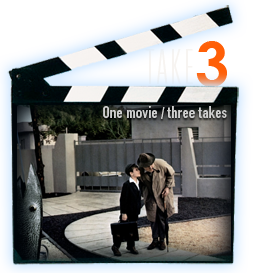





 Home Projectionist