Good evening. If you take this quiz within the next five minutes, for a limited time you will be offered, free of charge, the correct answers to the ten questions (afterwards, not before). But wait, there’s more. We’ll also add an exciting final grade-which, if if you get half or more correct, will be a passing one. This offer void where prohibited.
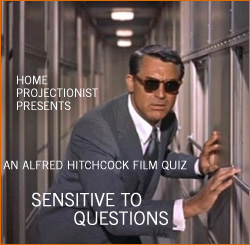
(*The quiz title was inspired by Alfred Hitchcock’s North By Northwest:“Something wrong with your eyes?” “Yes”, says the sunglass-clad Roger O. Thornhill (Cary Grant), “They’re sensitive to questions”. During the opening scenes of the movie, ad executive Roger advises his secretary: “Maggie, in the world of advertising, there is no such thing as a lie. Only expedient exaggeration.”)
ON THIS DAY in 1945, the Battle of Wake Island, ongoing since December of 1941, ended when Japanese forces surrendered to U.S. Marines. The 1942 film, WAKE ISLAND, with Brian Donlevy, dramatized the early days of that conflict.
What he called “black months”: When he was a friendly witness at HUAC, naming names
Academy Awards for Best Director: two (Gentlemen’s Agreement, On the Waterfront), plus three nominations
His favorite of all his films: America America
Fun fact: Was a bartender at college fraternities, but never joined one
Quote: “When I wasn’t working, I didn’t know who I was or what I was supposed to do. This is general in the film world. You are so absorbed in making a film, you can’t think of anything else. It’s your identity, and when it’s done you are nobody.”
ON THIS DAY in 1869, Felix Salten, author of Bambi, was born in Vienna, Austria. In 1942, Salten’s book was adapted by Walt Disney for his animated classic, BAMBI.
NUDE ON THE MOON (1961; directed by Doris Wishman; with William Mayer, Lester Brown, and Marietta)
IT’S TEMPTING to write-off this 1961 relic as a just plain awful waste of time. Poor production values, with sets that can’t quite surpass even Ed Wood’s cardboard cemetery in PLAN NINE FROM OUTER SPACE. It’s not only bad acting. It’s the lack of any acting whatsoever. And of course it goes without saying that there are much better lunar-themed films. Even a personal favorite of mine, the very much a product-of-its-time, DESTINATION MOON, would make for a more worthy tribute to the late Neil Armstrong.
But despite the film’s primary intent and its many flaws, NUDE ON THE MOON has a certain, honest-to-goodness, innocent charm. The effects, such as they are, are laughable at first. But after a while, I began to lament our present day, super-sophisticated dialog, rapid cutting, wall-to-wall soundtracks, CGI, and the overabundance of murderous, super-powered heroes and villains.
NUDE’s director, Doris Wishman, borrowed $10,000 from her sister in 1959 to make her first feature, HIDEOUT IN THE SUN, a nudist camp documentary. Her next film, in 1960, was NUDE ON THE MOON. Banned in New York, the censors said that showing nudes in a nudist colony setting was OK, but showing nudes on the moon in a sci-fi film was not. Wishman later worked with female stars like Chesty Morgan, and eventually moved on towards making more hardcore, “sexploitation” movies. She passed away in 2002.
There’s no cursing or bathroom humor here. In fact, you won’t find a mean word or unkind deed in the course of this wistful film. Sure, NUDE ON THE MOON was made–obviously–as a thin excuse to showcase topless women, of which there are several. But somehow there is nothing titillating or lecherous about the nudity. These characters look very well-adjusted, happy, and stable and content with their lives.
The movie’s point of view appears more like that of LOST HORIZON–the 1930s Frank Capra picture in which earthly travelers, each with their own problems, journey to a place where they discover what their lives have been missing. In the case of NUDE ON THE MOON, the traveler is a young rocketeer, so caught-up in his goal of getting to his imagined scientific paradise that he’s lost sight of the fact that he has a more human paradise right at home, on earth.
While the theme song (“Moon Doll”) is over-the-top corny, the “space ship” probably garnered from World War II salvage, and the attempts at any scientific accuracy almost nil, the movie left this over-60 viewer longing afterwards for far less-cynical days. Days when we spoke of the New Frontier, an exciting, optimistic time when President Kennedy boldly declared that “we will go to the moon!”. When none of us knew, but all of us wondered, dreamily, what we’d eventually encounter up there.
ON THIS DAY in 1638, Louis XIV–King of France, and the longest-reigning king in European history–was born. Roberto Rossellini’s 1966 film, THE TAKING OF POWER BY LOUIS XIV, tells the story of the “Sun King’s” rise to power.
ON THIS DAY in 1949, following a concert for civil rights by Paul Robeson at Peekskill, New York, departing concertgoers were attacked by a mob of anti-communist agitators, resulting in over 140 injuries. The 1979 biographical film, PAUL ROBESON: TRIBUTE TO AN ARTIST, documented this event.
ON THIS DAY in 1189, Richard I was crowned King of England at Westminster Abbey in London. Anthony Hopkins, in his first film role, portrayed the King (also known as “Richard the Lionhearted”) in the 1968 film, THE LION IN WINTER.
ON THIS DAY in 1864, Confederate forces evacuated Atlanta, Georgia, burning the city’s supplies and structures behind them. The 1939 classic film, GONE WITH THE WIND, depicted scenes of this great conflagration.
PRESIDENT GROVER CLEVELAND made Labor Day a national holiday in 1894, with the intention of preventing further worker turmoil and deaths, such as occurred during the just-ended, nationwide Pullman strike. Now, it’s a great time to gather together and relax with friends & family for food, drinks, and… movies. Celebrate worker esprit de corps with some Labor Day spirit and one or two of these recommendations (in no particular order), all of which in some way highlight both the delights, and plights, of working men and women. ON THE WATERFRONT (1954; directed by Elia Kazan) Ex-boxer and longshoreman Marlon Brando attempts to redeem himself by confronting union boss Lee J. Cobb. Leonard Bernstein’s first movie score. “One of the most powerful films of the 50s” (Pauline Kael).
SALT OF THE EARTH (1953) Latino mine workers on strike in New Mexico. The film’s writer and producer had been on the Hollywood blacklist.
BLUE COLLAR (1978; Richard Pryor, Harvey Keitel) Auto workers are being cheated by both their management and their unions. “Strongly-written and provocative” (Danny Peary).
MODERN TIMES (1936) Charlie Chaplin vs. the Machines. An assembly line worker tries to express his humanity at work, with the help of Paulette Goddard.
MOONLIGHTING (1982) Jeremy Irons is a Warsaw construction worker ordered to London where he slowly begins to oppress the Polish laborers he’s supervising.
BLACK FURY (1935) Michael Curtiz’ film is based on a true story of a Pennsylvania coal miner (Paul Muni) who was beaten to death by company detectives. “Realistic, strikingly filmed” (Leonard Maltin).
GUNG HO (1985; directed by Ron Howard) Michael Keaton stars in this light comedy about a Japanese auto firm’s attempts to establish a factory in the U.S.
NORMA RAE (1979) Sally Field (Oscar winner) and Ron Liebman team up to unionize textile workers in this inspiring Martin Ritt film.
MOLLY MAGUIRES (1970; Sean Connery, Richard Harris) Connery leads a secret society of Irish mineworkers in late 1800s Pennsylvania. “Elegiac” (Pauline Kael).
WHICH WAY IS UP? (1977) Richard Pryor plays three roles in a story of a citrus grove worker transformed into a union hero. A remake of the Lena Wertmuller film, THE SEDUCTION OF MIMI.
F.I.S.T.(1979) A truck driver (Sylvester Stallone) becomes a Hoffa-like union organizer and subsequently tangles with gangsters. Directed by Norman Jewison.
HOFFA (1992) Jack Nicholson portrays the exploits of the infamous Teamster boss, in a script by David Mamet. “Almost affectionate biographical treatment” (Videohound).
HARLAN COUNTY, U.S.A. Oscar-winning Barbara Kopple film documents a bitter strike by United Mine Workers against a Kentucky power company. “One of the most incisive portraits of America and the ever struggling labor movement” (Danny Peary).
ON THIS DAY in 1532, Lady Anne Boleyn was made England’s Marquess of Pembroke by her fiancé, King Henry VIII. In 1969, Genevieve Bujold portrayed Boleyn in the film, ANNE OF THE THOUSAND DAYS, with Richard Burton as King Henry.
Good evening. How many in your party? One? Fine. We have a pleasant quiz over here if you’ll follow this way. Please be seated and your quizmaster will be right with you. In the meantime, may we suggest reflecting on the many drinking and dining establishments you’ve encountered within the films of Alfred Hitchcock, followed by clicking on the “Take the Quiz” button.
(*The quiz title was inspired by Alfred Hitchcock’s North By Northwest:“Something wrong with your eyes?” “Yes”, says the sunglass-clad Roger O. Thornhill (Cary Grant), “They’re sensitive to questions”. Early during the movie, Roger dictates a note for his secretary to give to his mother: “Dinner at ’21’. Seven O’Clock.”)
ON THIS DAY in the year 12 A.D., Roman Emperor Gaius Caligula–nephew and adopted son of Tiberius–was born. The 1980 film, CALIGULA, written by Gore Vidal and starring Malcolm McDowell, told the story of the Emperor’s rise and fall.
THIS FASCINATING, short video should remove all doubt about the power of the “one-point perspective” and who was, and probably always will be, the master of it. The impact of a precise, symmetrical point of view is very dramatic and compelling, and it is prevalent in nearly all of Stanley Kubrick’s films.
Not just another WordPress.com site, but an extraordinary place to spend a weekend, grill a cheese sandwich and watch a film to improve your life and stimulate a few of the grey cells.








 Home Projectionist