When I saw the clip below from THE GREAT LIE (1941), I had to see the entire movie right away.
Why is Davis SO hell bent on monitoring Astor’s intake of booze and sandwiches?
After all, Sandra, Astor’s character, is HUNGRY. “I’m not one of you anemic creatures who can get nourishment from a lettuce leaf — I’m a musician, I’m an artist! I have zest and appetite — and I LIKE FOOD,” Sandra rails. “I’ve been lying awake in there thinking about FOOD!”
With an almost nonchalant grace, Davis’s Maggie pulls off one of the most striking double slaps in cinema history.
What fun these actresses must have had creating this scene. I can imagine them on set, sharing a satisfying cigarette after filming, as if they just had sex. (Together, Davis and Astor rewrote much of the original script, and Astor won the 1942 Oscar for Best Supporting Actress for her performance.)
All in all, THE GREAT LIE is a treat, full of goofy plot twists and turns. Watching Davis play the “good girl” counterpoint to Astor’s paryting diva is worth the entire 108 minutes. The drag on the whole movie is George Brent’s dud character and wooden performance. The character of Pete, played by Brent, doesn’t deserve one iota of either women’s attention. Every time he appears on screen, he does something worthy of a big sigh and a dose of disdain, like demanding that Sandra cancel her piano concert to marry him — even though they could probably go to City Hall after her concert, right?
In a nutshell (spoiler alert), both of the gals love Pete. He’s dumped Maggie to marry Sandra, then finds out that their marriage isn’t legal (due to Sandra’s delayed divorce). He has regrets, sees a way out, reconnects with Maggie, and goes off to the jungle. When the women think that he’s died in a plane crash — and Sandra realizes she’s pregnant and on her way to ruining her career as a concert pianist — the women conspire: Sandra will have the baby and give it to Maggie who will raise it as her own.
Hence, THE GREAT LIE.
But there is a GREATER, BIGGER, JAW-DROPPING LIE in this film. It’s a simple statement spoken by the doctor who is tending to Sandra as she goes through labor. While Sandra writhes and moans, Maggie waits outside, pacing, looking much like the traditional expectant father. On a break, the doctor says to Maggie: “A woman without a baby is like a man without a right arm.”
WHAT??? That’s SO not true, Doc! And could you come up with a worse metaphor?
Not only does the doctor imply that a man without an arm is worthless and devoid of all prospects (pity his poor patient in that sticky situation), but in his position of authority, the doc also gives voice to a big ball of hooey.
Certainly, being a mother may be one of the most fulfilling roles of a woman’s life.
But is a woman without a baby crippled? dysfunctional? broken? useless?
Of course not.
And that’s the BIG, BIG LIE in THE GREAT LIE.
To be sure, cultural messages upholding and reaffirming the positive role of motherhood resonate in film. On the opposite side of the spectrum, we all know about the cold-hearted and childless spinsters and stepmothers who appear in everything from traditional fairy tales to contemporary cinema. But I’ve not often caught such a specific line in a movie that so directly carries the message of “Procreate or Fail.”
Can you cite any other specific lines like that in movies? I want to make a list of them. Bad metaphors, big lies, and all.
Gloria Bowman is a writer, storyteller, blogger, movie lover, freelance editor,
and author of the novel, Human Slices.
Access her blog at www.gloriabowman.com; on Twitter @GloriaBow.
In Otto Preminger’s 1968 film SKIDOO, actor Austin Pendleton talks Jackie Gleason through an LSD trip and smokes pot with Groucho Marx.
What a mind-blowing way to start his film career.
“Here’s a movie that was made all those years ago, and it’s still controversial and being talked about. That’s sort of amazing,” Pendleton said in a recent interivew with HOME PROJECTIONIST.
“I mean, the majority of movies you make are just forgotten. People don’t even know what you’re talking about when you bring one up.”
Madeline Kahn with Pendleton in What’s Up, Doc? (1972), Warner Bros. Photo: movieactors.com
If you bring up Pendleton’s name, some moviegoers will respond, “Oh, I loved him in WHAT’S UP, DOC?” — or fill in the blank with another title in the long list of his films.
Others will say, “Austin who?”
“Oh, that’s all right,” Pendleton said in his self-deprecating style.
Over the years, it would have been hard to miss seeing Austin Pendleton on the silver screen. He’s brought his distinctive presence and talent to more than 40 feature films — plus stage and television — during a prolific career that’s still going strong. He’s kind of a national treasure. (See below for more on Pendelton’s career.)
AN INAUSPICIOUS BEGINNING
Austin Pendleton Photo: Steppenwolf Theatre
As soon as Pendleton settled in at his dreary motel near Paramount Studios to start work on SKIDOO, all he wanted to do was turn around and go back to the stage in New York.
“SKIDOO was the first time I ever played a part of any size at all in a film,” Pendleton said.
“When we first began to shoot, I thought, ‘Oh, I don’t know how to do this.’ I mean, for the first week I would call my agent in New York and I would say, ‘I gotta get outta here. I don’t know what I’m doing. I don’t know how to function in front of a camera.’ And my agent would say, ‘Well, dear, you just can’t get out of a film.'”
With no easy escape route, Pendleton continued to endure Preminger’s demands and tirades. “You’re an amateur,” Preminger railed to the struggling actor one day.
“We were about a week into filming,” said Pendleton, “and at that point, I just agreed with him. I said, ‘Yes, I know I’m inexperienced, Mr. Preminger. I really don’t know what to do.'”
Pendleton’s words of resignation instantly transformed the difficult director. “From then on, Otto took me under his wing,” Pendleton said. “He taught me just about everything I know about film acting. ”
“He was very kind and patient. Before each scene was shot, he would talk to me, mainly about how every take was like an opening night in the theatre, and I found that very helpful, since that was what I was most familiar with. He talked about how important simplicity was. He told me to just keep it small, to talk and listen, essentially, not to act too theatrically.
“He would repeat these things over and over to get them into me. And it meant so much that he was taking the time to do that. As an actor, I still call upon what Otto taught me.”
With Preminger’s coaching and support, Pendleton created the memorable SKIDOO character of Fred the Professor, an endearing, low-key, mastermind hippie whose stash of LSD changes everyone’s lives…for the better.
A LOVE IT OR HATE IT THING
Critics and movie fans have called SKIDOO all things scathing — a train wreck, a hot mess, a hatchet job.
It’s also been praised by its evangelists as being one of the most delightful, must-see films of all time.
“You know,” Pendleton said, “I sort of still don’t know what I feel about it. I certainly am happy I made it because I got to know Otto Preminger. That was wonderful. But there are two schools of thought about SKIDOO. One is that it’s a total disaster, an embarrassment, infamous, and all of that.
“On the other hand, there are a lot of people, either I know or know of, and who I’ve read on the subject who seem to be very intelligent, who just love that movie. It has a real following.”
Once you see SKIDOO, you can’t ever forget it. It’s a comedy that’s not a comedy, a spoof that’s not a spoof. Literally, it’s a “trip” — enigmatic, to be sure, blundering and odd, yet also rich with well crafted and executed scenes that will feed your head for a long time.
You’ll be asking yourself: “Did I really just see Carol Channing dancing in her underpants and see-through bra? Did I really just watch Jackie Gleason ingest LSD and hallucinate a vision of mathematics?”
In a nutshell, the plot is wacky. Tony (Jackie Gleason) is full of existential angst because he’s wondering if his wife Flo (Carol Channing) has been untrue and if he is really the father of his daughter Darlene (Alexandra Hay).
He’s also been called upon by God (Groucho Marx), the head of his old mob outfit, to knock off Blue Chips (Mickey Rooney) in Alcatraz because of an upcoming investigation in which Chips is going to testify. Tony doesn’t want to do the hit, but he finally agrees after discovering his friend Harry (Arnold Stang) in a car wash with a bullet hole right through his head.
How’s that for a comedic setup?
Tony has other trouble brewing as well. The hippies have come to town, and daughter Darlene has taken up with Stash (John Phillip Law) and his crew of dope-smoking, body-painting anarchists.
As an incognito prisoner, Tony sneaks into Alcatraz to do the hit. He befriends his cellmate, Fred the Professor (Austin Pendleton), a long-haired draft dodger. When Tony realizes he won’t be able to get to Blue Chips because of tight prison security, he and the Professor devise a scheme to escape from prison in a makeshift hot air balloon, oh yes, while all of the guards and the other convicts are happily hallucinating.
In the meantime, Carol Channing, dressed in a Napoleonic admiral suit, bugaloos and breaks into the SKIDOO theme song (by Harry Nilsson), leading a flotilla of hippies to rescue her daughter from God, who is hiding out on his yacht in the Pacific Ocean.
Most hilarious — and historic — is the closing shot where we find Pendleton and Groucho, now serene as Hare Krishnas, making their getaway in a psychedelic sail boat. After Groucho takes a hit off a joint, he utters what will end up being his last line ever in a movie: “Mmmm…pumpkin.”
“Doing that scene,” Pendleton said, laughing, “was one of the most delicious parts of the whole experience, you know?
“We were on location, by the ocean. We had dinner the night before, and everything Groucho said was funny, in a relaxed and inviting way. We talked about all kinds of things, mostly related to the acting profession.
“Looking back, I guess I was relieved that the last scene was being shot. But more than that, I was having a wonderful time at dawn with Groucho Marx. It was heaven, actually, exactly what you’d think it would be like.
“As soon as I got back to New York, I told everybody about that scene. In fact, I still tell everybody about it.”
CHANGING SCRIPTS & VISIONS
Preminger needed a film in 1968. He was facing a contractual obligation to get a movie completed by the end of the year. He chose the SKIDOO script, which was written by screenwriter Doran William “Bill” Cannon. Cannon asked the director to cast his friend Pendleton in the role of Fred because he had written the part specifically for him. Preminger met Pendleton and agreed.
“I think the script of that movie was pretty good,” Pendleton recalled. “I think Otto was not exactly the right director for it. It should have been somebody like Brian DePalma, who was very young then and who was making those counterculture movies. It should have been directed by somebody like that. On the other hand, Otto is a very original director, you know. What he does is very striking.”
Script changes were relentless. Cannon had written a “love, peace, and sunshine” script, and Preminger ended up making it something else, something still indefinable. He contributed to the jumble himself with his own script changes and brought in other writers as well, including Mel Brooks, Rob Reiner, Elliott Baker, and Stanley Ralph Ross, who was the writer for the BEACH PARTYmovies and several episodes for “The Monkees” and “Batman” television series. The film certainly shows his influence.
[Trivia buffs like to note that the SKIDOO cast includes Batman villains The Riddler (Frank Gorshin); The Penguin (Burgess Meredith); and The Joker (Cesar Romero). Otto Preminger himself played Mr. Freeze.]
Once Preminger established a relationship with Pendleton, he expanded his role as Fred the Professor. “That kind of knocked me out,” Pendleton said. “I wanted to be done with the whole thing. Although Otto was brilliant, there was this sense of despair on the set. What was happening didn’t seem to be really igniting.”
Pendleton said he learned from his later film experiences that there is often a sense of anxiety and fear during filming, and it doesn’t necessarily impact the success of a movie.
“I mean, it was true of the first few films that I did after SKIDOO. CATCH-22and WHAT’S UP, DOC? are both terrific films, but difficult in the making. On the other hand, sometimes the set is heaven and the film just sits there in the end.”
Certainly Preminger wasn’t trying to fail or crank out a meaningless throwaway piece of work. In addition to the star-studded “old school” Hollywood cast of Gleason, Channing, Rooney, and Marx, Preminger added Frankie Avalon, Fred Clark, Michael Constantine, Peter Lawford, Slim Pickens, Richard Kiel, and George Raft. For cinematographer, he opted for Leon Shamroy, an 18-time Oscar nominee. He chose avant-garde designer Rudi Gernreich for costumes, newcomer Harry Nilsson for original music, and renowned Saul Bass for titles.
But what in the world was he trying to do?
“One of the most interesting things about SKIDOO,” said Pendleton, “is that it’s a comedy with a dark, even sad, pull under it. Jackie’s got a comic persona and everything, but he’s depressed. So these comic and serious qualities are pulling against each other and pulling together. That’s what creates something distinctive to Preminger, I think. He was no fool, you know. A different director would have emphasized the comedy.
“That’s Otto’s specific contribution to it. I think that combination of feelings is what gives SKIDOO a quality all of its own and why people want to see it again and again and again.”
A YEAR LACED WITH ACID AND UPHEAVAL
Preminger produced SKIDOO during a monumental crossroads in time. Old Hollywood was still hanging on while it tried to figure out what to do with the growing influence of the counterculture on everyone’s daily lives and the film business itself.
“It’s important to remember that SKIDOO was filmed in that momentous spring of 1968,” Pendleton said, setting the stage for the film’s place in history. “In the middle of our shoot, Martin Luther King was assassinated, and before that was the withdrawal of LBJ from the presidential race and the primaries and all of the Viet Nam protests.
“We shot on the Paramount lot, and at the end of each day Otto would invite a few of us to his office and pour some vodka, and we would talk politics. Otto would lead the discussions; he was a famous liberal. Well, everyone there was a liberal, and that spring of 1968 was at once exhilarating and sobering, a mixture strongly reflected in Otto’s office on those evenings.”
That same mixture of exhilaration and sobriety is apparent in the film. While there were riots in the streets from Memphis to Paris, there was also an emerging counterculture of hope and new horizons.
The hippies intrigued Preminger. He was a 63-year-old classic Hollywood director turned hipster in a Nehru suit, and he was sympathetic to their cause. Straddling a cultural divide, Preminger had one foot grounded in his own history and generation while the other struggled to find a place in a groovy and cool world gone crazy with change.
Maybe he could find a bridge with lysergic acid diethylamide.
LSD’s appearance as a driving force in a movie certainly wasn’t strange in 1968. As TCM’s Millie de Chirico summarized in The Gist, “1968 in fact was a big year for acid movies. PSYCH-OUT, WILD IN THE STREETS, ALICE IN ACIDLAND, MANTIS IN LACE and others were released in the wake of Roger Corman’s THE TRIP (1967) and EASY RIDER (1969) was just around the corner.”
SKIDOO was created in the middle of them all. In preparation for the film, Preminger dropped acid with Timothy Leary (who appeared in the movie’s trailer). Likewise, Groucho Marx enjoyed a trip with Paul Krassner. All accounts tell of wondrous rides. (See reference links below.)
What made SKIDOO so different from the other acid movies of its time is that Preminger portrayed the LSD experience as a positive, liberating, empowering, and cathartic experience.
The movie still seemed “square.”
THE WILL TO SURVIVE
Paramount released SKIDOO in 1968 as part of a double bill with UP-TIGHT!
“On the set, even though I thought the film wasn’t quite working, I didn’t think it would be a catastrophe,” Pendleton said.
Nonetheless, due to scathing reviews and lackluster box office receipts, the film disappeared within weeks of its Miami premiere, sunk, buried, its memory erased, and it appeared that Paramount and the Preminger estate liked it that way. The film stayed out of view for many, many years.
“Oh, I remember the premiere very vividly,” Pendleton said. “People were walking out. And I remember thinking that they were wrong. I thought, ‘No way, it’s not a film you walk out on.’ We’ve all been in those and we’ve all seen those. It’s just not right.”
No one even talked about the movie at the gloomy after party. “It was so awkward and unpleasant,” said Pendleton. “I thought they were underrating the movie, but it was just the way it went.
“I put it behind me, flew back to New York, and kind of forgot about it. And it wasn’t too long after that that I did CATCH-22. The SKIDOO premiere was in late 1968, and I was shooting CATCH-22 in early 1969.”
Olive Films
SKIDOO was out of distribution for decades, a scarcity that increased demand and created a kind of mythology and mystery around it. It was a movie of its time whose time didn’t come until appropriately aged on the shelf.
Movie buffs coveted and shared bootlegs of it. In the late ’70s, it periodically showed up on cable and special screenings. New audiences appeared when TCM featured it, along with THE LOVE-INS, as part of its 2008 Underground Series.
At last, in July 2011 SKIDOO was released on DVD by Olive Films, followed by the Blu-Ray release of The Otto Preminger Collection in November 2012. The collection includes SKIDOO, SUCH GOOD FRIENDS (1971), and HURRY SUNDOWN (1967), which claims a spot in the book, TheFifty Worst Films of All Time.
PENDLETON AND SKIDOO: TOTAL ORIGINALS
“I saw SKIDOO again recently, ” Pendleton said. “I hadn’t seen it since it came out essentially, except once in 1997 at the Dallas Film Festival where they were going to have a midnight screening of it and they invited me down. I was in Los Angeles so I went there. SKIDOO was in a category called “Films You Love to Hate,” and I thought, ‘Wait a minute. I’ve flown all the way down here for that?!’
“They had me do a Q&A before it started. I told the audience, ‘Well, I haven’t seen the movie in years, and I’m looking forward to seeing it again.’ I said that I thought Otto was one of the great film directors, and they thought I was joking.
“Now that’s ridiculous. I mean the man made several classic movies, LAURA, ANATOMY OF A MURDER. Even the ones that aren’t classics, there are a lot of them that are, you know, very well made. Otto was much admired by a lot of people who are knowledgeable about the movies. A lot of actors do some of their best work in his movies. He’s very supportive and thorough with actors and he’s also difficult, so you get the pull of those two things.”
The festival audience still had to be convinced that Preminger was one of the greats.
“But then as I watched SKIDOO that night, after the Q&A,” Pendleton said, “I thought, ‘God, no, it doesn’t work.’
“But what’s good about the movie is that there isn’t anything else like it. It’s totally original. I just don’t think it works, that’s all. I don’t think it’s either this undiscovered classic or a disaster. I just think it’s this weird thing that doesn’t work.”
Pendleton paused and thought for a moment about the crazy movie that launched his film career.“And although SKIDOO‘s this ‘weird thing,'” he said, “it’s a film that still has its moments.
“That’s what I kind of love about it.”
_____________________
Postscript: Even the harshest critics of SKIDOO give high marks for Nilsson’s singing of the closing credits. It’s good in the movie, but it’s even better when Nilsson does it with an introduction by Otto Preminger in a “Playboy After Dark” segment.
MORE ON PENDLETON’S PROLIFIC CAREER
Pendleton has brought his inimitable presence to more than 40 feature films, including THE FRONT PAGE (1974); THEMUPPET MOVIE (1979); MR. & MRS. BRIDGE (1990); A BEAUTIFUL MIND (2001); and BAD CITY (2009) aka DIRTY CITY. His voice-over work includes Gurgle in FINDING NEMO (2003).
A long, long list of television appearances includes “Tales from the Crypt,” HBO’s “Oz,” “Law & Order,” “The Cosby Show,” “The West Wing,” and going way back, “Love, American Style.”
“I also direct,” Pendleton said,”so that keeps me busy a lot of the time. I do plays in attics. I’m kind of like a moving target,” he said. That’s a bit of an understatement. In the world of theatre, Pendleton is a well-respected and award-winning actor, playwright, and director whose presence is vast and still going strong.
In 1964, he originated the role of Motel the Tailor, singing the wonderful “Miracle of Miracle” in FIDDLER ON THE ROOF with Zero Mostel. He was nominated for a Tony for directing Elizabeth Taylor and Maureen Stapleton in the THE LITTLE FOXES.
Today he is still garnering rave reviews, currently starring in and directing the off-Broadway premiere of THE LAST WILL, by Robert Brustein. He recently directed Harold Pinter’s THE BIRTHDAY PARTY for Chicago’s Steppenwolf Theatre, where he’s been a member of the ensemble since 1987, and concurrently, a New York Mississippi Mudd production of SUDDENLY, LAST SUMMER. He’ll be back at Steppenwolf next season to direct TRIBES.
In addition to all of that, he teaches acting and directing at The New School in New York.
“Well, I do a whole lot of things,” Pendleton said. “I take a lot of work, and so that kind of keeps me going, and I try not to worry whether a role is going to promote my career or destroy it because you just simply can’t ever tell. But sometimes you can’t help worrying.”
Pendleton attributes his longevity and success to always being available and open to new work. “I think you have to follow your instincts and just go. That opens you up to a lot more things than if you tried to figure everything out. I guess thick-skinned and curious are the words I’d pick to describe myself. Sometimes I don’t pull off the thick-skinned part, though. I think everybody falls down with that one in this business sometimes.”
With support from an Indiegogo fundraising campaign, his students are producing a tribute to the man and his work with a new documentary, THE AUSTIN PENDLETON PROJECT: WHERE THE WORK IS. Set to be released this year, it’s described as Pendleton’s “five-decade journey…the colorful and dramatic life of this unsung artist…a portrait of the most famous actor you have never heard of.”
“You know,” he said, “I don’t know that much about it. It started out when two students of mine wanted to tape some of my classes. I sort of said ‘O.K.,’ although I got kind of nervous about it, but then it turned into this thing where they interview people.”
So far, the film includes interviews with the likes of Meryl Streep, Natalie Portman, and Laurie Metcalf, to name a few of Pendleton’s colleagues and biggest fans.
“I haven’t really seen any of it. I don’t think I should interfere with it because I would start trying to shape it in ways. I would start even if I resisted it,” he said, laughing.
IN THE QUEUE
Of all his movie performances, Pendleton’s favorites include: MR. AND MRS. BRIDGE (1990) with Joanne Woodward and Paul Newman and BAD CITY (2009), aka DIRTY WORK, where, Pendleton said, “I play the worst human being you can imagine.”
A special thanks to Austin Pendleton
for his time, kindness, and attention
and to Jeffrey Fauver of Steppenwolf Theatre
for making it happen.
Gloria Bowman is a writer, storyteller, blogger, movie lover, freelance editor,
and author of the novel, Human Slices.
Access her blog at www.gloriabowman.com; on Twitter @GloriaBow.
I’m all for viewing parties that have perfect pairings of food and film — like fish tacos being served at a screening of JAWS.
And I will be forever grateful that I went to a home screening of the documentary, OFF THE MENU: THE LAST DAYS OF CHASEN’S(1997). I probably would never have savored Chasen’s chili. How good is it? Liz Taylor had batches shipped to her every two weeks when she was in Rome filming CLEOPATRA. I don’t blame her.
Chasen’s was one of the Old Hollywood legendary eateries, and it managed to stay alive until 1995 when it was demolished to make room for a new retail site.
This delicious documentary, by independent filmmakers Shari Springer Berman and Robert Pulcini, is an homage to the stories of its glamorous clientele — from Hitchcock to Sinatra, Gable to Gleason — and even contemporary stars like Donna Summer who wrote “She Works Hard for the Money” in honor of a female bathroom attendant at the restaurant.
But the real emphasis of the work is on the stories and recollections of Chasen’s dedicated captains, waiters, and staff who loved doing their jobs as much as they loved rubbing elbows with celebrities. Like an extended family with all of its ups and downs, love and dysfunction, arguments and clashes, they stuck together and had a helluva a good time.
The New York Times called OFF THE MENU, a “poignant farewell” to another era, gone but not at all forgotten. Some critics assailed the film for not delving into the labor and social inequities of the time. That’s another story for another documentary.
This film is a charming celebration of character and characters. I can only dream of sitting in one of those banquettes watching Humphrey Bogart and Peter Lorre get drunk.
Siskel & Ebert talk about OFF THE MENU: THE LAST DAYS OF CHASEN’S
Gloria Bowman is a writer, storyteller, blogger, movie lover, freelance editor,
and author of the novel, Human Slices.
Access her blog at www.gloriabowman.com; on Twitter @GloriaBow
For its recommendation algorithms, Netflix uses something called “pragmatic chaos.”
“I kid you not,” John wrote. “I had rented a Godzilla movie and I got, ‘Since you liked GODZILLA VS. MOTHRA, you might also like YENTL.'”
David countered: “Since you liked I SPIT ON YOUR GRAVE, you might also like GIGI.”
Algorithms may be emerging as a powerful force in our world, but they sure aren’t as clever or as funny as Home Projectionists…and they can’t expand your movie horizons like our community of Home Projectionists on Facebook.
(We define Home Projectionists, by the way, as film fans always on the search for great things to watch … and who love the opportunity to be program directors in their own homes.)
We started the What Are You Watching?group on Facebook during last year’s winter holidays while we took a sabbatical from the Home Projectionist blog. The group now has more than 100 participants, all savvy and smart cinephiles who share, discuss, joke, and connect — and most importantly, make compelling recommendations for movies to add to your list.
Hundreds of films have already been talked about — from current popular releases like THE SESSIONS(2012) to the obscure, like the early Technicolor THE TRAIL OF LONESOME PINE (1936). As a result of the Home Projectionist group, my must-see list is on super-growth hormones, like some crazy beanstalk I will never be able to conquer. It’s a better kind of “pragmatic chaos” than the algorithms provide.
wikipedia.com
In addition to the direct recommendations and reviews, What Are You Watching? conversations go into all kinds of movie territory.
John didn’t recommend THE YESTERDAY MACHINE (1963) but at least we all know the movie includes “the world’s longest monologue by a mad Nazi scientist about how time travel works.”
While her family was sleeping, Gwen seemed to tell us quietly that she “was watching NOTORIOUS (1946) for the bizillionth time…I think it’s the most romantic movie ever created.” Jay agreed with her, “Not even a bizillion viewings can weary the charms and virtues of his artful masterpiece.”
Kelli, Andy, and Steve recently had a discussion about THE YOUNG GIRLS OF ROCHEFORT (1967) and the power of watching big movies on the big screen, and when you can’t, they agreed, sharing them with a group of friends is the next best thing.
wikipedia
Eric reported that he had watched DINAH EAST (1970) and spotted Tara from GONE WITH THE WIND in a backlot scene.
Aaron told us about the fabulous terribles he picked up in a $5 bin.
There was a multi-day dialogue about everyone’s favorite Susan Hayward movies. And we discovered that Dark Shadows super fan Harold put together a tribute to Joan Bennett.
Joseph cited one of his favorite lines from CROSSFIRE (1947): “Tonight was a long time ago.”
To make me laugh when I’m feeling a bit down in the dumps, I recall the day Daniel deadpanned, “Electricity is kind of a big deal,” when commenting on the famous dance from DeMille’s MADAM SATAN(1930).
I don’t think there could be a better crew of film fans. The Home Projectionist What Are You Watching?Facebook group is open for your viewing pleasure and participation. Go to http://www.facebook.com/groups/homeprojectionist and join in today.
Gloria Bowman is a writer, storyteller, blogger, movie lover, freelance editor,
and author of the novel, Human Slices.
Access her blog at www.gloriabowman.com; on Twitter @GloriaBow
These actors, actresses, directors, producers and composers have birthdays in April. How many do you recognize? Answers appear below the calendar.
1) Debbie Reynolds; 2) Alec Guinness; 3) Marlon Brando; 4) Elmer Bernstein; 5) Gregory Peck; 6) Barry Levinson; 7) Francis Ford Coppola; 8) Mary Pickford; 9) Paul Robeson; 10) Max Von Sydow; 11) Paul Douglas; 12) Ann Miller; 13) Stanley Donen; 14) Julie Christie; 15) Michael Kamen; 16) Charlie Chaplin; 17) William Holden; 18) Miklos Rosza; 19) Jayne Mansfield; 20) Harold Lloyd; 21) Anthony Quinn; 22) Jack Nicholson; 23) Frank Borzage; 24) Barbra Streisand; 25) Al Pacino; 26) Douglas Sirk; 27) Jack Klugman; 28) Lionel Barrymore; 29) Celeste Holm; 30) Eve Arden
Born on March 23, 1904, in San Antonio, she left us with a legacy of movies and a larger than life legend.
One of my favorite viewing parties ever included QUEEN BEE (1955) and STRAIT-JACKET(1964). We sat around on a hot summer day wearing improbable wigs, drinking beer, and staring at the screen. When Joan is on, you can’t look away.
Not long ago, we revisited FEMALE ON THE BEACH (1955). I had forgotten that Joan’s legs co-starred as much as hunky Jeff Chandler. Oh, yes, and this movie has some of the best snarky dialogue ever. Someone in the room proposed a drinking game: a sip of your libation of choice every time there was a gasp-worthy line. We had to stop just minutes into the movie because we couldn’t drink that fast.
Lines like —
“You’re about as friendly as a suction pump. ”
“I’d like to ask you to stay and have a drink, but I’m afraid you might.”
And the classic: “I wouldn’t have you if you were hung with diamonds, upside down!”
I’m sending Joan a BIG birthday wish through the cosmos and thanking her for her talent, her audacity, the memories, beauty, and pleasure she’s given to us all. She was a force, a one in a billion force.
Here’s a little Home Projectionist pick-me-up if you live where it’s dark and cold and daily life can be a struggle against the elements.
Imagine yourself at a lovely pool, in a floating chair, your drink of choice in the cup holder, and one of your favorite movies projected on a gigantic screen. Can’t get much better than that.
(Note that inflatable outdoor screens are getting more and more affordable — and accessible and affordable to rent as well if you don’t have the space or inclination for permanent installation.)
One the loveliest and most memorable New Year’s Eve scenes in the movies comes in the closing minutes of THE APARTMENT (1960). Shirley MacLaine abandons her disappointing lover at a party and runs, with her head held high, down a New York City street and up the stairs to Jack Lemmon’s apartment. Her face is so bright with clarity, determination, and anticipation that you can’t help but feel the absolute joy in her heart. The soaring score doesn’t hurt the level of emotion either.
While assorted and varied lists of the “Best New Year’s Movies” include contenders like STRANGE DAYS (1995), THE GOLD RUSH (1925) and, of course, the incredible THE POSEIDON ADVENTURE (1972), THE APARTMENTstill tops my list as the perfect film for ending one year and welcoming in a new. Not only is it a love story, but it’s also a story of reclamation, a tale of letting go of the bad to let in the good, an affirmation that every day brings an opportunity for you to choose how you want to live your life.
This film, which won Best Picture and Best Director for Billy Wilder in 1960, plus Oscar nominations for the cast, is a pure and eternal classic in all senses of the word. Its brilliant script is insightful and honest, the performances are perfect, it’s rewatchable and timeless, there’s an enduring emotional impact, and it’s perfectly engaging to look at — all those things that make great movies great.
Although it’s billed as a comedy and full of great lines and humor, THE APARTMENT is far from a screwball circus. Between the laughs, the film highlights the darker side of office life, rife with seduction, inappropriate behavior, and the daily drama of moral hazards.
MacLaine’s character is vulnerable Fran Kubelik, an office building elevator operator who is having an affair with Mr. Sheldrake, the head of human resources, played with impeccable smarminess by Fred MacMurray. He is a married man, powerful, certainly not well intentioned, and operating without any fear of consequences for toying with Miss Kubelik’s affections. Jack Lemmon, in one of his finest performances, takes on the role of C.C. Baxter, a young, ambitious employee at the firm who is not averse to letting his corporate higher ups use his bachelor pad for their sexual liaisons…in return for a key to the executive washroom.
Nothing good come of it. The script even goes so far as to include a suicide attempt.
These protagonists, Miss Kubelik and Mr. Baxter, have somehow found themselves in compromised positions. They are two people diminished, as it were, by what others want and expect from them. They have struck grand bargains, rationalizing that what they’re doing is in their best interests. Unfortunately, with their amoral decisions, both have lost the core of who they really are.
All is not lost, however. Happily, they both regain “consciousness” in time to recapture their own identities and, in turn, find each other, learning life can beat you up, but it also offers opportunities for changing course and finding what you really want and need.
Could there be a better uplifting message for celebrating new beginnings and ringing in a new year?
If you’re staying in and still don’t have a movie selection for this New Year’s Eve , TCM is airing THE APARTMENT tonight.
Wishing each and everyone the best of luck and love in this 13th year of the millennium!
SPECIAL NOTE: Home Projectionist is taking a brief hiatus as the New Year begins. We’ll be back soon.
Gloria Bowman is a writer, storyteller, blogger, movie lover, freelance editor,
and author of the novel, Human Slices.
Access her blog at www.gloriabowman.com; on Twitter @GloriaBow
I am wondering about all of the families and friends who settled in Christmas Eve to sit back, relax, and share a holiday movie but nothing was available for streaming. I hope they at least had cable.
In case you haven’t heard, a big chunk of providers, including Netflix, relies on the servers of Amazon’s Web Service, better known as AWS, and that service happened to have a meltdown on Christmas Eve.
According to the Wall Street Journal article, Amazon’s Snafu Rattles Customers, “Millions of Netflix customers from Canada to Brazil were unable to stream video on Christmas Eve after technical issues in Amazon’s servers in Northern Virginia felled service from Dec. 24 through the following morning.” No explanation has yet been provided.
The plot thickens too. During the meltdown, the social networks were “abuzz with speculation about why Amazon’s competing Prime streaming movie service was still functioning.”
So, Amazon has some ‘splainin’ to do and some technology to tend to. In the meantime, I am using this opportunity create a kind of cautionary tale. Hence, the photo of the ring.
I have had this little piece of costume jewelry since high school, when I worked at an appliance store. One of my jobs there was to take service calls. One night, a woman called in an absolute panic. “Help me,” she said, “please help me.”
“Yes, ma’am, what can we do for you?” I asked.
“I just realized my television is out, and my husband will be home soon, and I’m just terrified.”
“Terrified?” I asked her. I had heard of husbands going ballistic over things but of a television not working? Being “terrified” seemed a bit of an overstatement.
“Not terrified of him,” she said. “I’m terrified that we’ll discover we don’t have anything to talk about. We always have the tv on. Is there someone who can come over now? Right now? Please?”
Coming from a family of non-stop talkers, I didn’t appreciate that urgent gravity of her situation, but I could sense in her voice that she was indeed terrified.
“Here’s the thing,” I told her. “We do have a technician available for a house call tonight.”
“I’ll pay anything…anything!” she promised.
“Well, before I set something up, I have to ask you to do something for me,” I told her, feeling as if I needed to use a quiet and calm therapist voice. “You have to check the plug.”
“The plug?” she asked, sounding annoyed.
“Yes. The plug.” I hadn’t worked at the appliance store for long, but we did have a protocol. “Before we can arrange any service call, I have to ask customers to check the plug. Ninety percent of the time, it turns out that the only problem is that the plug is pulled out.” There was silence on the other end of the line. “Really. It’s true,” I said. “Do me a favor and go see. I’ll hold.”
After just a few moments, the woman came back ont the line. “God bless you,” she said. “That’s all it was. The plug was pulled out, just a little. It must have happened today when I was cleaning. God bless you. God bless you.”
I was glad to have helped. I shared the story with my co-workers. They all laughed. “Dummy,” said the television repairman working in the backroom.
That next morning, which was a Saturday, a woman came into the store. She was young, blonde, and perky. She came right up to the service counter where I sat. “Are you the girl who helped me last night? Who told me to plug in my tv set?”
I nodded. Yes, I was that girl, one and the same.
“Well, God bless you. Thank you for saving my marriage.” She held out her hand and showed me a ring with a shining purple stone. “I make jewelry,” she said, “and I want to give you this as a token of my undying appreciation. You really saved my marriage.” She pressed the ring in my palm, gave my hand a hard squeeze, and walked out the door.
I don’t know why I’ve kept that ring all these years, but when I come across it in a drawer full of old costume jewelry, I always remember that bride and her sheer panic. I hope that she and her husband learned how to have a conversation.
When I read of the streaming outage on Christmas Eve, I wondered if there were any families or friends or couples out there who were thrown into a sudden panic that they didn’t have the streaming service they were expecting.
The cautionary tale here is that it’s important to have a backup plan…like an emergency stash of DVDs to help you ride out future glitches with streaming technology. And just in case, remember to check the plug.
Gloria Bowman is a writer, storyteller, blogger, movie lover, freelance editor,
and author of the novel, Human Slices.
Access her blog at www.gloriabowman.com; on Twitter @GloriaBow
My friends laugh at me during the holidays when I dig out my DVD of a crackling fire and hit the play button. But then they do eventually admit that the video adds some wonderful ambience to my fireplace-less room — and they all end up looking great in the fire’s glow, eyes shining and skin warmed by that particular kind of light.
I think I’ve decided that the burning yule log is one of my favorite holiday “movies.”
Last week, the Northwest Film Society screened Charles Laughton’s very creepy THE NIGHT OF THE HUNTER (1955), billing this troubling and terrifying story featuring Robert Mitchum, Shelley Winters, and Lillian Gish as “an underrated and oddly heart-warming Christmas movie that makes a singular case for persistence of love over wickedness.”
I wondered what other movies — traditional and otherwise — were on people’s holiday viewing lists, so I posed the question to the Home Projectionist “What Are You Watching?” group on Facebook. (To participate in the Home Projectionist Facebook group, go to https://www.facebook.com/groups/homeprojectionist/.)
A number of suggestions surfaced, from scary to heartwarming, movies like BLACK CHRISTMAS; FAMILY STONE; LADY IN THE LAKE; and one of my personal favorites, BELL, BOOK AND CANDLE with Jimmy Stewart falling head over heels under Kim Novak’s bewitching spell on Christmas Eve.
Home Projectionist contributor Lindsay discovered Rod Serling’s dark version of A Christmas Carol, the made-for-tv CAROL FOR ANOTHER CHRISTMAS, starring Sterling Hayden and Peter Sellers, during her quest to watch a variety of different versions of the classic Dickens tale this year. She made it through seven!
Home Projectionist blogger Dave identified a compelling and creative list of options inspired by the 12 Days of Christmas carol — for example, LITTLE WOMEN filed under the “Eight Maids A-Milking” verse — brilliant!
And I am officially adding the holiday yule log video to the list.
Celebrating the Winter’s Solstice (and what was not to be the end of the world) on December 21 with some friends, the crackling fire burned bright on my tv screen for hours and hours, in all of its artificial glory, next to the artificial tree. As one guest said, “But it really works, doesn’t it?”
There’s nothing like the light of a fire to enhance the sense of holiday spirit in a room. You can stream fireplace videos on Netflix, grab them from YouTube, or pick one up today at your local discount store. Once you start looking for them, they’re everywhere. I haven’t been disappointed by any that I’ve seen. (Warning: You may want to play your preferred fireplace video on a screen that’s close to the size of an actual fireplace. I almost called the fire department when I saw a neighbor’s towering inferno projected on their eight-foot screen.)
Enjoy basking in the glow … and have a lovely Christmas Eve and Christmas Day!
Gloria Bowman is a writer, storyteller, blogger, movie lover, freelance editor,
and author of the novel, Human Slices.
Access her blog at www.gloriabowman.com; on Twitter @GloriaBow
We can’t escape the news. Tomorrow — December 21, 2012 — marks the end of the 5,125-year-old Mayan calendar. Is this a portent for the end of days or just another day like any other? NASA is issuing rebuttals: There are no planetary collisions on the radar.
But what if we were indeed headed toward a grand cosmic accident?
Lars Van Trier’s MELANCHOLIA (2011), starring Kirsten Dunst and Charlotte Gainsbourg, was, well, melancholic. Riveting to watch, the film is full of memorable, dreamlike images, albeit self-absorbed (and pretentious?), a drama of depression and other end-of-the-world maladies. Spoiler alert: Everyone explodes.
But for my end of the world movie, I would pick SEEKING A FRIEND FOR THE END OF THE WORLD (2012) starring Steve Carell and Keira Knightley. Carell shines as the regular guy who, like everyone else, has learned that an asteroid will slam into Mother Earth and destroy the planet in 21 days.
As the world prepares to meet its doom in assorted and various ways, Carell keeps going to work selling insurance.
He is numb, dutiful, and regretful — trudging on because that’s what he’s done his whole life. His wife leaves him. His friends have parties featuring heroine (why not?) and indiscriminate sex (“The apocalypse levels the playing field,” his less-than-attractive friend tells him, quite pleased that the end of the world has increased his opportunities for casual interludes). People do things here that make perfect sense, including wearing improbable outfits. A woman in a crazy getup tells him, “It’s everything I never wore.” That sounds like something many women would do when one’s days are limited, including me.
But it’s not all fun and games. There are riots in the streets. People jump from buildings. Carell stares blankly at the television screen as the announcer counts down the days. There is no hope.
Carell, too, loses his hope and drinks a bottle of Windex. But he doesn’t die. Nothing happens at all. All those label warnings about life were meaningless. He has no choice but to get on with what’s left. He wants to find an old love, “the one that got away.”
He gets a dog and a traveling companion in Keira Knightley. A road trip ensues.
Knightley’s performance is flat and doesn’t add a lick of soul to the movie. (If only she could have conjured a performance like Liza’s in THE STERILE CUCKOO or Diane Keaton in ANNIE HALL.) But Carell is so good that you don’t even notice Knightley’s flawed performance. The best thing she does is carry a Herb Alpert record around with her.
And records are important to the story here. Vinyl gets pulled out of paper sleeves for pitch-perfect songs like “This Girl’s in Love With You,” “The Sun Ain’t Gonna Shine Anymore,” and “All I Need Is the Air That I Breathe.” Of course, we would all play our favorite records if an asteroid was heading our way.
SEEKING A FRIEND is the first for writer and director Lorene Scafaria. It looks like a made-for-tv movie and doesn’t always hit the mark with the plot, but there are also some absolutely brilliant moments filed under “hilarious” and “remarkably poignant” that kept me believing in and loving this film.
Like MELANCHOLIA, there is a big explosion at the end. But there is also salvation right before the white light.
After seeing this movie, I thought about some of of the records I would play at the end of the world. One of them would be Todd Rundgren’s “Love Is the Answer” — with lines like “Who knows why? Someday we all must die.” Check out his 1980 performance on the Mike Douglas Show.
In the end, yes, love is the answer. SEEKING A FRIEND FOR THE END OF THE WORLD makes that point very clear.
Gloria Bowman is a writer, storyteller, blogger, movie lover, freelance editor,
and author of the novel, Human Slices.
Access her blog at www.gloriabowman.com; on Twitter @GloriaBow
I can’t help myself: I tear out articles from the newspaper. Relentlessly.
I sometimes wonder if this is a genetic behavior disorder and think of my aunt. She kept scrapbooks, stashed away in old Lytton’s Department Store dress boxes, documenting the news of her younger days, mostly about FDR and WWII.
She also kept an in-depth archive on the Dionne Quintuplets, Canadian superstars born in 1934, the first known quints to survive infancy.
When I discovered that there was a movie actually starring this famous fivesome, I had to see it. Maybe it would unlock some of the mystery of why my aunt was so seemingly obsessed by these miracle babies.
I have to say that THE COUNTRY DOCTOR (1936) delivered. Part promotional piece — the Dionne Quintuplets get top billing — and part well-crafted drama, this Darryl Zanuck production deserves a little more love.
Out of circulation for almost 50 years, THE COUNTRY DOCTOR was recently released by Fox Cinema Archives. According to New York Post film critic Lou Lumenick, this charmer has never even been shown on TCM “despite my lobbying,” and “no entry in Leonard Maltin’s Classic Movie Guide either.” (I’m pleased to know that at least one other person besides me is a fan of this movie.) Lumenick also writes in a Post article, “According to the AFI Catalogue, the March 4, 1936, opening of “The Country Doctor,” was ‘one of the largest day-and-date engagements in motion picture history.’”
Directed by the prolific Henry King, who would later bring us THE OLD MAN & THE SEA, LOVE IS A MANY-SPLENDORED THING, and THE SNOWS OF KILAMANJARO, to name a few, THE COUNTRY DOCTOR is full of compelling drama and memorable scenes.
The action starts in Moosetown, Canada, where the populace of the timber mill town is readying for its annual closing of operations and pilgrimage to less harsher climates to wait out the long, cold, and brutal winter. A shocking number of the mill workers are missing limbs. Soon you know why. Within the opening seconds, there is a crushing injury in the timber mill. Life is hard in these parts. A man begs to die rather than lose his leg.
While the townspeople who are able to leave Moosetown climb aboard the last ferry, a few must stay behind. Not only does the country doctor have to tend the injured mill worker, there is a diptheria epidemic to deal with. Thirty children are piled up in a makeshift hospital, and the necessary medicine is in short supply. One of the saddest scenes I’ve ever seen in a movie is of one of the children succumbing to the epidemic, while her mother, desperate and helpless, looks in from the outside through a window covered in ice and snow.
So the story goes, not a feel-good tale about babies. The narrative traces the dedication of the country doctor, beautifully played by Jean Hersholt (the grandfather from HEIDI), treating his patients with goodwill, generosity, and makeshift solutions. At the doctor’s right hand is Dorothy Peterson as his loyal and ever-faithful nurse (and subtle love interest). You root for them all of the way. Our country doctor warms new babies in ovens or pushed up against roaring fireplaces. In the big city hospitals, they have something new called incubators.
In addition to the story of the country doctor, the film moves forward with subplots of romance, dysfunctional family dynamics, redemption, social consciousness, media frenzy, and the arrival of modernity.
The timber worker who loses his leg becomes a hero, fixing the broken telegraph equipment. A strict and unyielding father tries to deny his daughter her chance at happiness but she soars off in an airplane with her lover-to-be. The country doctor himself takes on his big city (and rich) bureaucrat dad. The Fat Cat logging boss says of his struggling workers, “Those people aren’t the company’s responsibility” and his days are numbered. There are daily heroics and political dilemmas. Modern times vs. the simplicity of country life. The adventure of air flight! The miracle of tonsillectomies! There’s even an impassioned plea for equitable health care.
According to film critic Lumenick, screenwriter Sonya Levien’s script “plays fast and loose with the facts” related to the Dionne Quintuplets. But does it really matter?
Finally, 75 minutes into this 95-minute movie, the Dionne Quintuplets appear. The story turns from a dramatic tale of hard life in the upcountry into a sort of home movie of the actual twins as they survive infancy and grow into their toddler glory. We meet Yvonne, Cecil, Marie, Annette, and Emelie, and watch them wander around doing the random things that toddlers do. This odd little segment of the film is actually too long and quite boring–and it completely changes the dramatic narrative of the movie–but gosh those kids are the really the cutest wonders of the world.
After the quints bumble around their playroom, each subplot gets a happy conclusion. Amidst the media circus that emerges, the young lovers embrace, Moosetown gets a real hospital, the doctor and the nurse seem ready (at last!) to be ready to admit their feelings for each other.
Only 75 years ago, the survival of multiple birth babies was considered a miracle. Now we have the Octomom. What a historic and heartwarming movie THE COUNTRY DOCTORis. I’ll treasure my aunt’s scrapbook even more.
Gloria Bowman is a writer, storyteller, blogger, movie lover, freelance editor,
and author of the novel, Human Slices.
Access her blog at www.gloriabowman.com; on Twitter @GloriaBow
I stumbled upon Sergio Leeman’s “A Certain Cinema” site, which features more than 10,000 absolutely stunning photos of the stars of yesterday. In the spirit of the holiday season, start with his Deck the Halls gallery. Could there be anything cuter than Clara Bow waiting for Santa Claus? (Thanks to Clara Bow archive.)
In his “About” page, Leeman writes, “The casual browsing of a film book at age 13 was enough to turn assiduous moviegoing into a lifelong passion for every aspect of filmmaking… A Certain Cinema is a way of sharing all these many diverse experiences and an inexhaustible love of film.”
THE STORY OF FILM: AN ODYSSEY (2011) is indeed a journey. Clocking in at 900 minutes (via 15 one-hour segments), it’s a labor of love by both the filmmaker and the audience — and very well worth the ride, for both the cinephile and the fan-on-the-street. (I’m a fan-on-the-street type, by the way.)
Like any memorable road trip, STORY is as much about the route and destination as it is about the roadside attractions and unplanned side trips and conversations — all of which leave the traveler with a satisfying and enriching experience.
Based on the 2004 book by film critic and historian Mark Cousins, the award-winning STORY OF FILMexplores the never-ending evolution of cinema through an intensive compilation of clips from more than 500 films, along with insightful interviews and commentary. The pace of the film is relentless, sometimes leaving one reeling, but in retrospect, that’s part of the fun of the ride.
In this varied and complex story, Cousins focuses on the driving force in the evolution of film: innovation. Whether innovation comes from artistic vision, technological advances, political and cultural shifts, or cross-pollination of ideas, the fuel that propels the STORY OF FILM forward is constant innovation. And what a story it is.
Just in time for holiday shopping and hunkering down during these cold days of winter, STORY is now available everywhere, online and on DVD. For complete information and to request a screening near you, go to Music Box Films or Hopscotch Films.
A terrific addendum to the documentary is the complete list of film clips that Wikipedia has compiled, which includes links — a brilliant resource for building your must-watch list.
I watched THE STORY OF FILM during a series of screenings on seven consecutive Saturdays at Chicago’s Music Box Theatre. It was just like being in a film class only without the fear of a final exam. The downside was not having a discussion group afterwards. I would love to have had the opportunity to discuss and debate the content before or after each screening, something that theaters that show STORY could do. [One thing I would share is the little thrill I had (blatant self-promotion alert!) when one of the films highlighted was Peter Greenaway’s A ZED & TWO NOUGHTS, which is the movie that leads the protagonists to love in my novel HUMAN SLICES.)
If you end up arranging a multi-day screening of STORY for your family and friends at home, what a great opportunity you would have for such conversations. Get out the wine and start talking.
As I was watching THE STORY OF FILM, I published a series of blog posts about the experience. Here is a recap of those posts, some slightly edited.
IN THE BEGINNING…..
During the first two hours of THE STORY OF FILM: AN ODYSSEY, I learned that the first real movie star, Florence Lawrence, committed suicide with ant poison, that the first close up in cinema featured a sick kitty, and there was some hot erotic dancing going on in the silent movies.
Of course, the history of cinema is comprised of much more than the stuff of cocktail conversations. It’s a vast collection of stories that have impacted each and every one of our lives.
THE STORY OF FILM is quietly narrated by its creator, film critic and historian Mark Cousins. The first two segments, “The Birth of the Cinema (1900 – 1920)” and “The Hollywood Dream (1920s),” provide a sequence of mini tales featuring the inventors, the stars, the breakthroughs, and the innovations that started it all, from the Lumieres to Lloyd. The segments on the evolution of film editing are particularly strong and interesting to me.
Like a professor, Cousins will periodically veer into non-essential territory (like fretting over the glamour and the glossy veneer of Hollywood), which doesn’t particularly add to the narrative, but no matter. He has compiled an anthology of information and resources that will be turned to again and again.
Of course, because of the sheer breadth of material, Cousins must alight on some topics for only moments of time, leaving us wanting more. After seeing the shocking clip of Asta Nielsen’s erotic dance from the 1910 silent film THE ABYSS, for example, I am hoping that someone has created a documentary on THE HISTORY OF EROTIC DANCE IN SILENT FILMS.
THE ’20s GET SURREAL AND THE ’30s GET SOUND
In a cab the other day, I glanced at the odd image that appeared on the small television screen mounted on the back of the front seat. “What in the world is that?” I wondered as I looked at the closeup of some beige and bumpy blob. Was it a meteor? an enlarged fat cell? a mutant virus?
The mystery began to unravel as each of the ensuing shots zoomed out to reveal more and more information. As the camera moved back, I saw that the blob was one of many oyster shells chilling on ice. Then a hand holding a knife appeared; the hand belonged to a man who picked up the oyster and pried it open. It turned out that the man was casually sitting at a bar, the atmosphere dark and woody. The big conclusion at the last cut: A restaurant logo and operating hours flashed on the screen.
In the first episodes of THE STORY OF FILM, filmmaker Mark Cousins reminded us how Hitchcock created tension through his “brilliant use of closeups” to start a scene and would then zoom out to reveal place, rather than relying on the traditional establishing shot and moving to closeups from there.
“The guy who directed that restaurant commercial was a Hitchcock fan,” I thought to myself.
The segments of STORY entitled “Expressionism, Impressionism and Surrealism: Golden Age of World Cinema” and “The Arrival of Sound” feature a collection of insights, observations, and trivia, Cousins narrates the series in his lulling, quiet voice, as if he is imparting special secrets, chock full of analysis and comparison/contrast with a big dose of hyperbole.
He says that the the 1920s were “the greatest era in film”; that Japanese director Yasujiro Ozu was “perhaps the greatest film director that ever lived”; and that Alfred Hitchcock was “the greatest image maker of the 20th century.” I couldn’t quite keep up with all of the testimonials to greatness he brings to his commentary, but I have to admit that I enjoy those kinds of big, dramatic statements in his narrative, including pronouncements along the lines of “Cinema can be broken into two periods, before LA ROUE (1923) by Gance and after LA ROUE.” I’m going to use that line all of the time!
Nonetheless, Cousins does provide illustrations to support his declarations, doling out a relentless — and fascinating — selection of clips from more than 40 films include Dreyer’s THE PASSION OF JOAN OF ARC (1928), Murnau’s SUNRISE (1927), Buneul’s UN CHIEN ANDALOU (1929), and Disney’s SNOW WHITE AND THE SEVEN DWARFS (1937), just to name a few.
Each selection illustrates the innovations in story, action, and technique that dramatically widened the possibilities in filmmaking during “the golden age of world cinema,” and how this world of visual innovation abruptly changed when sound came into the picture. From the dadaists to the realists, we go bouncing around from innovation to innovation like the crazy journey of the baby carriage in BATTLESHIP POTEMKIN (1925) to the great musical journey of the song “Isn’t It Romantic” from Mamoulian’s LOVE ME TONIGHT (1930).
I am especially intrigued by the movie trivia that Cousins peppers in between his cinema history lessons: That there were 36,000 extras in METROPOLIS. That silent films in France were referred to as “deaf cinema.” That 90 percent of Japanese silent films have been destroyed. That Howard Hawks was responsible for bringing intense speed to cinema (recall the overlapping dialogue in BRINGING UP BABY). That the tragic demise of forgotten Chinese movie star Ruan Lingyu created a national mourning event of historic proportions. That the memorable camera angles in L’ATALANTE were a result of director Jean Vigo not wanting to show the newly fallen snow on the ground. That director Abel Gance watched the restoration of his NAPOLEAN at the 1979 Telluride Film Festival from the window in his hotel room. So many movies, so many footnotes….
As we follow Cousins’ journey through the movie business of the 1930s, he tells us that this era gave rise to the “great genres” of musicals, westerns, horror, gangster films, and comedies. And, at the conclusion of Part 2, Cousins asserts that three key films of 1939 — GONE WITH THE WIND, NINOTCHKA, and THE WIZARD OF OZ —bring “the end of escapism in films.” This statement still stumps me. I wish there had been more exploration of it.
The world is heading to war, and won’t there be plenty of escapist films during the tumultuous times ahead? But for some reason, we won’t get Cousins’ perspective on the films of the war years. The next episode of the series begins with a segment entitled “Post-War Cinema.”
AFTER THE WAR: RUBBLE, SEX & WEEPING Like life, film never stops changing.
With STAGECOACH (1939), John Ford introduced a new cinematic vision using deep staging and deep focus “that allowed the audience to choose where to look” on the screen.
This innovation, according to Mark Cousins, creator of THE STORY OF FILM: AN ODYSSEY, changed film forever, influencing Orson Welles to take “deep staging as far as it could go” in creating his masterpiece, CITIZEN KANE (1941). Film had never looked like this before.
In the opening of the segment “Post-War Cinema” we see a quick newsreel clip of Hitler and Mussolini sharing a lighter moment. The voiceover provided by Cousins recognizes that these two men wreaked havoc on the world, and then just like that, we’re off. Maybe film of the war years is a separate story for another time.
Nonetheless, the saga of THE STORY OF FILMis a compelling commentary on the constant evolution of film, a reflection of the ever-changing human experience. There has been war. Barriers are going up. Some barriers are coming down.
After the war, the Italian cinema made an indelible mark on filmmaking, with its “rubble” films, presenting the stark, bleak reality of post-war destruction, changing the nature of beauty in cinema, from soft focus romance to dark and dreary reality. The Italian neo-realists, per Cousins, created “cinema that features the boring bits of life,” as opposed to Hitchcock who said that “cinema is life but without the boring bits.”
The convergence of new directorial styles and gloomy world views gave us a Hollywood that began emphasizing film noir, with films like SCARLET STREET (1945) by Fritz Lang; GUN CRAZY (1950) by Joseph Lewis; THE HITCH-HIKER (1953) by Ida Lupino, Hollywood’s only female film noir director; and the pitch-perfect noir classic, THE THIRD MAN(1949) by Carol Reed.
As much as noir became the Hollywood norm during this post-war period, the American film industry still created vibrant stunners such as SINGING IN THE RAIN (1952) and AN AMERICAN IN PARIS (1951), ensuring audiences that joy could still be found in this neo-realist world.
And while the brooding vision of the post-war years went on, borders were redrawn and decolonialization was happening. As a result, the faces of world cinema came to the forefront in Egypt, India, China, Mexico, Britain, and Japan. In the 1950s, the human story went global, and in the film world, the emphasis moved to grand melodramas about the perils of life, love, lust, and survival.
David Lean delivered big drama with GREAT EXPECTATIONS (1946). And American movies certainly had their own glossy tortured tales like Nicholas Ray’s REBEL WITHOUT A CAUSE (1955) and JOHNNY GUITAR (1954). The world saw other groundbreaking weepers, such as PATHER PANCHALI (1955) by Satyajit Ray and DONA BARBARA (1943) by Fernando Fuentes and Miguel Delgado.
As with each segment of THE STORY OF FILM: AN ODYSSEY,mylist of must-see films expands. I’m starting with CAIRO STATION (1958), with Youssel Chahine, which Cousins taga as “the first great African/Middle Eastern film,” and a revisit to the ultimate sexy melodrama of the 1950s, …AND GOD CREATED WOMAN (1956) by Roger Vadim and starring Brigitte Bardot.
THE PROFOUNDLY PERSONAL FILM ARRIVES After the plethora of sweeping, epic melodramas in post-WWII films, the next era of innovation in moviemaking took the opposite road: exploring the “profoundly personal” experience found in the New Wave cinema of the 1950s and ’60s.
During the beginning of this era in film history, Cousins cites four great directors as the movers and shakers who took film to this new, personal level: Ingmar Bergman, Robert Bresson, Jacques Tati, and Frederico Fellini. These innovators championed the role of film itself becoming an integral part of the narrative.
Citing Bergman’s SUMMER WITH MONIKA (1953), for example, there is a groundbreaking scene where Monika looks at us directly, straight into the camera, changing the audience’s relationship to the story being exposed on the screen. In Robert Bresson’s masterpiece, THE PICKPOCKET (1959), Cousins notes that the film demonstrates the “total rejection of gloss,” stripping down the story to emphasize the flatness of the everyday. Thirdly, he recognizes the briliance of visionary director Tati with MONSIEUR HULOT’S HOLIDAY (1953), a film which basically affirms that “the story doesn’t exist,” Tati preferring incidence and details to a plot line. And last but not least, Cousins highlights the work of Frederico Fellini, whose major construct was portraying life as a circus world, with films such as NIGHTS OF CABIRIA (1957), using improvisation as opposed to linear storytelling.
As the story of film evolves, these four influential filmmakers gave way to the French New Wave directors of the early sixties. Cousins calls these innovators “the film school generation,” who embraced filmmaking as an intellectual endeavor, creating even more “narrative ambiguity” in movies and focusing on the meaning of life and existentialism.
For starting an exploration of this period, go with classics such as CLEO FROM 9 -5 (1962) by Agnes Varda; LAST YEAR IN MARIENBAD (1961) by Alain Resnais; Francois Truffaut’s 400 BLOWS (1959); Jean Luc Goddard’s A MARRIED WOMAN (1964); Marco Ferreri’s THE WHEELCHAIR (1960); Sergio Leone’s FISTFUL OF DOLLARS (1964); and I AM CURIOUS YELLOW (1967) by Filgot Sjoman.
And then like every other era, the French New Wave lost its steam and made way for a new world cinema that “dazzled” the industry.
_____________________
Part of the experience of watching this STORY OF FILM series is sinking down into your seat and giving into the filmmaker’s hypnotic narration. Have a listen….
EUROPE’S NEW WAVE RIPPLES AROUND THE WORLD Ten hours into THE STORY OF FILM: AN ODYSSEY , my head was reeling with “begats,” such as this-scene-was-influenced-by-this-scene-which-was-influenced-by-this-scene etc., etc. In sum, like all art — and life itself — filmmaking is influenced by what has come before, the impact of cultural and political changes, and what technology allows.
As this history of film gathers steam across time, the cross-pollination of influences and innovation gets more and more diverse and less linear. In the segments ofTHE STORY OF FILMthat explore movies of the 1960s and 1970s, filmmaker and historian Mark Cousins examines the influential directors of Europe’s New Wave, the emergence of a new, “dazzling” world cinema, and the evolution of American film post-Hollywood’s Golden Age. As this new wave of world cinema grows and matures, filmmaking around the world doesn’t just reflect culture, it attempts to change it.
Here are only just a very few of the notable films cited by Cousins from the world cinema directors of the 1960s and 1970s to add to your Watch List:
-Roman Polanski’s TWO MEN AND A WARDROBE (1958) and THE FEARLESS VAMPIRE KILLERS (1967)
-Andrei Tarkovsky’s ANDRE RUBLEV (1966)
-Milos Forman’s THE FIREMAN’S BALL (1967)
-Nagisa Oshima’s BOY (1969)
-Vera Chytilova’s DAISIES (1966)
-Ousmane Sembene’s BLACK GIRL (1969)
-Ritwik Ghatak’s THE CLOUD-CAPPED STAR (1960)
-Werner Fassbinder’s THE BITTER TEARS OF PETRA VAN KANT (1972)
-Donald Cammell & Nicholas Roeg’s PERFORMANCE (1970)
-Bernardo Bertolucci’s THE CONFORMIST (1970)
One of the most spellbinding moments in THE STORY OF FILM is watching the beautiful and imaginative continuous shot from the funeral scene in I AM CUBA (1964) by Mikhail Kalatozov. What an achievement — without computer-generated graphics. You can watch this one again and again.
Following the growth in world cinema, Cousins opines that American film of the ’70s was next up for a sea change, emphasizing the cynical and dissident films, such as Mike Nichols’ THE GRADUATE (1967) and CATCH 22 (1970); the “assimilationist” film, like Peter Bogdanovich’s THE LAST PICTURE SHOW (1971), which simultaneously pays homage to film’s past and its future; and identity films, such as Martin Scorsese’e ITALIANAMERICAN (1974).
The next era covered in THE STORY OF FILM “ushers in the age of the multiplex,” with blockbusters like JAWS, STAR WARS, and THE EXORCIST from the States, and Bollywood and Bruce Lee from Asia. Stay tuned….just a few more hours to go!
THE THRILLS OF THE ’70s & THE POWER OF THE ’80s When I think of the blockbusters of the 1970s, I think of Spielberg gems like JAWS (1975) and CLOSE ENCOUNTERS OF THE THIRD KIND (1977); Freidkin’s THE EXORCIST (1973); and Lucas’s STAR WARS (1977) masterpiece.
According to Mark Cousins, narrator and filmmaker of THE STORY OF FILM: AN ODYSSEY, these innovative films were the candy that lured American audiences back into the country’s movie theaters, these new things being built that were called “multiplexes.”
These Hollywood blockbusters were innovative, to be sure, because of new technology like Dolby sound and enhanced deep space perspective. But there was something more in these movies, a focus on universal emotions, showcasing REALLY BIG, inspired moments that relied on the ever-present “awe and revelation scene,” where the audience doesn’t see what the actor sees. Picture CLOSE ENCOUNTERS, with Richard Dreyfuss and Melinda Dillon, staring, dumfounded, while we wait in expectation to see what they’re seeing, spellbound ourselves, mouths open, on the edge of our seats.
And while American audiences were wowed by their newest contemporary directors, the Asian mainstream cinema was also being kickstarted (pun intended) by the Shaw Brothers Studios (Hong Kong’s sprawling film center) and Bruce Lee movies. From Lee’s physicality, the martial arts genre grew, inspiring more cinematic innovation, with the super fast cut and slow motion “spinning” effects that enthrall and mesmerize and later show up in films like THE MATRIX (1999).
The Bollywood film industry also became a force in this era, building the biggest moviemaking empire in the world, churning out 433 movies in one year, for example, and in the present day releasing more than 1,000 per year, double that of a typical production year in Hollywood.
Since almost everyone in the world has seen them, you may want to add two world cinema blockbusters from the ’70s on your must-watch list: THE MESSAGE: THE STORY OF ISLAM (1976), directed by Moustapha Akkad and starring Anthony Quinn, which Cousins says has probably been “seen by more people than any other,” and SHOLAY (1975) by director Ramesh Sippy, considered “one of the most influential films of the time.” It played in one cinema alone for 7 years!
As the 1970s retreated and the ’80s emerged, film took a new turn, where the focus of moviemaking was on politics, leveraging film as a protest mechanism heard ’round the world. Cousins cites a long list of influential titles from the “fight the power” era: THE HORSE THIEF (1988) from China, which led the rebirth of that country’s film industry; REPETANCE (1984) by Tengiz Abuladze; COME AND SEE (1985), pegged by Cousins as the “greatest war film ever made”; Krzysztof Kieslowski’s A SHORT FILM ABOUT KILLING (1988), which changed death penalty law in Poland; and award-winning MY BEAUTIFUL LAUNDRETTE (1985), which Cousins calls “a kick in the balls to right-wing England.”
Cousins defines these ’80s protest films as cinema that “speaks truth to power,” and as this influence grew around the world, America’s up-and-coming directors like David Lynch, Spike Lee, John Sayles, and David Croenenberg took note.
These heady days of filmmaking of the ’80s made way for stretching the boundaries of world cinema even further as the 1990s arrive.
ARTIFICE & AUTHENTICITY The last episodes of the 15-part of THE STORY OF FILM: AN ODYSSEY, filmmaker and narrator Mark Cousins continues to explore the constancy of change in cinema as it moves from celluloid to the digital era. Throughout the 1990s and onward, authenticity and artifice weave in and out of the picture as directors all over the world explore, question, and reference the realm of possibilities.
During this time, film becomes more “real” with expanded use of documentary style demonstrated in Iranian films like LIFE, AND NOTHING MORE (1992) by Abbas Kiarostami and the handheld roughness of BLAIR WITCH PROJECT (1999) by Daniel Myrick and Eduardo Sanchez. Paradoxically, directors are exploring the “unreal” with movies such as the jaw-dropping HOUSE OF FLYING DAGGERS (2004) by Yimou Zhang, horror film RINGU (1998) by Hideo Nakata; and the “mash-up” music video style of MOULIN ROUGE (2001) by Baz Luhrmann.
Of course, as time moves on, computer-generated graphics create spectacle of the kind created in GLADIATOR (2000) and AVATAR (2009) to the point that films start feeling like video games. (The utter disdain with which Cousins spits out the words “hobbits and avatars” is highly entertaining, by the way.)
On the other end of the spectrum are directors like Van Trier, Tarantino, and the Coen Brothers who erase boundaries and artifice to create films that strive to be more real — and less real — at the same time. (I’m no blood-and-guts movie fan, but I do have to say that the commentary on these movies was intriguing food for thought.)
Like the adage goes, “Nothing is constant but change.” And film is no different. Technology will continue to influence the realm of possibilities. More corporate marketing (and perhaps less of culture) will continue to influence what’s seen on the silver screen. And directors of every scale will continue to strive to deliver their individual visions.
One of the most compelling clips in this part of STORY is the side-by-side comparison the shower scene in Hitchcock’s PSYCHO and Van Sant’s 1998 version.
Like an ongoing conversation with the past, film will continue to quote film.
Around the world, film is the medium in which we tell our stories and share the way we see the world. Just a few years ago, the concept of a Home Projectionist was hard to explain. Now, not only are we all program directors in our own homes and mobile devices, but we also all have the technology at hand to be filmmakers.
It’s always good to know where you’ve been before you head out to new horizons. Why not start your trip with THE STORY OF FILM?
Gloria Bowman is a writer, storyteller, blogger, movie lover, freelance editor,
and author of the novel, Human Slices.
Access her blog at www.gloriabowman.com; on Twitter @GloriaBow
The great screwball comedies of the ‘30s and ‘40s from acclaimed directors like Wyler, Hawks, Lubitsch, and Sturges are always crowd pleasers. These are movies chock full of star power, snappy dialogue, stunning sets, and buckets of style.
What’s not to like?
Sometimes, I fear, what is not to like is when mean-spirited revenge is played for comedy and a supposedly “happy ending” of wedded bliss is sure to be doomed because the bride and groom will, in no way, ever operate on the same level and with any sense of trust.
Call me a poop, but for that reason, I just can’t put THE LADY EVE (1941) by Preston Sturges at the top of my list of favorite comedies from that era.
You’ll get no argument from me that THE LADY EVE is indeed a funny and clever film with laugh-out-loud lines so full of double entendre that they’re actually shocking. I can watch selected scenes from this movie over and over and over and never stop being entertained by their hilarity.
I have a friend who often waxes on how THE LADY EVE is one of the most brilliant comedies of all, and I’m just using this space to put in my two cents that it’s a bit depressing as well.
Barbara Stanwyck is gorgeous as Jean, a manipulative con artist, and Henry Fonda is the handsome but bumbling Charles Pike (aka “Hopsie”) as her love interest — although you can’t help but wonder how the scenes would have sounded and looked with Hepburn and Grant in charge. Co-stars William Demarest as Fonda’s right-hand man is delightful, and Charles Coburn as Stanwyck’s father is the lovable criminal you can’t help but like.
On a trans-Atlantic crossing, Stanwyck plays the ultimate “cruiser,” setting her sights on Fonda when she discovers he is an heir to a beer fortune—and even better, he is completely clueless to feminine and cardsharp wiles. Within minutes of their first meeting, Stanywck gets him to her room and actually has him picking out her shoes and falling on his knees to slip them on for her. Who is this guy?
And who in the world is this dame? She is lusty and lovely and not to be trusted. You feel a bit sorry for Fonda’s Hopsie character, but the again, maybe not.
Hopsie falls hard for her but quickly finds out that Stanwyck’s Jean isn’t who she says she is. Hurt and dismayed, he rejects her. She doesn’t even try to explain that she has genuine feelings for him and regrets trying to dupe him. Couldn’t they just have had an honest conversation to clear things up? There could have been some solid comedy from that scenario. Instead, she turns callous and bitter and plots her revenge. She even calls him a “sucker.”
Once Stanwyck’s countenance goes cold and her wheels start turning on an “I’ll get you” path, the movie loses its laugh power. I’m not rooting for her anymore. I’m annoyed by her nasty spirit and smug self-assuredness that she’s in a fight to win, in the name of winning alone, not in the name of finding love.
If you’re watching THE LADY EVE at home, this is the point in the movie when might want to get up, pour yourself a glass of wine, go to the bathroom, make a list of things to do for the next day. Keep within earshot to catch a few clever lines however.
And when you hear froggy-voiced Eugene Palette (playing Fonda’s father) banging on the table demanding that someone feed him, settle back in. He steals the show. The movie regains its momentum here and as we watch the kitchen staff get ready for a dinner party—a brilliant series of scenes. This is joyful moviemaking at its best. But then the devious Stanwyck walks in, and the spirit of fun dissolves.
A lot of time, and I mean A LOT of time goes by as Stanwyck lies, postures, and poses, and we head to the inevitable conclusion: Hopsie will stay clueless and Stanwyck will get her man. And no one, in the end, will be the happier for it.
Gloria Bowman is a writer, storyteller, blogger, movie lover, freelance editor,
and author of the novel, Human Slices.
Access her blog at www.gloriabowman.com; on Twitter @GloriaBow
Not just another WordPress.com site, but an extraordinary place to spend a weekend, grill a cheese sandwich and watch a film to improve your life and stimulate a few of the grey cells.


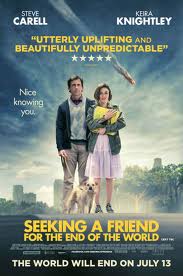





 Home Projectionist