
ON THIS DAY in 1965, the Beatles played before approximately 60,000 fans at Shea Stadium in New York City. The concert–which marked the birth of stadium rock–was documented in the 1966 film, THE BEATLES AT SHEA STADIUM.
You can’t always trust first impressions.
So there’s this show. It’s apparently about drugs. Dwelling on the drug culture, watching shiftless, troubled kids get high. Violence, death. Sounds depressing. My impressions led me to say, this isn’t quite like the way I’d want to spend an hour at 9 p.m. on a Sunday night. MAD MEN, yes, absolutely. But not this. And so I never tuned-in to BREAKING BAD.
Meanwhile, friends would recommend various shows to me. DEXTER, THE WIRE, ROME, HOMELAND, BOARDWALK EMPIRE. I tried but couldn’t get into BOARDWALK EMPIRE. The others, particularly HOMELAND, I definitely will be checking out.
As BREAKING BAD was available via Netflix Instant, I broke down and gave Season 1, episode 1 a try. And so there was this desperate-looking, middle-aged guy in his underwear, standing in a desert next to a beige RV. Well, I don’t know. But by the end of the show, I was a little bit intrigued. At the conclusion of episode 2, I was hooked forever.
That was about seven weeks and 40 episodes ago. Last night I watched episode 6 of season 4 (seasons 1-4 are available on Netflix and elsewhere; season 5 is currently running on AMC, and will be the show’s last ).
I can’t imagine having one-week interludes between new installments, let alone waiting nearly a year for a new season. Well, actually I don’t have to imagine that, because it is actually what I’m currently doing with the aforementioned MAD MEN.
Actor Bryan Cranston, who plays Walter White (aka “Heisenberg”, the lead character in BREAKING BAD) is truly terrific. Basically just a regular guy, his deadpan, slightly annoyed-and-perturbed, slow-boil style is a hilarious and tense contrast to his angry young partner Jesse (Aaron Paul). It gets even better with Walt’s son (RJ Mitte, who, like his character, Walt, Jr., has mild cerebral palsy), Walt’s wife (Anna Gunn) and a great supporting cast.
Like with Norman Bates or Tony Soprano, it’s amazing how the human mind can often feel sympathy for a person who is doing bad things, if we know their life story and their motives. The disturbed Norman, of course, loved his mother to the point where he’d kill on her behalf. Tony was a real family guy, but he was raised to see murder and mayhem as the cost of doing business in Jersey. In Walter White’s case, his overriding desire is to provide for his wife and son.
At a dead-end, part-time job at a car wash, and in a thankless role teaching bored high school students chemistry, Walt finds an opening to use his skills to finally make something people really want. At the same time, Walt, like some spreading disease, has caused a chain reaction that affects many people–not always in good ways–and he has learned how to lie, to everyone. And to lie on top of lies. He is finally getting respect, and he’s making something of himself at last. But what is that “something”? I’m on my way to finding out. 
Without spoiling anything, a clip from the show; a glimpse into the premise and tongue-in-cheek style of BREAKING BAD:
ON THIS DAY in 1980, Polish electrician and human rights activist Lech Wałęsa scaled a fence at the Lenin Shipyard in Gdańsk where a food price-hike strike was taking place. Wałęsa became the strike’s leader, his actions leading to Poland’s Solidarity movement. In 1981, the film MAN OF IRON, directed by Andrzej Wajda, told the story of how the movement persuaded the Polish government to recognize workers’ rights.

Growing up in Chicago in the 70’s, we were blessed with having some of the best local television stations in the country. At the top of the list was WGN; Cubs baseball, classic television shows, and lots and lots of movies. Every Sunday morning, if there wasn’t a baseball game, there were movies from 11 AM until 3. 11:00 – Charlie Chan. 1:00 – A comedy. Mostly Abbott and Costello movies. I don’t think I missed one. I can’t even say that I was a fan, but they were always on; I took them for granted.
That’s why I was surprised to run across one of their movies that I’d never heard of, The Noose Hangs High. An awkward title for an independently produced feature they did in 1947. So independent that Lou Costello’s mother was one of the producers!
I won’t go into details of the plot because it really doesn’t matter. What does matter is if you are going to watch one A&C film, this would be the one I would show people. They pulled out all of their old comedy routines for this film. Word confusion, getting dressed then undressed, and best of all ‘the Mustard sketch’.
Lou Costello, yet another man/child character, is funny, but the marvel when I saw this scene is Bud Abbott. Groucho Marx called him the best straight man that there ever was… and it’s true. He makes nonsense sound logical.
The full movie can also be watched on Hulu.com. But with commercials.
Not really a group watch movie, but it sure was nice to see the boys again. 
Death scenes from 36 of Alfred Hitchcock’s movies, synchronised to climax in unison…
ON THIS DAY in 1860, Annie Oakley–sharpshooting star of Buffalo Bill’s Wild West show–was born. In 1935, her life was portrayed by Barbara Stanwyck in the film, ANNIE OAKLEY.

ON THIS DAY in 30 B.C., Cleopatra VII Philopator, last ruler of the Egyptian Ptolemaic dynasty, committed suicide, allegedly by means of an asp bite. In 1963, she was portrayed by Elizabeth Taylor in the epic CLEOPATRA, also starring Richard Burton.

FAR FROM THE MADDING CROWD (1967) contains some of the most memorable scenes in cinema — including suicidal sheep and maniacal casket cracking. This epic love story is a near-perfect convergence of scene, score, story, and performance. The only thing that doesn’t work in this film is Julie Christie’s hair and makeup. Maybe it’s the frosted lip gloss. As in Dr. Zhivago, she just doesn’t quite seem historically accurate, although she is otherwise perfect.
Christie stars as Bathsheba, the unattainable catch of the English countryside, who struggles with her passion and lack of passion for the men in her life: Peter Finch as the desperate suitor, Alan Bates as the regular guy, and Terence Stamp as the hot bad boy. While Bathsheba struggles over finding the right man, she is also rolling up her sleeves to deal with the the trials and tribulations (and joys) of day-to-day farm life. She’s a flirt and a heartbreaker, passionate and vulnerable. She is also smart, powerful, and confident.
The film is based on the book of the same name by 19th century novelist Thomas Hardy. And although I love the book, watching the movie is way, way easier and more satisfying than slogging through Hardy’s heavy prose.
When I read that there was a remake of MADDING CROWD as a “romantic comedy,” I couldn’t help but be curious. The only thing I’m curious about now is that someone thought that might be a good idea.
TAMARA DREWE (2010), starring Bond girl Gemma Arterton, boasts better historically accurate hair, but the film is flat and dull as it traces Ms. Drewe’s quest to find love among her choice of uninteresting village men. So much for a laugh riot take on a classic.
I was so hopeful with the opening of this film, which begins with a classified post advertising a country writers’ retreat that is “Far from the madding crowd.” But the film is all downhill from there. Homage to Hardy abounds — but is it really funny when one of Tamara’s suitors is trampled by stampeding cows? If there were a Monty Pythonian take on it, perhaps.
There are a few clever takes on the classic-to-contemporary theme, like casting a rock star in the role of a typical Hardy bad boy, and instead of misunderstood letters there are missent emails. But if you’re looking for a few romantic comedy laughs, you won’t find them. Better to watch the original drama instead.
Sadly enough, FAR FROM THE MADDING CROWD wasn’t released on DVD until 2009, so I think it’s been missed by many home theater fans. The trailer for the film is far from compelling (and you get to see why Julie Christie seems to be a time traveler instead of a 19th century beauty). Nonetheless, if you enjoy period dramas, tragic love stories, rain, and the English countryside, you’ll enjoy FAR FROM THE MADDING CROWD. A romantic “comedy” remake of it? Not so much.
Gloria Bowman is a writer, storyteller, blogger, movie lover, freelance editor,
and author of the novel, Human Slices.
Access her blog at www.gloriabowman.com; on Twitter @GloriaBow
ON THIS DAY in 1926, Danish socialite Claus von Bülow was born in Copenhagen. Von Bülow was convicted of attempting to murder his wife Sunny via an overdose of insulin (thus leaving her in a lifelong vegetative state), but the conviction was reversed. The story was retold in the 1990 film, REVERSAL OF FORTUNE, starring Jeremy Irons and Glenn Close.
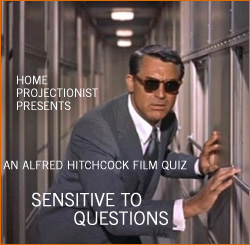
Good evening and welcome to the virtual birthday celebration for one Mr. Alfred Hitchcock. On Monday, August the 13th, Alfred will be 113 years old. Although he’s not quite as sprightly as he once was, his films haven’t aged a bit. And so to celebrate this occasion, you are being cordially invited to test your memory of Hitch’s films by taking part in this party-ish quiz. Please think responsibly.
Good luck, Mr. Thornhill, wherever you are…
Take the Quiz!(*The quiz title was inspired by Alfred Hitchcock’s North By Northwest: “Something wrong with your eyes?” “Yes”, says the sunglass-clad Roger O. Thornhill (Cary Grant), “They’re sensitive to questions”. Previously, Roger’s assailants pretended to Roger that his early, forced and drunken departure via automobile was of his own free will: “It was a dull party. You didn’t miss a thing.”)
ON THIS DAY in 1988, the United States authorized the Civil Liberties Act, which gave $20,000 payments to Japanese Americans who had been interned or relocated by the government during World War II. The 1990 documentary short subject Oscar winner, DAYS OF WAITING, tells the story of an artist who went voluntarily to one of the internment camps.
Several years ago when Netflix started streaming some of their content via the Internet I would occasionally. It was only available to me on my computer and sitting in my office chair watching a movie seemed uncomfortable and awkward. Then about a year ago, I purchased a Roku which allowed instant viewing of the Netflix library through my projector system and to my television. Also at this same time, Netflix started adding the mother load of movies. Things that haven’t seen the light of day in decades, movies that had never nor would ever have a chance of being released on DVD.
There are so many movies that are on there now that I thought it might be helpful to start sorting through them for future group movie nights. Some are truly buried treasures, and some should have remained buried.
Last night I came upon something that I thought I’d never see… a Jerry Lewis movie I’d never heard of: It’s Only Money.
Combining two of my guilty pleasures, Film Noir and Jerry Lewis! Even though I completely see why people would hate Jerry Lewis, his boy/man character, Borscht Belt humor, gags that are so predictable you can see them coming a mile away… But he stil makes me laugh; especially his work with the wonderful director Frank Tashlin. Tashlin was an animator before a director and this film in particular brings the exaggerated styling of a Warner Brothers cartoon to life. Mix that with some dark and stunning cinematography, some brilliant characters like Jack Weston, Jessie White and Mae (Olive Oil) Questel, and you have a classic comedy that seems to have slipped through the cracks.
(One odd moment was that although I didn’t remember anything about this film; I did recall the horrifying lawnmowers featured in the climax. Monstrous machines with large grinding teeth that chase everyone around. I remembered the feeling of being terrified of them; but nothing else about the film. The lawnmowers are out a Stephen King novel. And made me wonder if he recalled them when he wrote his short story, The Mangler about a killer machine.)
Granted this film might not be for a group if you have people who hate Lewis, because Jerry is as Jerry as you can get. I gave up counting the number of times he did his ‘Hey Lady’ routine or made his Jerry-Lewis-being-funny face. But if you grew up with these slightly innocent romps they don’t disappoint. 
ON THIS DAY in 1942, Indian leader Mahatma Gandhi was arrested in Bombay by British forces, thereby launching the “Quit India Movement”. The incident was reenacted for the 1982 biographical film, GANDHI, starring Ben Kingsley.
Composer Marvin Hamlisch passed away on Monday, August 6, leaving behind memories of songs like “The Way We Were” and “What I Did for Love,” songs that can still make me instantly weepy, even when I’m annoyed by them.
One of Hamlisch’s earliest uber-dramatic scores was composed for THE SWIMMER (1968). The film, based on a story by John Cheever, is awash with Hamlischian musical interpretations of a variety of human emotions — triumph, distress, tenderness, wonder, grooviness, foreboding, dreaminess, despair. While the emotive bits are mostly over-the-top or silly cliches, there is a lovely Hamlisch theme that survives. It’s a glimpse into the beginning of a legendary career.
In THE SWIMMER, Burt Lancaster is perfectly cast as Neddy Merrill, a virile, proud man in a bathing suit (and for a few minutes, no bathing suit at all) who is on a “vision quest,” attempting a journey home by swimming pool-to-pool and jogging across the pretty backyards of his wealthy Connecticut neighborhood. In between dips, he has time for a few martinis and interactions with his neighbors, all of whom are surprised to see him. Neddy has been gone for a couple of years. We slowly discover he’s not at all who he first seems to be. He admires himself as a man of integrity and strength, and he is reduced to nothing but a big lie.
The film is a visual treat of sixties’ style and an indictment of the shallow people who live in a particular space in time. Neddy, too, is a visual treat, but he’s no prize either. He’s at first charming, but then as his journey continues, we get glimpses into a man with a lost soul. We have some sympathy for him because he has been betrayed by people he loves and there is a heart of gold in there somewhere, but we also learn that Neddy is an opportunist, narcissist, philanderer, a bit of a pervert, potential pedophile and rapist, unknowing racist, and generally delusional loser. He has nowhere to go but down the drain.
The film is filled with unsavory moments, especially between Neddy and his former babysitter, who at least has sense enough to run away from him. But the ultimate creepiness occurs when a guard at a public pool demands that Neddy “spread his toes” so he can inspect them to make sure they’re clean. Neddy simply obeys. It’s a scene that is seriously gasp-inducing. (Wonderfully jarring and groan-worthy moments like these make THE SWIMMER an excellent choice for a group watch.)
An additional reason for watching this film now is that there’s a little homage to the Olympics when Neddy and his former babysitter run some hurdles — in slow motion! — while accompanied by the swelling Hamlisch score.
The ending of this movie will deflate the end of an evening soiree so make sure you have drinks ready to lighten up your audience after Neddy faces his dismal reality in the rain. Everyone will eventually cheer up.
Gloria Bowman is a writer, storyteller, blogger, movie lover, freelance editor,
and author of the novel, Human Slices.
Access her blog at www.gloriabowman.com; on Twitter @GloriaBow

I OWN A BUNCH of movie books. Well, more than a bunch. Dozens. Too many, I suppose. I think the hobby (or is it habit?) started about the time that VCRs came into being–about 1979–a milestone for my latent movie fanaticism. I had been awakened to a world of movies that previously had been unavailable for viewing.
I think the first book was Donald Spoto’s excellent film-by-film analysis, Hitchcock. I’d borrowed the Oak Lawn Public Library’s copy a couple of times, gotten completely immersed in it, and then finally plunked down the $8.95. Next, if I recall, was a little paperback, The Golden Turkey Awards-a sort of oddball collection of lists–lists of bad movies–turkeys, some of them in the so-bad-they’re-good category, a la MST3K; others just plain awful and unwatchable. A fascinating, fun read.
Eventually, my wanderings in Waldenbooks, Barnes & Noble, and Kroch & Brentano’s led me to my most treasured film book, Guide for the Film Fanatic (1986; Fireside Books) From the Introduction:
“If you flipped through the pages of this book, you may have noticed that, unlike many movie-list books, this one does not have a star rating system. I love those books, but I worry that rating systems have the adverse effect of discouraging people from seeing certain movies that should be equally recongnized. It’s only natural to choose a movie that has a three-star rating over one that has just two stars, but in many cases the two-star movie is more interesting–indeed it may have a cult made up of devoted fans who appreciate things that a particular review overlooked. I may attack a film, but that doesn’t mean I don’t want you to see it. This book is meant to encourage readers to see movies, not discourage them.”
Danny Peary’s is untypical of most movie review books in that every one of the films he discusses is worth your time, in some way or another. Each entry is a pleasure to read, even if it doesn’t convince you to watch the film. Peary might consider how absolutely great a movie is, or place some high value on it even if solely for its pure entertainment value, or occasionally only for historic reasons. Many of the book’s movies have a strong, cult-like following–not everyone’s cup of tea, but maybe it will be yours, if you give it a try. I discovered movies I would’ve otherwise overlooked–movies that Maltin gave just two stars to, that Siskel & Ebert rated “dogs of the week”, or films that arrived and burned brightly then for various reasons faded quickly from memory. Some films I had seen before, multiple times, took on a new light.



 Home Projectionist