
ON THIS DAY in 1952, the notorious penal colony of French Guiana (Devil’s Island)-in operation since 1852-was permanently closed. The 1973 film, PAPILLON, with Steve McQueen and Dustin Hoffman, was based on the book of the same name, written by a Devil’s Island prisoner’s memoir.
If you’re a film fan in New York City–particularly a fan of Alfred Hitchcock–you’ll want to be at Tribeca 92/Y, 2012 92nd Street, tonight for the next installment of the “Bastards of Hitch” program. It’s the last in their series exploring films were by works of the great Master of Suspense.
During August, Tribeca 92/Y has screened Jonathan Demme’s Hitchockian-themed THE LAST EMBRACE, Nicholas Roeg’s mysterious DON’T LOOK NOW and title designer Saul Bass’ PHASE IV. Tonight it’s Brian DePalma’s DRESSED TO KILL (1980).
I think many people might choose DON’T LOOK NOW as the best among the MUBI-sponsored series. But this DePalma film, along with DePalma’s Vertigo-esque OBSESSION, are my two favorite, Hitch-like efforts. DRESSED TO KILL, while it couldn’t quite be mistaken as being directed by Hitch himself, comes very close. Cast as the cool blonde, Angie Dickinson has the same, icy-yet-smoldering sensuality of Kim Novak, while Michael Caine, like Joseph Cotten in SHADOW OF A DOUBT or Robert Walker in STRANGERS ON A TRAIN, has just enough edge to his character to make you wonder if he could be a tiny bit off-center.
DePalma’s superb, tour-de-force museum sequence is a highlight of this very disturbing and scary film–a film that is to elevators what PSYCHO is to showers. 
The most recent film I saw Phyllis Diller in just happened to be her very first movie appearance. In the splendid SPLENDOR IN THE GRASS, (1961; Elia Kazan; Warren Beatty, Natalie Wood) she portrays a character named Texas Guinan, an acerbic nightclub hostess. She’s basically playing herself though–a loud, brash and brassy comic within whom could also be seen a warm, laughing heart, a need for acceptance, and a vulnerability. Rest in peace.

Actor Frank Langella (GOOD NIGHT AND GOOD LUCK, many more) says he’s had “a life like a Chekhov play”. He has many stories to tell about his co-stars in a well-reviewed new biography, Dropped Names. (“Rita Hayworth dancing by candlelight in a small Mexican village; Elizabeth Taylor devouring homemade pasta and tenderly wrapping him in her pashmina scarf; streaking for Sir Laurence Olivier in a drafty English castle; terrifying a dozing Jackie Onassis; carrying an unconscious Montgomery Clift to safety on a dark New York City street.”) He also appears in a new film with, of all things, a robot.
Frank was just interviewed on NPR’s Fresh Air program. My favorite Langella film, without a doubt, is Mel Brooks’ THE TWELVE CHAIRS. Highly recommended.
ON THIS DAY in 1942, the Battle of the Tenaru, between U.S. Marines and the Japanese army, took place on Guadalcanal Island. The confrontation was featured in episode 1 of the 2010 Steven Spielberg mini-series, THE PACIFIC.

via World of Wonder
Here are the first eight minutes of The Adding Machine (1969). With Phyllis Diller in a serious (surreal) role.
THE ADDING MACHINE (1969)
Pulitzer Prize winning author Elmer Rice’s 1923 play (here brought to film some 45 years later) is a funny and slightly nightmarish look at advancing technology and its effect on human relationships. The play chronicles the life of Zero, a hapless cog spinning aimlessly in the corporate world, who, after 25 years of service, is replaced by a machine.
Fearmakers (1958) is the second collaboration between Jacques Tourneur and actor Dana Andrews. The first being the great horror classic Curse of the Demon. Fearmakers takes on another demon from 1958, another unseen menace: Communism! And eerily portends the state of American politics today.
The plot in a nutshell, is that Andrews is a POW coming back to work at the PR company he founded, only to find that its just crawling with communists! In fact, everyone that dear Dana meets is a Communist. From the blathering old man on the plane, to a blousey blond running the boarding house, even a nerdy Mel Torme, are all trying to push the communist agendas and destroy America from within.

A Commie nuclear physicist nearly bores Dana Andrews to death
The movie is pretty campy. It looks and feels like a long television episode of a 50’s drama, i.e, Perry Mason. Dana Andrews barely registers an emotion on his face; and his voice is a long drone, to the point where viewers joining me for this Sunday night noir where dozing off for the first half.
 If you can’t trust this floozy, who can you trust?
However, the theme of the movie is amazingly timely; almost frighteningly so… The message is heavy handed, delivered in long, long speeches. (The plane ride with the old man clocks in at 7 minutes, lunch with a senator nearly ten!) We, the audience, are warned over and over, that if the same methods that are used to sell soda and cigarettes are used to sell politicians than the American way is doomed. Especially if “the Communists” start putting out false information to change the public minds about political candidates.

Mel tries to see through his coke bottle glasses
As Dana Andrew’s character says, “Most people from main street to Madison avenue will go with the majority…” Is this Karl Rove’s favorite movie? The character of the senator warns about ‘professionally packaged groups lobbying congress with big money behind them to change the laws and distorting the voice of the people’. The Communists are trying to get the U.S to stop making nuclear bombs so they will become a weak nation, so that North Korea can take us over… or something like that.
Fearmakers is not a good film by any means, but I’d highly recommend it for its camp moments and historical value. It feels like filmmaker Jacques Tourneur was trying to warn us about the culture of the media/public relations today. If you tell people a lie enough times they’ll believe it, get enough people to believe it then you have everyone else going along with the majority. Trust no one… not even Mel Torme! 
ON THIS DAY in 1940, Russian revolutionary Leon Trotsky was fatally wounded after being struck with an axe by a Soviet government assassin. The 1972 Joseph Losey film, THE ASSASSINATION OF TROTSKY, with Richard Burton, depicted this event.

ON THIS DAY in 1612, three women from Lancashire, England–“the Samlesbury witches”–were accused of practicing witchcraft in one of the most famous witch trials in English history. In 1957, this trial was depicted in the French-German film THE CRUCIBLE, with Simone Signoret and Yves Montand.
When I told a friend I was going alone on a trip to Venice this summer, he said, “Oh, you’ll probably have this great affair just like in the movie SUMMERTIME.” I remember laughing and having a vague recollection of Katharine Hepburn falling in love, wandering along the canals of Venice with handsome Italian Rossano Brazzi.
Unfortunately, an affair like theirs didn’t happen to me when I was there.
Fortunately, however, this 1955 classic film, directed by David Lean, perfectly captures the essence of Venice and the experience of being a woman of a certain age traveling alone. I watched this film after my trip. I wish I would have watched it before I went.
The film is a cinematic stunner, a love letter to one of the most romantic and surreal cities in the world. Every scene captures the light, the air, the visual magic of Venice — and also its timelessness. The train speeding across the canal, the jumble of people boarding the water taxis, tourists wandering down the narrow streets, the rows of palaces, the breathtaking expanse of Piazza San Marco, the white coated waiters at the cafes, and of course, the canals and the sparkling water. Nothing much has changed. Venice is the same today as it was in 1955, which is just like Venice was in 1455. It is “The Eternal City.”
And the story of people searching for love is eternal as well.
Miss Hepburn is remarkable in her portrayal of Ohio secretary Jane Hudson. She is a self-sufficient woman, who saved her money so that she could take her dream vacation. With her movie camera in hand, she is spirited and gutsy, beautiful and charming, excited about the adventure that awaits her.
She also realizes there is a bittersweetness attached to solo travel when her landlady asks, “You don’t mind traveling alone?” Jane likes it, she says. She is an independent soul. But there is also a slight sting with the question. It would be better if such a lovely experience could be shared. She is vulnerable, yes. She is open to possibilities.
Hepburn is nervous about her attraction to Brazzi as they first meet at an outdoor cafe. She is drawn to the potential affair but she also resists. When Brazzi tells her that “It’s better to take home more than Venetian glass,” you know that the fireworks will eventually happen. With her free spirit in force, she considers the pro’s and con’s and then goes after what she wants, transformed by the romance that beckons. She buys a lovely pair of impractical shoes, and like Cinderella, she becomes the beautiful princess. Violins play. You root for the both of them.
The only way for their love to remain as eternal as Venice, they have to part. Jane knows that she has a life back in Ohio. And she knows that her lover has a life in Venice. She ends the affair on her own terms.
If I had re-watched this film before I went on my trip, maybe it would have gone differently. I would have stayed longer in Venice. I would have tried harder not to feel so conspicuous and awkward sitting alone in the Piazza San Marco (along with so many other middle-aged ladies). And I would have bought those red shoes that I wanted. Maybe they would have been as magical as the ones that Hepburn’s character buys.
Gloria Bowman is a writer, storyteller, blogger, movie lover, freelance editor,
and author of the novel, Human Slices.
Access her blog at www.gloriabowman.com; on Twitter @GloriaBow
ON THIS DAY in 1958, Vladimir Nabokov’s controversial novel Lolita was published in the United States. Stanley Kubrick’s film LOLITA premiered in 1962, with James Mason, Shelley Winters, Peter Sellers and Sue Lyon as Lolita.
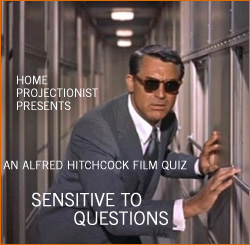
Good evening. Have you ever told a lie? Be truthful now. Remember what really became of the last cookie in that cookie jar? Yes you do. Of course, some lies-white lies-aren’t as big as others, as you’ll find out in this creative and amusing quiz we’ve created. By the way, in case you shouldn’t find the quiz creative and amusing, then we had absolutely nothing to do with. Honest.
Good luck, Mr. Thornhill, wherever you are…
Take the Quiz!(*The quiz title was inspired by Alfred Hitchcock’s North By Northwest: “Something wrong with your eyes?” “Yes”, says the sunglass-clad Roger O. Thornhill (Cary Grant), “They’re sensitive to questions”. When Roger steals a cab out from under a poor man by claiming his secretary, Maggie, is very ill, Maggie scolds him: “He knew you were lying.”)
ON THIS DAY in 1786, American frontiersman and soldier Davy Crockett was born. His exploits were dramatized in the 1955 Disney film, DAVY CROCKETT, KING OF THE WILD FRONTIER, starring Fess Parker.
ON THIS DAY in 1888, British Army officer T. E. Lawrence was born. David Lean’s 1962 epic, LAWRENCE OF ARABIA, starring Peter O’Toole, was based on Lawrence’s experiences in Arabia during the first World War.
I don’t really like scary movies. My brain takes them seriously.
Thanks to some long forgotten film, I suffer from an unnatural fear of quicksand (although I’ve never actually even seen quicksand). I worry sometimes about dolls coming alive.
And, of course, thanks to JAWS (1975), I still have a deeply entrenched fear being torn apart by those pesky, jagged teeth of a shark — even when I’m in a freshwater lake.
How can it be that it’s already more than 35 years since I first heard John Williams’ two terrifying musical notes of doom?
It seems impossible that there are still people who haven’t seen this classic film whose promotional poster tells all.
But if you have never seen it or if you haven’t seen it in a long time, it’s time to think about an end-of-summer group watching event. JAWS is frightening and campy and full of howl-inducing fun.
Best yet, just yesterday on August 14, the new Blu-ray version was released as part of Universal’s 100th Anniversary series. The restoration gives the film “the sight and sound that I didn’t get when I made the movie,” says director Steven Spielberg.
The release of the JAWS Blu-ray was also also timed to coincide with the 25th anniversary of the Discovery Channel’s annual celebration of Shark Week.
As a result, shark is totally in the air. It’s time for a shark party.
There are tips on shark drinking games at sites like Brobible. Shark paraphernalia is available at sites like The Jungle Store and Cafe Press. And amazing feats of shark party creativity are rocking the boat on Pinterest.
You can even have your shark spotters take a quiz. There’s a fascinating collection of JAWS trivia on IMDB. (Did you know that Peter Benchley was livid about the ending of the movie? He didn’t think it was believable. Spielberg told him that the audience would believe anything after watching the movie for two hours, even the blowing up of the mechanical shark.)
I’ll still be scared when watching this one, but sort of like being scared with a good friend. JAWS has everything for a chomping good time.
Gloria Bowman is a writer, storyteller, blogger, movie lover, freelance editor,
and author of the novel, Human Slices.
Access her blog at www.gloriabowman.com; on Twitter @GloriaBow



 Home Projectionist