ON THIS DAY in 1877, Thomas Alva Edison announced that he had invented the phonograph. This event was dramatized in the 1940 biographical film, EDISON, THE MAN, starring Spencer Tracy.


ON THIS DAY in 1877, Thomas Alva Edison announced that he had invented the phonograph. This event was dramatized in the 1940 biographical film, EDISON, THE MAN, starring Spencer Tracy.
ON THIS DAY in 1925, Senator and 1968 Presidential candidate Robert F. Kennedy was born in Brookline, Massachusetts. Kennedy was portrayed by Barry Pepper in the 2011 TV miniseries, THE KENNEDYS.
ON THIS DAY in 1863, President Abraham Lincoln delivered the Gettysburg Address as part of the dedication of the Soldiers’ National Cemetery at Gettysburg, Pennsylvania. This event is dramatized in the 1982 TV miniseries, THE BLUE AND THE GRAY, starring Gregory Peck as Lincoln.
If your Thanksgiving Day involves film watching and family and friends of “a certain age,” say, fifty-plus, you could do no better than select THE BEST EXOTIC MARIGOLD HOTEL (2011) for a feel-good, heart- warming tale about the power of the present.This British film by director John Madden (SHAKESPEARE IN LOVE, for example) brings together an outstanding cast of seven characters is search of meaning in the next stage of their lives. And they indeed find new beginnings, along with the help of the young, bungling, and idealistic hotel manager, played by Dev Patel (of SLUMDOG MILLIONAIRE fame).
One unifying dilemma brings most of the characters together: getting older without the right resources. Maggie Smith’s character needs a new hip and a better frame of mind. She has lost her job and her purpose. Her inability to feel needed has turned her sour and hard. Judi Dench, recently widowed, has discovered that her husband left her totally broke. Bill Nighy and Penelope Wilson play a retired couple whose minimal government pension has left them disillusioned with their lives and with each other. Tom Wilkinson has abruptly exited his unfulfilling job to re-establish contact with his past. Celia Imrie defies being relegated to the role of grandma, and Ronald Pickup isn’t ready to go down anytime soon (and he’s got the Viagra to prove it).
They all end up at the Best Exotic Marigold Hotel in Jaipur, India. Their money will go further here in this strange land…and so will their understanding of who they are and who they are yet to be.
The charming, bittersweet script is part brilliant and part self-help-motivation speak. One of my favorite lines is Dench’s sensible character, Evelyn, philosophizing, “There is no past that we can bring back by longing for it. Only a present that builds and creates itself as the past withdraws.” We watch each of the characters face their present realities and continue to grow with grace, and most importantly, with spirit and strength.
The film isn’t without its faults. But the very few weak or predictable moments are salvaged by the impeccable cast whose performances are painfully real and honest. Bill Nighy is flawless in his portrayal of a kind and curious man who keeps being surprised by himself. Adding additional depth to the story are the glorious colors and chaos of India.
Dev Patel’s character relies on the words of his father to help him through his struggles. He often says, “Everything will be all right in the end… if it’s not all right, then it’s not the end.”
And so the characters learn, too, that they have until their end, and until that time comes, there is still opportunity to create joy and happiness. What a lesson for Thanksgiving.
THE BEST EXOTIC MARIGOLD HOTEL ia delicious morsel to add to your holiday weekend. 
ON THIS DAY in 1865, Mark Twain’s The Celebrated Jumping Frog of Calaveras County, his first successful short story, was published in the New York Saturday Press. This event was depicted in the 1944 film, THE ADVENTURES OF MARK TWAIN, starring Fredric March.

Scorsese, on VERTIGO:
ON THIS DAY in 1970, U.S. Army Lieutenant William Calley went on trial for the 1968 My Lai massacre of Vietnamese civilians. The incident was documented in the 1989 British TV production, FOUR HOURS IN MY LAI.
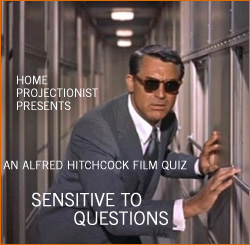
Good evening. Sleepy, but can’t fall asleep? May we suggest a book before bedtime? You’re advised to stay away from thrillers–they have a tendency to keep one awake. However, some of the books that were a part of Hitchcock’s films had the potential to put their readers–or their readers’ victims–into a deep sleep. In fact, sometimes into an everlasting slumber, as you’ll find see when you delve into this week’s quiz.
Good luck, Mr. Thornhill, wherever you are…
Take the Quiz!(*The quiz title was inspired by Alfred Hitchcock’s North By Northwest: “Something wrong with your eyes?” “Yes”, says the sunglass-clad Roger O. Thornhill (Cary Grant), “They’re sensitive to questions”. Locked up in the bed compartment aboard the 20th Century, Roger is asked by Eve if he is bored. “Don’t worry. I’ll catch up on my reading,” he replies.)
ON THIS DAY in 42 BC, the Roman emperor Tiberius was born. Tiberius was portrayed by James Mason in the 1985 TV miniseries, A.D.
Like life, film never stops changing.
With STAGECOACH (1939), John Ford introduced a new cinematic vision using deep staging and deep focus “that allowed the audience to choose where to look” on the screen.
This innovation, according to Mark Cousins, creator of THE STORY OF FILM: AN ODYSSEY, changed film forever, influencing Orson Welles to take “deep staging as far as it could go” in creating his masterpiece, CITIZEN KANE (1941). Film had never looked like this before.
In the opening of Part 3 of THE STORY OF FILM: AN ODYSSEY, we see a quick newsreel clip of Hitler and Mussolini sharing a lighter moment. The voiceover provided by Cousins recognizes that these two men wreaked havoc on the world, and then just like that, we’re off to “Post-War Cinema.” Maybe film of the war years is a separate story for another time.
Nonetheless, the saga of THE STORY OF FILM is a compelling commentary on the constant evolution of film, a reflection of the ever-changing human experience. There has been war. Barriers are going up. Some barriers are coming down.
After the war, the Italian cinema made an indelible mark on filmmaking, with its “rubble” films, presenting the stark, bleak reality of post-war destruction, changing the nature of beauty in cinema, from soft focus romance to dark and dreary reality. The Italian neo-realists, per Cousins, created “cinema that features the boring bits of life,” as opposed to Hitchcock who said that “cinema is life but without the boring bits.”
The convergence of new directorial styles and gloomy world views gave us a Hollywood that began emphasizing film noir, with films like SCARLET STREET (1945) by Fritz Lang; GUN CRAZY (1950) by Joseph Lewis; THE HITCH-HIKER (1953) by Ida Lupino, Hollywood’s only female film noir director; and the pitch-perfect noir classic, THE THIRD MAN (1949) by Carol Reed.
As much as noir became the Hollywood norm during this post-war period, the American film industry still created vibrant stunners such as SINGING IN THE RAIN (1952) and AN AMERICAN IN PARIS (1951), ensuring audiences that joy could still be found in this neo-realist world.
And while the brooding vision of the post-war years went on, borders were redrawn and decolonialization was happening. As a result, the faces of world cinema came to the forefront in Egypt, India, China, Mexico, Britain, and Japan. In the 1950s, the human story went global, and in the film world, the emphasis moved to grand melodramas about the perils of life, love, lust, and survival.
David Lean delivered big drama with GREAT EXPECTATIONS (1946). And American movies certainly had their own glossy tortured tales like Nicholas Ray’s REBEL WITHOUT A CAUSE (1955) and JOHNNY GUITAR (1954). The world saw other groundbreaking weepers, such as PATHER PANCHALI (1955) by Satyajit Ray and DONA BARBARA (1943) by Fernando Fuentes and Miguel Delgado.
As with each segment of THE STORY OF FILM: AN ODYSSEY, my list of must-see films expands. I’m starting with CAIRO STATION (1958), with Youssel Chahine, which Cousins taga as “the first great African/Middle Eastern film,” and a revisit to the ultimate sexy melodrama of the 1950s, ...AND GOD CREATED WOMAN (1956) by Roger Vadim and starring Brigitte Bardot.
THE STORY OF FILM: AN ODYSSEY (2011) is a 15-part, 15-hour documentary exploring the convergence of technology, business, intelligence, and vision that has created the remarkable and powerful art of cinema. Music Box Films is distributing this new documentary, and Chicago’s Music Box Theater is conducting a multi-week screening of this ambitious effort. The DVD will be released in November 2012. You will want to add it to your collection.
Gloria Bowman is a writer, storyteller, blogger, movie lover, freelance editor,
and author of the novel, Human Slices.
Access her blog at www.gloriabowman.com; on Twitter @GloriaBow
ON THIS DAY in 1959, four members of the Clutter family were murdered at their farm near Holcomb, Kansas. The incident was chronicled in the 1967 Richard Brooks film, IN COLD BLOOD, starring Robert Blake and Scott Wilson.
ON THIS DAY in 1908, Wisconsin Senator Joseph “Joe” McCarthy was born. McCarthy was portrayed by Joe Don Baker in the 1992 HBO movie, CITIZEN COHN, also starring James Woods.
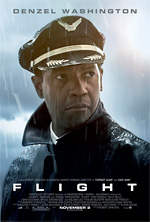 FLIGHT is an excellent movie. But a few years ago, you couldn’t have gotten me into the theater. Or onto a commercial jet–without something to calm me down.
You no doubt surmised, by the title, the trailer, or both, what FLIGHT’s subject matter is, even though, as it turns out, alcohol and drug addiction are just as much a part of its story as air travel.
Briefly, Denzel Washington is Whip Whittaker, a pilot for the fictional SouthJet Airlines. It’s a stormy morning in Orlando and, after a late night alcohol and cocaine binge, he’s behind the controls of a flight to Atlanta–a flight that ends very badly, notwithstanding the fact that he pulls off a miraculous landing, saving nearly everyone aboard. In the aftermath, Washington, while lauded as a hero, has to answer questions about his potentially incriminating blood test results, and he’s faced with some very difficult decisions.
For a long time, I have been trying to overcome a fear of flying. It’s a phobia that overtook me about 15 years ago. I’ve had this fear despite the fact that I had several hours of flying lessons in a tiny plane when I was a teenager, and despite enjoying airline travel and hanging my feet out the open doors of helicopters over Vietnam.
Now I do realize that perspective is needed. Substance abuse and dependency are more serious ailments than what I have had. And there are alternatives to flying, such as trains and cars. Those sufficed for a long while. But then the novelty, as you might put it, wore off, and the time costs (two or three days to L.A. vs. four hours by jet) became too much to pay at my lofty age. So I plunged ahead. First there were travel mugs of Bailey’s (prior to the ban on liquids). My doctor suggested classes, but I asked for, and received, some anti-anxiety medication. After several flights and some dosage adjustment, it’s worked. I’m flying again, still with some nervousness and a tiny sliver of Xanax, but the anxious anticipation of future flights is pretty much gone now.
So when a friend asked me the other day if I wanted to see FLIGHT, I didn’t hesitate to say yes, because I knew I’d be OK. And I was. Sure, there’s that one sequence that is pretty nerve-racking. However, there was an audible, collective audience exhalation at its conclusion and, in fact, my friend, who didn’t share my phobias, was more jittery than I was.
Who knows? Maybe my fear will return some day. For now though, it’s down to a minimum. I can watch clips like those below without getting sweaty palms and a quickened heartbeat. And I can recommend FLIGHT, in more ways than one, without hesitation.
Besides the edge-of-the-seat, nervous thrills in FLIGHT, what are my top 10 favorite flying film sequences, you ask?
THE SPIRIT OF ST. LOUIS (1959; with James Stewart; directed by Billy Wilder) Having flown many hours while fighting sleep, Lindbergh gradually comes to the realization that he’s approaching land, and it’s Ireland.
NIGHT FLIGHT (1933; John Barrymore, Clark Gable, Lionel Barrymore) The shadow of Clark Gable’s plane as it flies over the terrain of South America.
THE AVIATOR (2004; with Leonardo DiCaprio; directed by Martin Scorsese) Howard Hughes is nearly killed as his experimental plane crashes in Beverly Hills.
THE HIGH AND THE MIGHTY (1954; with Claire Trevor; directed by William Wellman) John Wayne lands his plane. The religious symbolism of the runway lights is corny, but it’s a nail-biting series of scenes.
FOREIGN CORRESPONDENT (1940; Joel McCrea; directed by Alfred Hitchcock) At the outset of WWII, a German warship mistakes a British passenger plane for a bomber, sending it plunging into the turbulent Atlantic. We identify with the passengers’ terror, as the entire sequence is shot from within the plane.
OUT OF AFRICA (1985; directed by Sydney Pollack) Robert Redford takes Meryl Streep for a spin, high above herds of animals on the savannah, and accompanied by John Barry’s beautiful music.
FEARLESS (1993; directed by Peter Weir) Jeff Bridges finds himself in an Iowa cornfield, walking away from a horrible crash, and walking towards a new perspective on life.
FLIGHT OF THE PHOENIX (1965; directed by Robert Aldrich) James Stewart and company and their aircraft are nearly left for dead. After struggling with the mechanisms and with themselves, they manage to rev up the cobbled-together airplane. Will it or won’t it take off?
FLYING DOWN TO RIO (1933; with Dolores Del Rio) A bevy of beauties is waiting in the wings to dance on the wings
WINGS (1927; directed by William Wellman) The first, major air battle in this unforgettable movie is breathtaking, particularly if you watch it with the latest, restored version with its magnificent, re-recording of the original score.
Happy landings!
ON THIS DAY in 1850, Scottish novelist Robert Louis Stevenson was born. Stevenson’s first major literary success, TREASURE ISLAND, was adapted for the screen in 1934 and starred Jackie Cooper and Wallace Beery.

If you spent most of your time watching movies this past week, you might have missed these articles here at Home Projectionist:
Visit Home Projectionist on Facebook



A bucket list blog: exploring happiness, growth, and the world.
this blog will disappear on the day that my heart is alive again
Where classic films stand out above the rest
The Power of Words
Incredible tips for Classrooms and Staffrooms
Watch as I amaze and astound with opinions about what TV shows I like!
Political Co-Dependency Intervention
Tablecloths, Table Toppers, Placemats our specialty
I blog about everything and anything, never hesitate to question....
The works and artistic visions of Ken Knieling.
entertainment & belief go heart to heart
the Story within the Story
Horror With Humour
unparalleled film reviews, news, and top 10s
Mostly movies with a smattering of TV, books, and LEGO thrown in!
MUSINGS : CRITICISM : HISTORY : NEWS
Film, Comics, Music, News, You want it? We've got it!
On This Day....
Celebrate Silent Film
...a classic film and TV blog
Entertainment and Everyday News brought to you in a flash
wendy maruyama, art work, executive order 9066, the tag project
A guy with a desk...
www.attentiallupo2012.com
Improving the English language one letter at a time
Seek first the kingdom of God and his righteousness. (Matthew 6:33)
draws comics
Canadian trivia and history in bite size chunks!
“There are always two people in every picture: the photographer and the viewer.” -Ansel Adams
Independent movie reviews and more...
Stories
The life and times of Erik, Veronica and Thomas
a site for movie lovers' eyes
Short reviews on high quality films. No spoilers.
For the Love of Leading Ladies
A blog for movie enthusiasts and weed lovers
A Blog For Every Movie Lover
knitting and blogging in Italy in times of economic crisis
** OFFICIAL Site of Artist Ray Ferrer **
Not just another WordPress.com site, but an extraordinary place to spend a weekend, grill a cheese sandwich and watch a film to improve your life and stimulate a few of the grey cells.
 Home Projectionist