ON THIS DAY in 1941, the Imperial Japanese Navy attacked Pearl Harbor, Hawaii, resulting in the United States entry into World War II. This event was depicted in the 1953 film, FROM HERE TO ETERNITY, with Burt Lancaster, Frank Sinatra, Montgomery Clift and Donna Reed.
Dansk: Blikdåse med reklamefilm på Statsbiblioteket. (Photo credit: Wikipedia)
The last episodes of the 15-part of THE STORY OF FILM: AN ODYSSEY(2011), filmmaker and narrator Mark Cousins continues to explore the constancy of change in cinema as it moves from celluloid to the digital era. Throughout the 1990s and onward, authenticity and artifice weave in and out of the picture as directors all over the world explore, question, and reference the realm of possibilities.
During this time, film becomes more “real” with expanded use of documentary style demonstrated in Iranian films like LIFE, AND NOTHING MORE (1992) by Abbas Kiarostami and the handheld roughness of BLAIR WITCH PROJECT(1999) by Daniel Myrick and Eduardo Sanchez. Paradoxically, directors are exploring the “unreal” with movies such as the jaw-dropping HOUSE OF FLYING DAGGERS(2004) by Yimou Zhang, horror film RINGU (1998) by Hideo Nakata; and the “mash-up” music video style of MOULIN ROUGE (2001) by Baz Luhrmann.
Of course, as time moves on, computer-generated graphics create spectacle of the kind created in GLADIATOR (2000) and AVATAR (2009) to the point that films start feeling like video games. (The utter disdain with which Cousins spits out the words “hobbits and avatars” is highly entertaining, by the way.)
On the other end of the spectrum are directors like Van Trier, Tarantino, and the Coen Brothers who erase boundaries and artifice to create films that strive to be more real — and less real — at the same time.
Like the adage goes, “Nothing is constant but change.” And film is no different. Technology will continue to influence the realm of possibilities. More corporate marketing (and perhaps less of culture) will continue to influence what’s seen on the silver screen. And directors will continue to strive to deliver their individual visions.
One of the most compelling clips in this part of STORY is the side-by-side comparison the shower scene in Hitchcock’s PSYCHO and Van Sant’s 1998 version. Like an ongoing conversation with the past, film will continue to quote film.
________
THE STORY OF FILM: AN ODYSSEY(2011) is a 15-part, 15-hour documentary exploring the convergence of technology, business, intelligence, and vision that has created the remarkable and powerful art of cinema. Music Box Films is distributing this new documentary, and Chicago’s Music Box Theater has just completed a multi-week screening of this ambitious effort. The DVD has been released. You will want to add it to your collection.
Gloria Bowman is a writer, storyteller, blogger, movie lover, freelance editor,
and author of the novel, Human Slices.
Access her blog at www.gloriabowman.com; on Twitter @GloriaBow
ON THIS DAY in 1969, during a Rolling Stones concert at Altamont Speedway in California, Meredith Hunter was assaulted by Hells Angels security guards and stabbed to death. The incident was documented in the 1970 film, GIMME SHELTER.
Movie recommendation algorithms can be interesting, but isn’t it a lot more fun to discover movies and shows by sharing what you’re watching among friends?
We’ve launched a Home Projectionist Facebook group to do just that.
(This group is an addition to the Home Projectionist blog and Facebook page.)
Our ultimate goal is to create a community of like-minded people who love movies, love being the program directors in their own living rooms, and love talking about what they’re watching.
For Home Projectionists, settling in to watch a film, show, or clip is more than a movie, it’s a passion.
Go to the Home Projectionist Facebook Group to join. And feel free to invite your friends. Anyone on Facebook is invited to participate. Who knows what you’ll discover…
ON THIS DAY in 1945, “Flight 19”—five Avenger torpedo bombers piloted by 14 U.S. Navy airmen—disappeared over the Bermuda Triangle during a training exercise. The aircraft were featured in the 1977 Steven Spielberg film, CLOSE ENCOUNTERS OF THE THIRD KIND.
DINNER AT EIGHT is widely available on disk or online, and is also shown on TCM from time to time:
Dave is a graphic designer (www.dhdd.net) and movie lover, and the caretaker of “The 3 Benny Theater” (also known as his living room). The moniker was inspired by an extinct movie house–The 3 Penny Theater–and by his black Manx cat, Benny. Favorite films: North By Northwest, The Third Man and The Dekalog.
ON THIS DAY in 1875, imprisoned New York City politician Boss Tweed, while on a home visit, escaped to Cuba. In 2002, Tweed was portrayed by Jim Broadbent in Martin Scorsese’s GANGS OF NEW YORK.
ON THIS DAY in 1960, the musical Camelot debuted on Broadway at the Majestic Theatre. In 1967, Joshua Logan directed the film adaptation of CAMELOT, which starred Richard Harris and Vanessa Redgrave.
ON THIS DAY in 1908, Pu Yi (age two years, 10 months) became Emperor of China. This event was dramatized in Bernardo Bertolucci’s 1987 film, THE LAST EMPEROR.
When I think of the blockbusters of the 1970s, I think of Spielberg gems like JAWS (1975) and CLOSE ENCOUNTERS OF THE THIRD KIND (1977); Freidkin’s THE EXORCIST (1973); and Lucas’s STAR WARS (1977) masterpiece.
According to Mark Cousins, narrator and filmmaker of THE STORY OF FILM: AN ODYSSEY(2011), these innovative films were the candy that lured American audiences back into the country’s movie theaters, these new things being built that were called “multiplexes.”
These Hollywood blockbusters were innovative, to be sure, because of new technology like Dolby sound and enhanced deep space perspective. But there was something more in these movies, a focus on universal emotions, showcasing REALLY BIG, inspired moments that relied on the ever-present “awe and revelation scene,” where the audience doesn’t see what the actor sees. Picture CLOSE ENCOUNTERS, with Richard Dreyfuss and Melinda Dillon, staring, dumfounded, while we wait in expectation to see what they’re seeing, spellbound ourselves, mouths open, on the edge of our seats.
And while American audiences were wowed by their newest contemporary directors, the Asian mainstream cinema was also being kickstarted (pun intended) by the Shaw Brothers Studios (Hong Kong’s sprawling film center) and Bruce Lee movies. From Lee’s physicality, the martial arts genre grew, inspiring more cinematic innovation, with the super fast cut and slow motion “spinning” effects that enthrall and mesmerize and later show up in films like THE MATRIX (1999).
The Bollywood film industry also became a force in this era, building the biggest moviemaking empire in the world, churning out 433 movies in one year, for example, and in the present day releasing more than 1,000 per year, double that of a typical production year in Hollywood.
Since almost everyone in the world has seen them, you may want to add two world cinema blockbusters from the ’70s on your must-watch list: THE MESSAGE: THE STORY OF ISLAM (1976), directed by Moustapha Akkad and starring Anthony Quinn, which Cousins says has probably been “seen by more people than any other,” and SHOLAY (1975) by director Ramesh Sippy, considered “one of the most influential films of the time.” It played in one cinema alone for 7 years!
As the 1970s retreated and the ’80s emerged, film took a new turn, where the focus of moviemaking was on politics, leveraging film as a protest mechanism heard ’round the world. Cousins cites a long list of influential titles from the “fight the power” era: THE HORSE THIEF (1988) from China, which led the rebirth of that country’s film industry; REPETANCE (1984) by Tengiz Abuladze; COME AND SEE (1985), pegged by Cousins as the “greatest war film ever made”; Krzysztof Kieslowski’s A SHORT FILM ABOUT KILLING (1988), which changed death penalty law in Poland; and award-winning MY BEAUTIFUL LAUNDRETTE (1985), which Cousins calls “a kick in the balls to right-wing England.”
Cousins defines these ’80s protest films as cinema that “speaks truth to power,” and as this influence grew around the world, America’s up-and-coming directors like David Lynch, Spike Lee, John Sayles, and David Croenenberg took note.
These heady days of filmmaking of the ’80s made way for stretching the boundaries of world cinema even further as the 1990s arrive. Stay tuned….
_________
THE STORY OF FILM: AN ODYSSEY (2011) is a 15-part, 15-hour documentary exploring the convergence of technology, business, intelligence, and vision that has created the remarkable and powerful art of cinema. Music Box Films is distributing this new documentary, and Chicago’s Music Box Theater has just completed a multi-week screening of this ambitious effort. The DVD has been released. You will want to add it to your collection.
Gloria Bowman is a writer, storyteller, blogger, movie lover, freelance editor,
and author of the novel, Human Slices.
Access her blog at www.gloriabowman.com; on Twitter @GloriaBow
ON THIS DAY in 1955, Rosa Parks refused to give up her seat to a white passenger on a Montgomery, Alabama bus. This incident was featured in the 2002 documentary, MIGHTY TIMES: THE LEGACY OF ROSA PARKS.
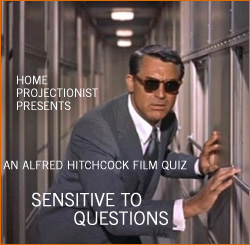
Good evening. We’re seeing a lot of the Master of Suspense these days, what with his self-titled movie currently playing at theaters. But we have always had the opportunity to catch his familiar face and form often over the years, right there during his cameo appearances in the very pictures he directed. We can identify that distinctive shape easily in those movies, but can you name the movie’s title?
(*The quiz title was inspired by Alfred Hitchcock’s North By Northwest:“Something wrong with your eyes?” “Yes”, says the sunglass-clad Roger O. Thornhill (Cary Grant), “They’re sensitive to questions”. In the hotel room of the fictitious George Kaplan, Roger spots a photograph of his kidnapper, Philip Vandamm, and says, “Oh, well, look who’s here!”.)
ON THIS DAY in 1874, Prime Minister of the United Kingdom Sir Winston Churchill was born. Churchill’s early days were dramatized in Richard Attenborough’s 1972 film, YOUNG WINSTON.
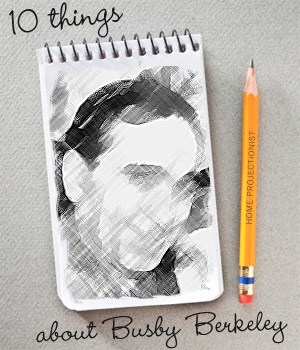
First film choreographed: WHOOPEE! with Eddie Cantor
Deleted choreography: Ray Bolger’s WIZARD OF OZ scarecrow dance number
Acquitted: at third trial for second degree murder charges following car accident in 1935
Fun fact: was uncredited actor in three films he choreographed
Directed at age 75: Broadway revival of No, No Nanette, starring Ruby Keeler
Quote: “In an era of breadlines, depression and wars, I tried to help people get away from all the misery…to turn their minds to something else. I wanted to make people happy, if only for an hour.”
Busby Berkeley’s “Remember My Forgotten Man”, from GOLD DIGGERS OF 1933:
Not just another WordPress.com site, but an extraordinary place to spend a weekend, grill a cheese sandwich and watch a film to improve your life and stimulate a few of the grey cells.






 Home Projectionist